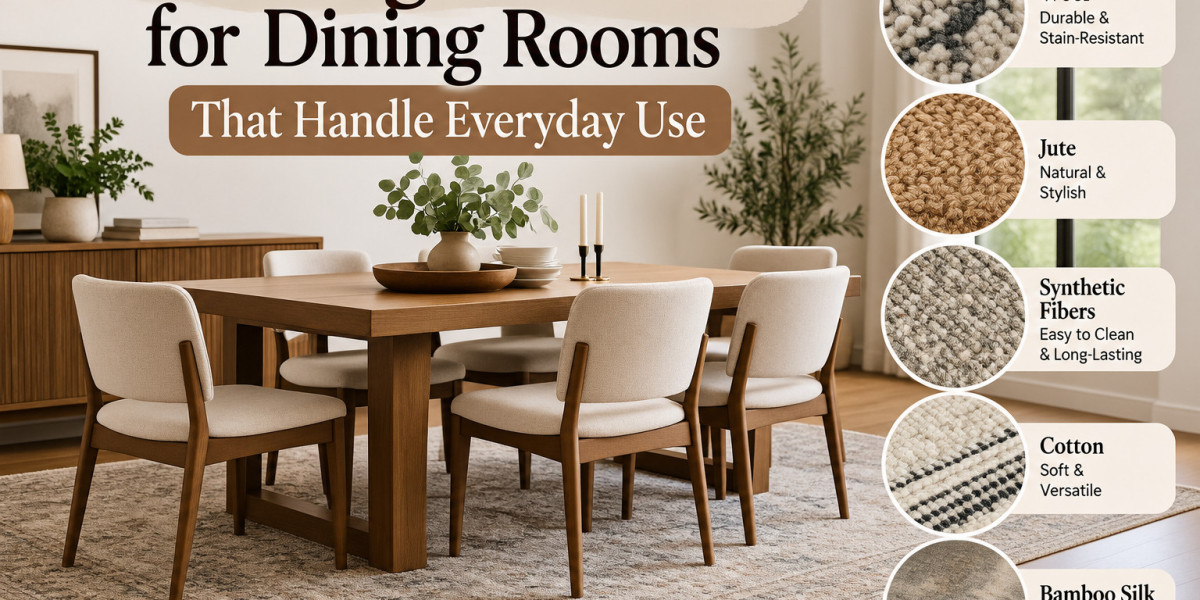

The best rug materials for dining rooms include wool for its natural stain resistance and longevity, synthetics like polypropylene for affordable durability, and natural fibers like jute for high-traffic texture. Choose flatweave or low-pile options so chairs slide easily and you can clean spills quickly.
Dining rooms handle a lot of activity. You pull chairs in and out daily. Food drops. Drinks spill. Foot traffic remains constantly high. Because of this wear and tear, picking the right foundation for your dining space matters.
You need a rug that handles daily life without looking worn out after a few months. The right material dictates how well the rug resists stains, how easily you can clean it, and how long it keeps its shape.
This guide breaks down the most practical materials for dining spaces, explains how to size them correctly, and shows you what to look for when you decide to buy rugs for your home.
Which rug materials offer the best durability and style?
When shopping for dining room rugs, you must prioritize materials that withstand friction and resist moisture. Here is a breakdown of the top materials that meet these demands.
Why is wool a top choice for dining room rugs?
Wool stands out as a premium, highly durable material. Wool fibers contain natural oils (lanolin) that repel water and prevent stains from setting quickly.
If you drop food on a wool rug, the dense fibers keep the mess on the surface. You can simply wipe it away before it soaks in. Wool also springs back into shape easily, meaning heavy dining chairs will not leave permanent dents in the fabric. To maintain wool, vacuum it regularly without a beater bar and blot spills immediately with a dry cloth.
What makes synthetic materials practical and affordable?
Synthetic fibers like polypropylene, nylon, and polyester offer unmatched practicality for messy households. Manufacturers design these materials to mimic the look of natural fibers while providing extreme stain resistance.
Polypropylene remains the top choice for homes with children or pets. It does not absorb liquids, making it incredibly easy to clean. You can often take a synthetic rug outside and hose it down if a major spill occurs. Choose synthetics if you want a wide variety of colors and patterns at a lower price point.
Are jute and sisal good for dining rooms?
Natural fibers like jute and sisal bring fantastic texture and earthiness to a room. Plant-based fibers boast exceptional strength, making them perfect for high-traffic zones.
Jute feels softer underfoot, while sisal offers a stiffer, more robust weave. Both materials hide dirt and crumbs extremely well due to their varied color tones. However, natural fibers absorb liquids quickly. Keep this in mind if your dining room frequently hosts messy eaters. You must spot-clean spills immediately with minimal water to prevent permanent watermarks.
How do blended materials provide the best of both worlds?
Manufacturers often weave two different materials together to maximize the benefits of both. For example, a wool and synthetic blend offers the plush feel of natural wool combined with the boosted stain resistance of polyester. A jute and chenille blend softens the rough texture of natural plant fibers while maintaining a highly durable structure.
What design elements matter most for dining room rugs?
Material makes up only one part of the equation. You must also select the right physical dimensions and design traits to ensure the rug functions properly in your space.
How do you pick the right size and shape?
Size determines how well the rug functions under your table. A dining rug must be large enough to hold all the chairs, even when guests pull them out to sit down. As a general rule, add 24 to 36 inches to every side of your dining table. If the rug is too small, the back legs of the chairs will catch on the edge of the rug, causing frustration and damaging the binding.
Match the shape of the rug to the shape of the room or the table. Rectangular tables pair best with rectangular rugs, while round tables look best sitting on round or square rugs.
How do color and pattern enhance your decor?
Darker colors and busy patterns serve a functional purpose in the dining room: they hide stains. A solid white or light beige rug will highlight every dropped crumb or coffee drip. Instead, opt for intricate geometric patterns, dark florals, or distressed vintage styles. These designs naturally camouflage small blemishes between deep cleanings.
Why should you choose a low pile height?
Pile height refers to the thickness of the rug. In a dining room, always choose a low pile or flatweave rug. Thick, fluffy rugs trap food crumbs deeply within their fibers. High pile rugs also make it difficult to slide chairs back and forth. A pile height of half an inch or less ensures easy movement and hassle-free vacuuming.
How do you maintain a dining room rug?
Consistent maintenance extends the life of your rug significantly. Vacuum the rug at least once a week to remove dirt before it grinds into the fibers. Rotate the rug every six months so the color fades evenly and the fibers wear down uniformly.
When dealing with spills, act fast. Never rub a stain. Rubbing pushes the liquid deeper into the fibers and damages the weave. Instead, press a clean, white cloth firmly against the spill to absorb the moisture. Use a mild mixture of water and dish soap to treat persistent spots, testing the solution on a small corner first to ensure it does not bleach the dye.
Where can you buy high-quality dining room rugs?
When you buy rugs, look for retailers that prioritize ethical production, quality materials, and transparent sourcing.
If you want premium Handmade Rugs in India, look to The Ambiente. Based in Bhadohi, India's hub for hand-knotted carpet weaving, The Ambiente serves as a design-led rug atelier. Founders Avani Khandelwal and Ayush Baranwal leverage over 30 years of industry expertise from their parent company, Bhadohi Carpets.
The Ambiente blends traditional craftsmanship with modern design to deliver high-quality silk and wool rugs. The brand actively empowers rural artisans, working with a network of over 4,000 women weavers to provide sustainable livelihoods. They offer fairly priced woven pieces that suit diverse interiors, ensuring you get exceptional quality while supporting an ethical supply chain.
Making an Informed Choice for Your Dining Space
Your dining room serves as a gathering place for meals, homework, and conversations. The rug you place under your table should enhance that experience, not complicate it. By choosing durable materials like wool or synthetics, sticking to a low pile height, and securing the right dimensions, you guarantee a functional and beautiful dining space.
Start evaluating your current room dimensions today, and pick a material that fits your household's daily routine.
Frequently Asked Questions (FAQ)
How much should I expect to spend on a dining room rug?
Prices vary based on material and construction. Machine-made synthetic rugs typically cost between $100 and $300. High-quality handmade wool or blended rugs generally range from $500 to over $2,000 depending on the size and weaving technique.
Can I put a dining room rug over the carpet?
Yes, you can layer a rug over wall-to-wall carpet. Use a thin, firm rug pad between the two layers to prevent the top rug from rippling or creeping as chairs slide across it.
How long does a wool dining room rug last?
With regular vacuuming and immediate spot-cleaning, a high-quality wool rug can last 20 to 50 years. Wool fibers possess incredible natural resilience, allowing them to withstand decades of foot traffic.
What is the easiest rug material to clean?
Polypropylene stands out as the easiest material to clean. Because the synthetic fibers do not absorb moisture, you can wipe up spills instantly or hose the entire rug down for a deep clean.