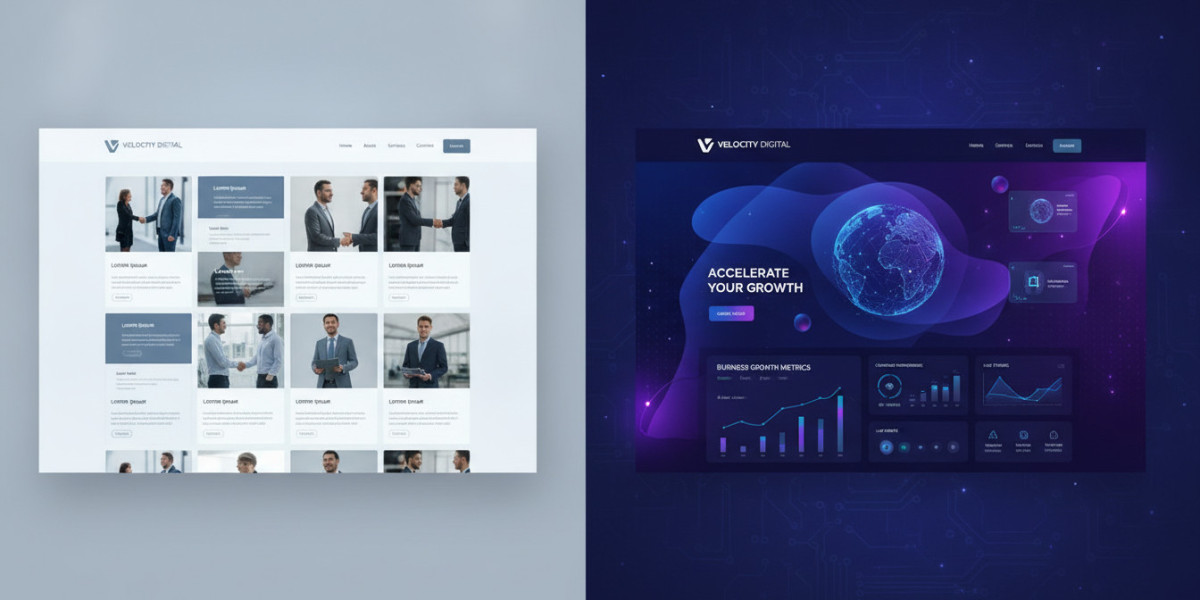

One of the biggest decisions businesses face when building a website is choosing between a custom website and a template website.
At first glance, template websites appear attractive because they are affordable, easy to launch, and require minimal technical knowledge. However, as businesses grow, many discover limitations that affect performance, branding, search engine rankings, and scalability.
Custom websites, on the other hand, are built specifically for a business's unique requirements. They provide greater flexibility, improved performance, enhanced security, and long-term growth opportunities.
The challenge is determining which option is right for your business.
Should you invest in a custom-built website or choose a pre-designed template solution?
In this guide, we'll compare custom websites and template websites across multiple factors including cost, design flexibility, SEO performance, scalability, security, and return on investment. By the end, you'll have a clear understanding of which solution best supports your business goals in 2026.
Table of Contents
- What Is a Custom Website?
- What Is a Template Website?
- Key Differences Between Custom and Template Websites
- Benefits of Custom Website Development
- Benefits of Template Websites
- Custom Website vs Template Website Comparison
- Which Option Is Better for SEO?
- Which Option Is Better for Business Growth?
- Common Mistakes Businesses Make
- Best Practices for Choosing the Right Website
- Future Trends in Website Development
- Conclusion
- FAQs
What Is a Custom Website?
A custom website is designed and developed specifically for a business based on its unique requirements, branding, functionality, and goals.
Unlike templates, every element is created from scratch or highly customized.
A custom website can include:
- Unique design elements
- Custom features
- Advanced integrations
- Specialized user experiences
- Tailored functionality
Examples include:
- ERP-integrated business portals
- Custom e-commerce stores
- Membership platforms
- Healthcare booking systems
- SaaS applications
Custom websites provide maximum flexibility and control.
What Is a Template Website?
A template website is built using pre-designed layouts and structures.
Popular platforms include:
- WordPress Templates
- Wix Templates
- Shopify Themes
- Squarespace Templates
These websites allow businesses to quickly launch an online presence without extensive development work.
Template websites generally include:
- Pre-built designs
- Drag-and-drop builders
- Basic customization options
- Standard functionality
They are ideal for businesses needing a simple website with limited requirements.
Key Differences Between Custom and Template Websites
| Feature | Custom Website | Template Website |
|---|---|---|
| Design Flexibility | Very High | Limited |
| Scalability | Excellent | Moderate |
| SEO Potential | High | Moderate |
| Performance | Optimized | Depends on Template |
| Security | Strong | Platform Dependent |
| Cost | Higher Initial Investment | Lower Initial Cost |
| Unique Branding | Fully Customized | Limited |
| Functionality | Unlimited | Restricted |
| Integrations | Highly Flexible | Limited |
| Long-Term Growth | Excellent | Can Become Restrictive |
Benefits of Custom Website Development
Unique Brand Identity
A custom website reflects your business rather than looking similar to thousands of other websites.
Benefits include:
- Better recognition
- Stronger trust
- Improved credibility
Customers remember unique experiences.
Better SEO Performance
Custom websites are built with SEO in mind.
Advantages include:
- Clean code structure
- Faster page speed
- Optimized architecture
- Better crawlability
This improves search engine rankings and organic traffic.
Superior Performance
Custom websites remove unnecessary code and features.
Benefits inclde:
- Faster loading times
- Better Core Web Vitals
- Improved user experience
Website speed directly impacts conversions and rankings.
Scalability
As businesses grow, custom websites can easily evolve.
Examples:
- Customer portals
- Mobile app integration
- CRM systems
- ERP systems
- Advanced automation
This flexibility supports long-term growth.
Enhanced Security
Custom websites can implement advanced security measures.
Benefits include:
- Better protection against attacks
- Secure data handling
- Compliance support
This is especially important for businesses handling sensitive information.
Benefits of Template Websites
Lower Upfront Cost
Templates are generally more affordable.
Ideal for:
- Startups
- Freelancers
- Small businesses
with limited budgets.
Faster Launch Time
Template websites can often be launched within days.
This helps businesses establish an online presence quickly.
Easy Management
Most templates provide user-friendly interfaces.
Business owners can manage content without technical expertise.
Suitable for Simple Websites
If your website only requires:
- Company information
- Contact forms
- Basic services
a template may be sufficient.
Which Option Is Better for SEO?
SEO plays a critical role in online visibility.
Custom Websites
Advantages:
- Optimized code
- Faster loading speeds
- Better site architecture
- Advanced technical SEO
Template Websites
Limitations:
- Bloated code
- Shared structures
- Performance issues
Result:
Custom websites generally provide stronger SEO foundations and greater ranking potential.
Which Option Is Better for Business Growth?
For businesses planning long-term growth, custom websites offer significant advantages.
Growth Benefits
- Custom functionality
- Better customer experiences
- Advanced integrations
- Scalability
Template websites often become restrictive as businesses expand.
Many companies eventually migrate from templates to custom solutions.
Common Mistakes Businesses Make
Choosing Based Only on Cost
A lower initial investment doesn't always mean better value.
Long-term growth requirements should be considered.
Ignoring Scalability
Many businesses outgrow template websites quickly.
Future requirements should be planned early.
Overlooking SEO
Websites should be built with search engine optimization from day one.
Prioritizing Design Over Functionality
A visually appealing website means little if it doesn't support business goals.
Best Practices for Choosing the Right Website
Choose a Template Website If:
- You need a simple website
- Budget is limited
- Requirements are basic
- Fast launch is a priority
Choose a Custom Website If:
- You want long-term growth
- SEO is important
- You need advanced functionality
- Branding matters
- You plan to scale
Future Trends in Website Development
AI-Powered Websites
Artificial intelligence will automate personalization and optimization.
Headless Architecture
Businesses will separate frontend and backend systems for greater flexibility.
Progressive Web Applications (PWAs)
Websites will increasingly function like mobile apps.
Advanced Personalization
Customer experiences will become highly customized.
Voice Search Optimization
Voice-driven interactions will continue to grow.
Conclusion
Both custom websites and template websites have their place in modern business.
Template websites offer affordability and speed, making them ideal for simple projects and businesses with limited requirements.
However, for organizations focused on long-term growth, SEO performance, scalability, security, and competitive advantage, custom website development remains the superior choice.
A website should be viewed as an investment rather than an expense. While custom websites require a higher upfront investment, they often generate greater returns through improved visibility, better user experiences, stronger branding, and higher conversion rates.
Choosing the right solution depends on your business goals, budget, and future growth plans.
Frequently Asked Questions (FAQs)
What is the difference between a custom website and a template website?
A custom website is built specifically for your business, while a template website uses a pre-designed layout that can be customized to a limited extent.
Which is better for SEO?
Custom websites generally provide better SEO performance due to cleaner code, faster speeds, and optimized architecture.
Are template websites good for small businesses?
Yes, template websites can work well for businesses with basic requirements and limited budgets.
Why are custom websites more expensive?
Custom websites require professional design, development, testing, and optimization tailored to specific business needs.
Can I upgrade from a template website later?
Yes, but migrating to a custom website later often requires additional costs and effort.
Which option loads faster?
Custom websites are usually faster because they contain only necessary features and optimized code.
Are custom websites more secure?
Generally, yes. Custom security implementations provide greater protection against threats.
Which website option is better for long-term growth?
Custom websites offer better scalability and flexibility for growing businesses.
Do custom websites improve conversion rates?
They often do because they can be tailored specifically to customer journeys and business objectives.
How do I decide which option is right for me?
Consider your budget, goals, functionality requirements, SEO needs, and future growth plans.