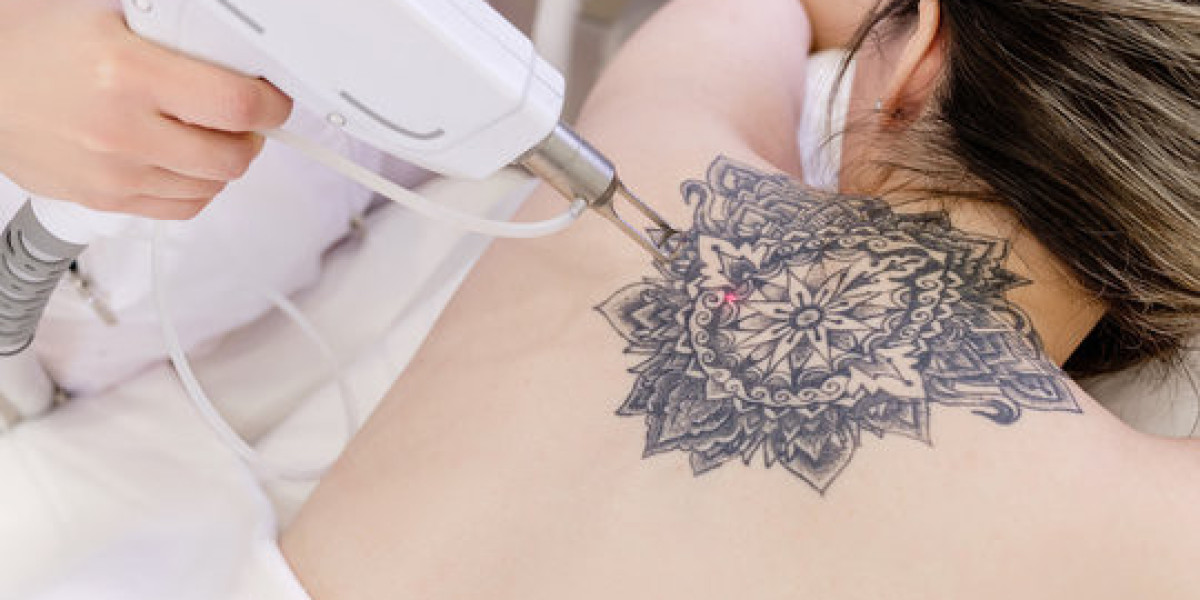

One of the most common questions for anyone considering Tattoo Removal in Dubai is the total time commitment required to see clear skin. Unlike getting a tattoo, which can be completed in a single afternoon, removing one is a multi-stage biological project. In the UAE, where patients often have busy professional schedules, understanding the timeline is essential for planning. On average, a complete removal cycle can span anywhere from 6 to 12 months, depending on the complexity of the ink. This duration is not due to the laser's limitations, but rather the time your body needs to safely process and flush out the shattered pigment. By aligning your expectations with the natural rhythm of your immune system, you can achieve a flawless result without compromising your skin's health.
The total duration is a combination of active treatment time and the "silent" healing phases that happen between your visits to the clinic.
Average Number of Sessions Required
While every tattoo is unique, clinical data in Dubai allows us to categorize tattoos into general categories to estimate the number of sessions:
Small, Simple Tattoos: (Under 5cm) with black ink typically require 4 to 8 sessions.
Medium-Sized Tattoos: (5-15cm) with shading or multiple colors often need 8 to 12 sessions.
Large or Professional Pieces: Deeply saturated sleeves or back pieces can require 12 to 15+ sessions for 100% clearance.
Cover-Up Fading: If you only want to lighten a tattoo for a new design, this can often be achieved in just 3 to 5 sessions.
The Essential "Waiting Window"
A critical factor in the timeline of Tattoo Removal in Dubai is the 6-to-8-week gap required between sessions.
Why can't I come back sooner? Patients often feel that more frequent sessions would lead to faster results, but the opposite is true. After the laser shatters the ink, your white blood cells (macrophages) begin the slow work of carrying the "dust" to your lymph nodes. Based on post-procedure follow-ups, we observe that the most significant fading often happens in the 4th and 5th weeks after a session. If we laser the area again too early, we are simply hitting ink that hasn't been moved yet, which increases the risk of skin irritation without adding any benefit to the removal speed.
Factors That Influence Your Speed of Clearance
Not all tattoos fade at the same rate. Several biological and environmental factors play a massive role in how "quick" your results will be:
Distance from the Heart: Tattoos on the chest, neck, and head fade faster due to higher blood circulation. Tattoos on the fingers, ankles, and toes take the longest because circulation is slower in the extremities.
Ink Color: Black and dark blue are the easiest to break down. Red is moderate, while vibrant greens, yellows, and "fluorescent" colors are the most stubborn and may add months to your timeline.
Smoking Status: We observe that smokers often require significantly more sessions. Nicotine constricts the small blood vessels, reducing the efficiency of the immune system in hauling away the shattered ink.
Tattoo Age: Older tattoos (10+ years) have already been partially "attacked" by your immune system over time, making them much faster to remove than a fresh, 1-year-old tattoo with dense, stable ink.
Realistic Recovery: The Short-Term Timeline
While the total project takes months, the recovery from each individual session is relatively quick.
Days 1–2: Redness and swelling, similar to a sunburn. You can return to work immediately, provided the area is protected.
Days 3–7: The skin may develop a "crust" or light flaking. This is the surface healing.
Weeks 2–8: The "Internal Cleanup." The skin looks normal on the outside, but the fading is happening deep within the dermal layers.
"I thought I'd be done in three months. My doctor explained it was a marathon, not a sprint. I'm on my sixth session now, and the tattoo is 80% gone. It takes patience, but it works." — Hassan
Information Gain: The "Lymphatic Loading" Limit
A technical reason for the 8-week gap is "Lymphatic Loading." Your lymphatic system is like a highway. When the laser shatters a large amount of ink, it’s like a traffic jam of particles trying to get to the "exit" (your lymph nodes). If we add more "traffic" by doing another session too soon, the system becomes overwhelmed. In a professional Dubai clinic, we monitor the "fading curve" of your tattoo. If we notice the fading has slowed down, we actually recommend increasing the gap to 10 or 12 weeks. This gives your body more time to clear the existing debris, often making the next session significantly more effective. This "strategic waiting" is the secret to achieving total clearance in the fewest number of sessions possible.
"I was annoyed when the specialist told me to wait 10 weeks instead of 8. But when I came back, that next session made the tattoo fade more than the previous two combined. The body really does need that extra time to 'clean up'." — Maya
Strategic Planning at Tajmeels Clinic
At Tajmeels Clinic, we help you plan your removal journey with total transparency. During your initial consultation, we use the "Kirby-Desai Scale"—a clinical tool that factors in your skin type, tattoo location, and ink colors—to provide you with a realistic estimate of your total session count. We utilize high-speed Pico-second lasers that maximize ink shattering in every pulse, ensuring that each visit moves you closer to your goal as efficiently as possible. By focusing on both advanced technology and your body’s unique healing rhythm, we ensure that your path to clear skin is professionally managed and perfectly timed for the best possible results in the UAE.
FAQs
Can I speed up the process by exercising?
Yes! Anything that boosts your circulation and metabolism helps the removal process. Regular cardiovascular exercise and staying well-hydrated keep your lymphatic system active, which can potentially shave weeks off your total treatment timeline.
How do I know if my tattoo is "ready" for the next session?
The skin should be completely free of redness, scabbing, or sensitivity. Most importantly, you should have noticed some degree of fading since your last visit. Our specialists will always perform a skin check before starting a new session to confirm your body has finished its "cleanup" phase.
Will a larger tattoo take more time per session?
Yes. A small tattoo might take 5 minutes of laser time, while a full-sleeve or back tattoo can take 45 to 60 minutes. Because larger tattoos involve a higher "ink load," they also typically require more total sessions to achieve the same level of clearance as a smaller piece.
What happens if I miss a session or wait too long?
Nothing bad! Waiting longer than 8 weeks will not hurt your results. In fact, it often helps. The ink will continue to fade for several months after a session. You won't "lose progress" by taking a break; the ink that has already been shattered is gone for good.
Does the "Dubai heat" slow down the healing?
The heat doesn't slow down the internal ink removal, but it can make the surface of the skin more sensitive. It is vital to keep the area cool and away from direct sunlight during the first week of recovery to prevent "heat-induced" inflammation, which can slow down the initial healing phase.
Why do some colors fade faster than others?
Lasers are light-based. Black ink absorbs all laser wavelengths, making it very easy to shatter. Colors like green or yellow only absorb very specific, narrow wavelengths of light. This means the laser is less "efficient" at hitting these colors, requiring more passes and more sessions to achieve the same fragmentation as black ink.