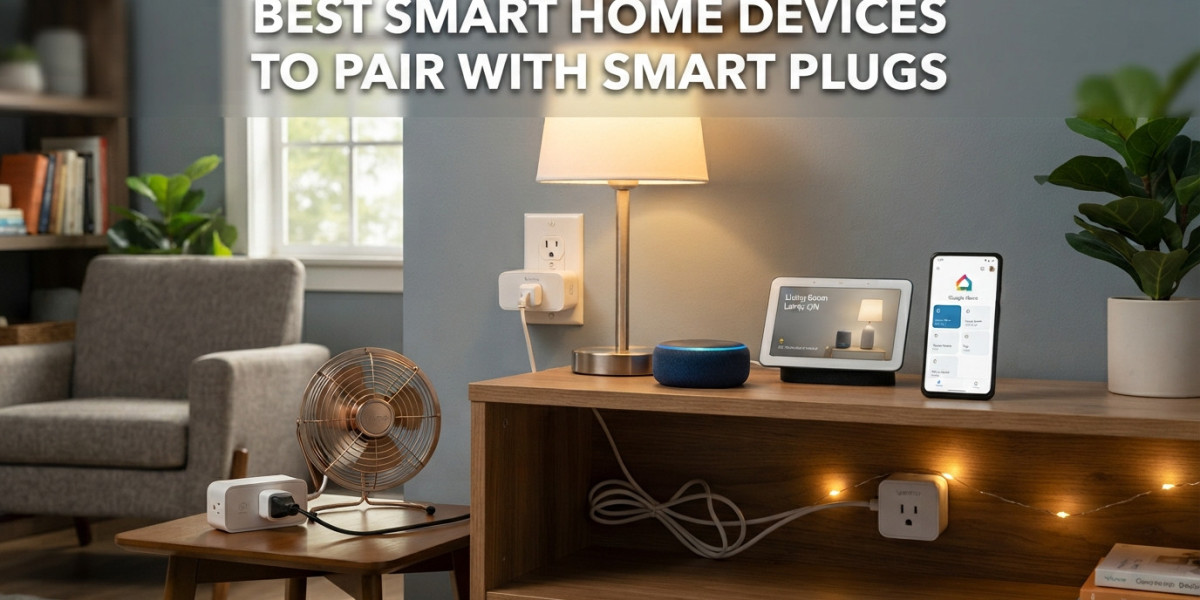

A smart plug is often the first device in a household's home automation journey, but it's rarely the last. Once the basics click, a lot of people in Pakistan start looking at what else pairs well with that initial setup.
Smart Bulbs: An Easy Next Step
Smart bulbs offer similar app-based and voice control to smart plugs, with the added benefit of adjustable brightness and, in many cases, color options — a natural pairing since both devices typically work within the same companion app and voice assistant ecosystem.
Smart Switches for Hardwired Fixtures
While a smart plug works for anything you plug in, a smart switch replaces an existing wall switch to control hardwired fixtures like ceiling lights or fans that aren't plugged into an outlet. This is a logical next step once you're comfortable with smart plugs and ready to extend automation to fixtures a plug alone can't reach.
Smart Sensors for Automation Triggers
Motion, door, or temperature sensors add a layer of automation beyond manual or scheduled control — for example, a smart plug controlling a lamp that turns on automatically when a motion sensor detects movement in a room, rather than relying purely on a fixed schedule.
Smart Sockets and Circuit Breakers for Whole-Room or Whole-Circuit Control
For more ambitious setups, smart sockets and smart circuit breakers extend automation and monitoring beyond individual plugged-in devices to entire circuits or fixed sockets, useful for larger homes or more comprehensive automation projects.
Voice Assistants as the Control Hub
Google Home and Amazon Alexa devices serve as a central hub for voice control across all these device types, letting you manage smart plugs, bulbs, switches, and sensors through a single voice interface rather than juggling multiple separate apps for each device category.
Smart Cameras for Security Integration
For households interested in extending automation into security, smart cameras can sometimes be integrated into the same ecosystem as other smart devices, allowing automations like lights turning on when a camera detects motion after dark.
Building an Ecosystem, Not Just Individual Gadgets
The real value of expanding beyond a single smart plug comes from these devices working together — a motion sensor triggering a smart plug, a voice command controlling multiple device types at once, or a schedule coordinating several devices rather than each one operating in isolation.
Compatibility Matters More as You Expand
As a smart home setup grows beyond a single device, checking that new additions use compatible platforms (the same app ecosystem, or at least the same voice assistant support) becomes increasingly important — mixing incompatible ecosystems can mean juggling multiple apps with no ability to automate across them together.
A Sensible Expansion Order for Most Households
A practical progression for most people: start with one or two smart plugs on your most-used appliances, add a smart bulb or two once comfortable with the basics, introduce a sensor for automation triggers once you understand your usage patterns, and consider smart switches or sockets for a more comprehensive setup once you're confident the ecosystem works well for your household.
Budget Considerations for Expansion
Rather than buying an entire smart home setup at once, expanding gradually — verifying each addition genuinely gets used and adds value before buying the next device — tends to be a more cost-effective approach than a large upfront investment in devices that may end up underused.
Where to Explore a Compatible Range
For anyone building out a smart home setup in Pakistan, Walton Market carries smart plugs alongside bulbs, switches, sensors, sockets, and cameras within a compatible ecosystem, making it easier to expand a setup without worrying about cross-platform compatibility issues between devices from entirely different systems.
A Smart Home Expansion Checklist
Start with smart plugs on your most-used, highest-value appliances
Add smart bulbs next for an easy, similar-experience expansion
Introduce sensors once you understand your household's usage patterns
Check platform compatibility before mixing devices from different ecosystems
Expand gradually, verifying real usage before adding more devices
The Bottom Line
A smart plug is a genuinely good entry point, but the bigger value of home automation shows up once several compatible devices work together — worth planning your expansion thoughtfully rather than buying devices piecemeal from incompatible ecosystems.