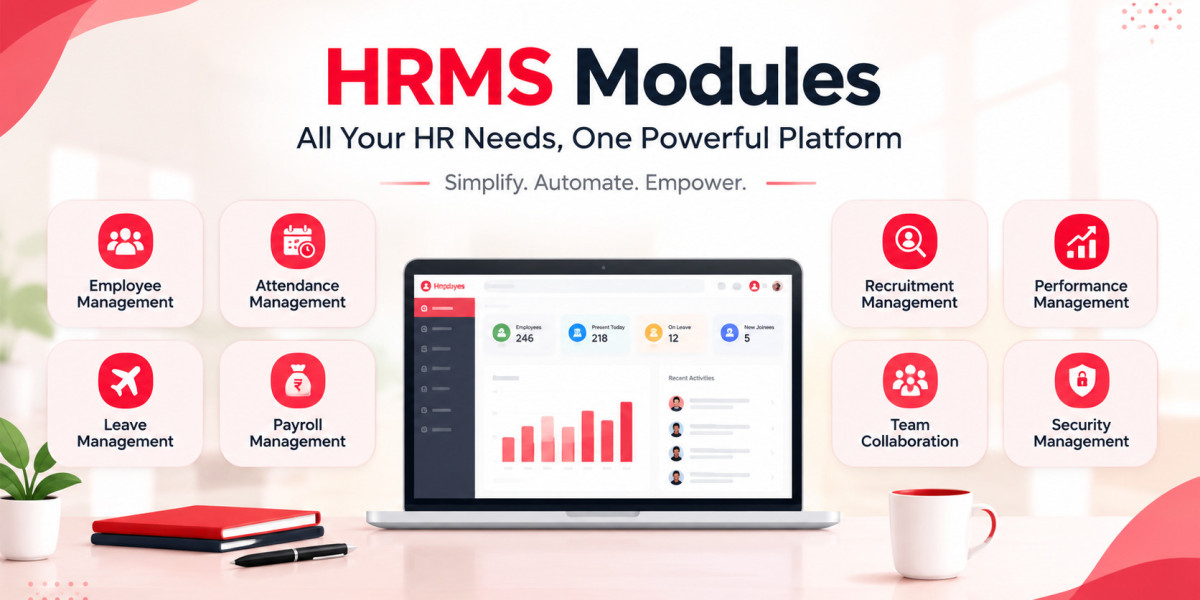

HRMS Modules: A Complete Guide to Managing Modern HR Operations with IntelloHRM
Human resource management has become more complex as businesses grow. Managing employee information, attendance, leave, payroll, recruitment, and performance manually can consume significant time and increase the possibility of errors. This is where an HRMS (Human Resource Management System) can help businesses organize and automate important HR activities from a centralized platform.
Modern HRMS platforms are generally divided into different HRMS modules, with each module handling a specific HR function. IntelloHRM is designed to bring these essential HR activities together, helping organizations manage their workforce more efficiently.
What Are HRMS Modules?
HRMS modules are individual functional sections of an HR management system. Each module focuses on a particular HR process, while the complete system connects these processes to create a centralized employee management environment.
For example, employee information can be connected with attendance, leave, payroll, and other HR activities. Instead of maintaining separate spreadsheets or disconnected applications, HR teams can manage related information through one system.
1. Employee Management Module
Employee management is one of the core HRMS modules. It helps HR teams maintain important employee information in an organized manner.
Businesses can use an employee management system to manage details such as employee profiles, departments, designations, joining information, documents, and employment-related records.
With IntelloHRM, businesses can centralize employee information and reduce dependency on multiple spreadsheets and manual records.
2. Attendance Management Module
Tracking employee attendance manually can become difficult, especially for organizations with a large workforce or multiple locations.
An attendance management module helps businesses record and monitor employee attendance, working hours, late arrivals, absences, and other attendance-related information.
A centralized attendance system can also make it easier for HR teams to access attendance records when processing payroll or reviewing employee work patterns.
3. Leave Management Module
Managing leave requests through emails, spreadsheets, or paper forms can create unnecessary communication between employees, managers, and HR teams.
The leave management module provides a structured way to manage employee leave requests and balances. Employees can submit leave requests, while authorized managers or HR personnel can review and approve them.
This creates a more transparent process and makes leave information easier to track.
4. Payroll and Payslip Module
Payroll is an important HR process where accuracy is essential. Salary calculations can involve attendance, leave, deductions, allowances, and other payroll components.
A payroll module helps businesses organize salary-related information and streamline payroll processing. It can also help generate employee payslips and maintain payroll records.
IntelloHRM brings payroll and employee information together, helping HR teams reduce repetitive manual work during salary processing.
5. Recruitment and Job Posting Module
Recruitment is another important area that can benefit from HR technology. A recruitment or job-posting module can help organizations manage vacancies and candidate-related information.
HR teams can organize job openings, collect applications, and manage recruitment information from a centralized system. This can make the hiring workflow easier to monitor compared with maintaining candidate information across emails and spreadsheets.
6. Performance Management Module
Employee performance management is important for understanding progress, setting expectations, and supporting employee development.
A performance management module can help organizations structure performance-related activities, feedback, evaluations, and goals. Instead of keeping performance information in separate documents, HR teams can maintain it within the HRMS environment.
This can support a more organized approach to employee performance discussions.
7. Employee Documents and Information
HR departments handle many employee documents throughout the employee lifecycle. These may include identification documents, employment records, certificates, and other important files.
An HRMS can help organizations organize employee documents and make relevant information easier for authorized users to access. Centralized document management can also reduce the need for physical paperwork.
Why Are HRMS Modules Important for Businesses?
The main advantage of using multiple HRMS modules within one platform is centralization. HR teams can manage different HR processes without switching between several systems.
A centralized HRMS can help businesses:
- Reduce repetitive manual HR tasks
- Organize employee information
- Improve attendance and leave tracking
- Streamline payroll processes
- Maintain employee records
- Support recruitment activities
- Structure performance management
- Improve access to HR information
- Reduce dependency on spreadsheets
Choosing the Right HRMS Modules
Every organization has different HR requirements. A small business may initially need employee management, attendance, leave, and payroll, while a growing organization may also require recruitment, performance management, document management, and other capabilities.
When evaluating an HRMS, businesses should consider whether the modules are easy to use, properly connected, scalable, and suitable for their existing HR processes.
How IntelloHRM Helps
IntelloHRM brings essential HR functions together through a centralized HR management platform. Its HRMS capabilities cover areas such as employee management, attendance, leave, payroll, performance management, recruitment, and employee-related information.
By bringing these functions into one system, IntelloHRM can help organizations move away from fragmented HR processes and create a more structured approach to workforce management.
Conclusion
HRMS modules play an important role in modernizing HR operations. From employee information and attendance to leave, payroll, recruitment, and performance management, each module addresses a specific part of the employee lifecycle.
For businesses looking to organize their HR processes in one place, a centralized platform such as IntelloHRM can provide the foundation for more efficient and structured workforce management.