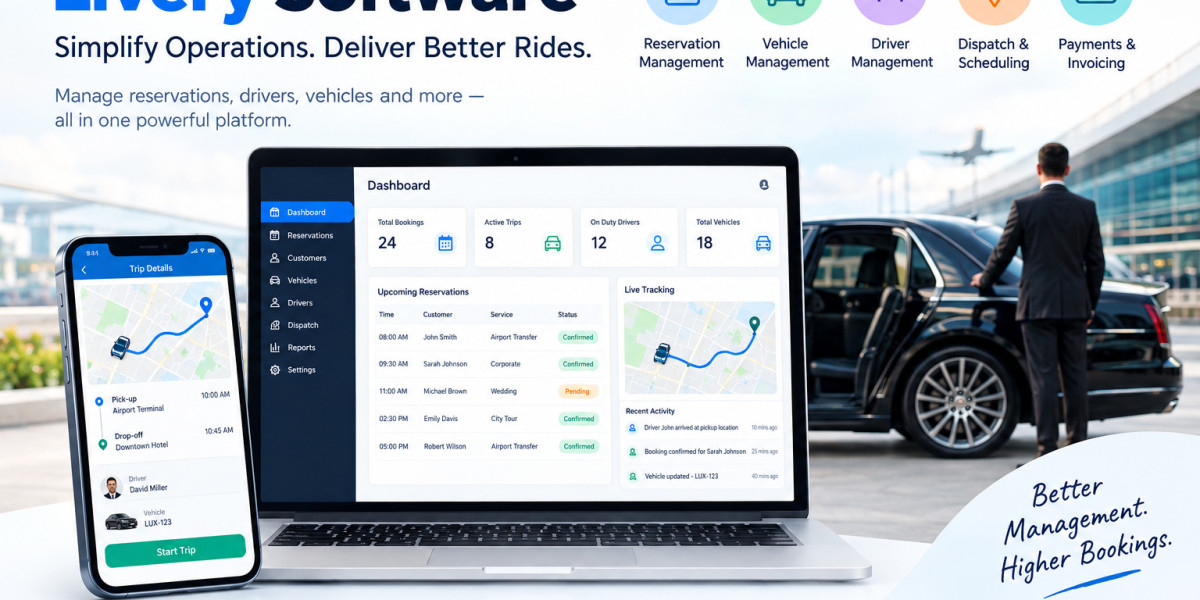

Running a limousine or private transportation company involves managing many details at the same time. Reservations, customers, chauffeurs, vehicles, schedules, payments, and last-minute changes all need attention. When these tasks are managed through disconnected tools, small mistakes can quickly become operational problems.
Livery software provides a centralized way to manage many of these daily activities. Instead of relying heavily on spreadsheets, phone calls, emails, and separate applications, transportation operators can use connected technology to organize bookings, dispatch operations, driver communication, and customer information.
The right software does more than save administrative time. It can help create a more consistent workflow from the moment a customer discovers a company online to the completion of the ride.
What Is Livery Software?
Livery software is a technology solution designed for businesses that provide passenger transportation services, including limousine companies, chauffeur services, black car operators, and other private transportation providers.
Depending on the platform, it may support reservations, scheduling, dispatching, customer management, vehicle coordination, payments, driver communication, reporting, and other operational tasks.
Consider a customer booking an airport transfer. The business needs to record the reservation, confirm the pickup details, assign an appropriate vehicle and chauffeur, communicate trip information, and monitor the service.
Without a connected system, employees may have to enter the same information into multiple tools. A centralized platform can reduce unnecessary duplication and make the workflow easier to manage.
Why Livery Businesses Need Connected Technology
Transportation businesses operate on schedules. A single change can affect a driver, vehicle, customer, and several other trips.
For example, if a passenger changes a pickup time, the office needs to update the booking and make sure the assigned chauffeur receives the correct information. If the information does not reach the driver quickly, the customer experience can suffer.
A centralized system provides a clearer operational structure. Staff can access important information from one place, while drivers can receive the information they need to complete their assignments.
This becomes especially important as a company grows. More bookings and vehicles create more coordination requirements, making manual processes harder to maintain.
Key Benefits of Livery Software
1. Centralized Booking Management
A strong platform can organize reservations and customer information in one location.
Operators can review upcoming trips, pickup details, customer requirements, and other booking information without searching through different spreadsheets or messages.
This can also make it easier to identify scheduling conflicts before they affect the customer.
2. Better Chauffeur Coordination
Chauffeur availability is an important part of transportation management.
Livery technology can help operators organize driver schedules and assignments while keeping trip information accessible.
Instead of repeatedly calling drivers to confirm basic details, dispatch staff can use a centralized workflow to communicate relevant updates.
3. Improved Customer Experience
Customers expect accurate information and professional service.
When booking information is organized properly, staff can respond to questions more efficiently and provide clearer updates.
A well-managed backend may not be visible to the passenger, but it can have a direct effect on the consistency of the service they receive.
4. Reduced Manual Work
Repeated data entry takes time and creates opportunities for mistakes.
Connected software can reduce the need to copy information between separate systems. When booking, scheduling, dispatch, and driver communication are connected, employees can spend more time handling customers and operational priorities.
5. Better Business Visibility
Business owners need more than a list of today's reservations. They need to understand how their operation is performing.
Depending on the platform, reporting tools can help operators review bookings, revenue-related information, trip activity, driver assignments, and other operational data.
This information can support better business decisions.
Connect Livery Software With a Limo Driver App
The office and the road need to stay connected.
A limo driver app can give chauffeurs mobile access to important trip information. Depending on the system, this could include passenger details, pickup instructions, schedules, trip status, and updates from dispatch.
For example, imagine a customer changes a pickup time shortly before the scheduled trip. Instead of relying entirely on a phone call, the updated information can be delivered through the connected driver workflow.
A driver app can also help chauffeurs stay organized throughout a busy day. The exact capabilities vary by provider, so operators should evaluate the driver experience as carefully as the administrative interface.
Use Limousine Dispatch Software for Better Coordination
Livery operations depend heavily on efficient dispatching.
Limousine dispatch software can help businesses coordinate trips, chauffeurs, vehicles, and schedules from a centralized system. This can be particularly useful when several rides are taking place at different times or locations.
Imagine an operator managing airport transfers, corporate transportation, and special-event bookings on the same day. Each trip may have different timing, vehicle requirements, and customer instructions.
A centralized dispatch system can help staff see assignments more clearly and respond when schedules change.
The best workflow connects reservations directly with dispatch instead of requiring employees to repeatedly transfer information manually.
Support Growth With an SEO Limousine Company Strategy
Technology can improve operations, but customers still need to find the business.
An seo limousine company strategy can help transportation providers improve their visibility in organic search. Service pages, location-specific content, useful transportation guides, and properly optimized business information can help potential customers discover relevant services.
For example, a limousine company could create dedicated pages for airport transportation, corporate travel, wedding transportation, and other services it actually provides.
The important connection is what happens after the customer finds the company. SEO can bring visitors to the website, but the booking and operational systems need to be ready to handle those customers.
This makes marketing and technology complementary parts of the same business process.
Connect Livery Operations With Limo Service Google Ads
Paid search can provide another source of qualified traffic.
With limo service Google ads, companies can advertise services to people actively searching for limousine and private transportation options.
However, generating clicks is only one part of the process. The website needs a relevant landing page, the booking process should be straightforward, and the business needs the operational capacity to fulfill the resulting reservations.
For example, an advertisement for airport transportation should lead to a page focused on airport service rather than a generic page with unrelated information.
Once a customer books, livery and dispatch technology can help move that reservation into the operational workflow.
Why Choosing the Right Livery Software Matters
Every transportation company has different operational needs. A small chauffeur business may prioritize simplicity, while a larger operator may require more advanced dispatching, reporting, driver management, and integration capabilities.
The right livery software should support the way your business actually operates.
Look beyond individual features and consider the complete workflow. Can reservations move smoothly into dispatch? Can drivers receive updates easily? Can staff access accurate customer information? Can the system grow with the business?
These questions are often more important than simply choosing the platform with the longest feature list.
Conclusion
Modern transportation businesses need more than a way to record reservations. They need connected systems that help employees manage customers, chauffeurs, vehicles, schedules, and daily operations efficiently.
Livery software can provide that central foundation by connecting important parts of the transportation workflow. When combined with a limo driver app and limousine dispatch software, it can improve communication and make daily coordination more organized.
Marketing should also connect with operations. An effective seo limousine company strategy and targeted limo service Google ads can attract potential customers, while reliable technology helps turn those opportunities into well-managed bookings.












