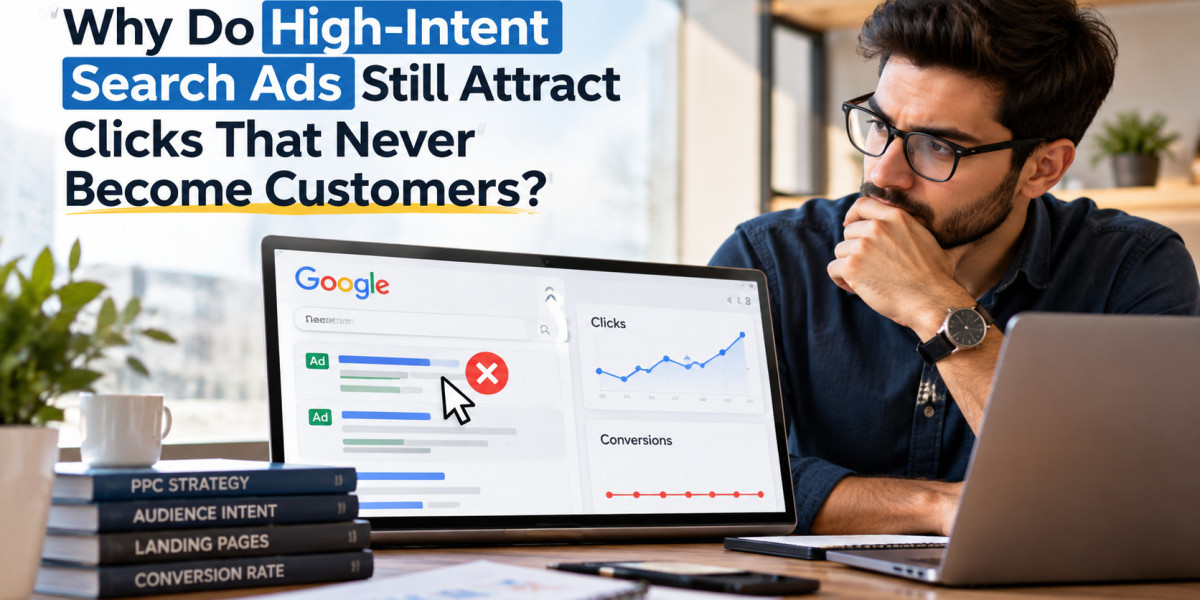

Search advertising is often considered one of the strongest ways to reach potential customers because it targets people who are actively looking for information, products, or services. However, a search query that appears valuable does not always come from someone ready to buy.
A campaign may receive clicks from seemingly relevant keywords while generating very few enquiries or sales. This usually happens when the advertiser focuses only on the words people type and ignores the purpose behind those words.
Understanding paid search intent helps businesses separate general interest from genuine commercial demand. It also improves keyword selection, ad messaging, landing-page relevance, and budget efficiency.
What Is Paid Search Intent?
Paid search intent describes the purpose behind a person’s search query. It explains what the user is trying to achieve when entering certain words into a search engine.
Two people may search for similar topics while expecting completely different results. One may want basic information, while the other wants to compare providers or make an immediate purchase.
Search intent generally falls into four categories:
Informational Intent
The user wants to learn something or find an answer. Searches may begin with words such as “how,” “why,” “what,” or “guide.”
These users can become customers later, but many are still researching the problem.
Navigational Intent
The person is trying to find a specific company, website, product, or platform. The search commonly includes a brand or business name.
Commercial Investigation
The user is comparing possible solutions before making a decision. Searches may include words such as “best,” “reviews,” “alternative,” “comparison,” or “top.”
These users may have strong potential, but they still need evidence and reassurance.
Transactional Intent
The person wants to take action, such as purchasing, booking, subscribing, requesting a quotation, or contacting a provider.
Transactional searches often include terms such as “buy,” “book,” “hire,” “pricing,” or “near me.” However, the exact language varies by industry.
Why Can Relevant Keywords Still Produce Poor Leads?
A keyword can be connected to the business without being connected to its offer.
For example, a company selling premium consulting services might advertise on a broad marketing-related term. The keyword is relevant to the industry, but it may attract students, job seekers, researchers, or people looking for free templates.
The campaign receives traffic, yet those visitors were never suitable prospects.
This problem becomes more serious when businesses judge keywords only by click volume. A keyword generating many visits may appear successful even if none of those visitors take meaningful action.
Effective paid advertising should evaluate the quality of the demand behind each search, not merely the number of clicks available.
How Does Keyword Specificity Affect Search Intent?
Broad keywords usually contain less information about what the user wants.
A short search such as “marketing” could have dozens of meanings. The user might want a definition, course, job, agency, software platform, or marketing plan.
A more specific search provides additional context. For example, a person searching for “paid advertising consultant for ecommerce brand” communicates the service required and the type of business involved.
Longer keywords do not automatically deliver better results, but they often make intent easier to understand.
Advertisers should examine whether each keyword reflects:
· The service being offered
· The type of customer being targeted
· The problem the business solves
· The desired location, when relevant
· The stage of the buying process
· The action the user is likely to take
A smaller group of well-matched searches can be more valuable than a large amount of unfocused traffic.
Why Must the Ad Message Match the Search?
Once a business understands the user’s likely intent, the advertisement must respond to it directly.
Someone searching for pricing expects information about cost or value. A user looking for a comparison wants help evaluating options. A person searching for a specialist expects to see relevant expertise.
If the advertisement ignores the purpose of the search, the message feels generic.
Strong search ads should make it clear:
· What the business offers
· Who the offer is for
· Which problem it addresses
· Why the solution is relevant
· What the user should do next
This clarity can reduce unsuitable clicks because people can decide whether the offer matches their needs before visiting the website.
How Can Ad Copy Help Qualify Potential Customers?
Ad copy should attract suitable prospects while setting realistic expectations.
Many advertisers attempt to generate the largest possible number of clicks by using broad promises. This may increase traffic, but it can also increase spending on people who are unlikely to become customers.
Qualification can be improved by mentioning important details such as:
· The type of service
· The target customer
· The location served
· The starting price, when appropriate
· Eligibility requirements
· The expected commitment
· The specific outcome or use case
For example, a business serving established ecommerce companies may state that focus clearly rather than presenting the service as suitable for everyone.
A knowledgeable paid advertising expert considers both attraction and qualification when developing campaign messages. The purpose is not simply to earn a click but to attract a click from someone the business can genuinely help.
Why Does the Landing Page Matter After the Click?
A search advertisement creates an expectation. The landing page must fulfil it.
If someone searches for a specific service but arrives on a general homepage, the visitor must search again for relevant information. This extra effort can reduce conversions.
The landing page should continue the conversation started by the search query and advertisement. Its headline, content, evidence, and call to action should reflect the same intention.
A strong landing page typically includes:
· A headline related to the original search
· A clear explanation of the offer
· Benefits relevant to the target customer
· Evidence supporting important claims
· Answers to common objections
· A visible and appropriate next step
Message consistency helps visitors feel that they have reached the correct destination.
How Can Negative Keywords Protect the Budget?
Negative keywords prevent advertisements from appearing for searches that are irrelevant or commercially unsuitable.
Suppose a business provides a paid professional service but repeatedly receives clicks from searches containing “free,” “course,” “job,” or “template.” Adding these terms as negative keywords may help reduce unwanted traffic.
Negative keywords should be based on real search-query data rather than assumptions alone. The same word can have different meanings in different industries.
Advertisers should regularly review actual search terms and identify patterns connected to:
· Free resources
· Employment searches
· Educational research
· Unavailable products
· Unsupported locations
· Irrelevant customer groups
· Services the business does not provide
This process can improve traffic quality without requiring a larger budget.
Which Metrics Reveal an Intent Problem?
A high click-through rate does not automatically mean that the keyword is profitable.
Campaigns should be evaluated using metrics that reflect what happens after the click, including:
· Conversion rate
· Cost per qualified lead
· Lead-to-appointment rate
· Sales conversion rate
· Customer acquisition cost
· Revenue generated
· Search terms producing conversions
· Search terms producing unsuitable enquiries
Businesses should also review call recordings, form responses, and sales feedback. A keyword may generate conversions while still attracting poor-quality leads.
Reliable campaign results and reviews should connect advertising performance with meaningful business outcomes rather than focusing only on surface-level platform metrics.
How Can Search Intent Be Tested?
Search intent is not always obvious from the keyword alone. Businesses should treat their initial interpretation as a hypothesis and test it using real behaviour.
A practical testing process can include:
1. Grouping keywords by expected intent.
2. Writing ads that reflect each intent group.
3. Sending traffic to closely matched landing pages.
4. Tracking enquiries, sales, and lead quality.
5. Reviewing actual search queries.
6. Removing or limiting weak intent groups.
7. Expanding the terms that generate valuable customers.
Changes should be made carefully so the business can understand what influenced the result. Altering keywords, advertisements, landing pages, and offers simultaneously makes it difficult to identify the real cause of improvement.
Final Thoughts
High-intent search campaigns can still underperform when advertisers confuse topical relevance with buying intent. A keyword may describe the business accurately while attracting people whose goals do not match the offer.
Understanding paid search intent allows businesses to choose more meaningful keywords, write qualifying advertisements, build relevant landing pages, and prevent wasted spending through negative keywords.
The strongest campaigns do not chase every possible click. They focus on searches that indicate a genuine problem, a suitable customer, and a realistic opportunity to take action.
Frequently Asked Questions
1. What is the difference between a keyword and search intent?
A keyword is the phrase entered into a search engine. Search intent is the goal or purpose behind that phrase.
2. Are long-tail keywords always high-intent?
No. Longer keywords provide more context, but they can still be informational. Each phrase should be evaluated according to the action the user is likely to take.
3. Can informational keywords generate customers?
Yes, but they often require educational content and a longer nurturing process before the user becomes ready to purchase.
4. How often should search terms be reviewed?
They should be reviewed regularly, especially during the early stages of a campaign or whenever traffic quality begins to decline.
5. What is the clearest sign of poor search intent?
A common sign is a campaign receiving relevant-looking clicks and form submissions while producing very few qualified leads, sales opportunities, or customers.













