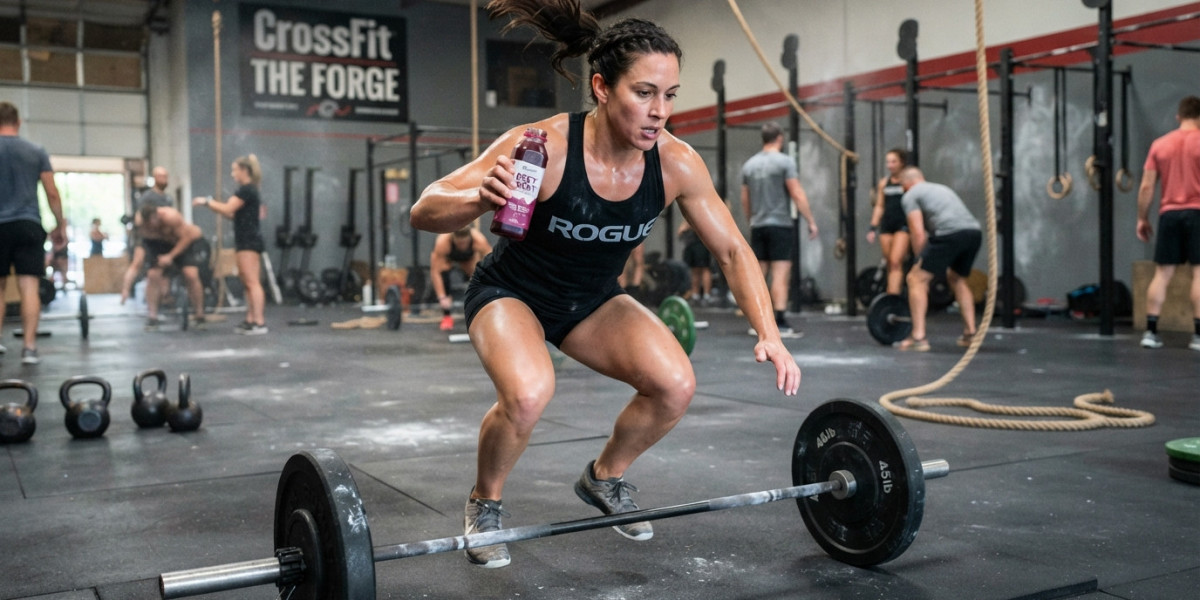

CrossFit and HIIT workouts are a different physiological animal than the steady endurance efforts most beet juice research has focused on, which raises a legitimate question: does any of this actually apply to high-intensity interval training?
Understanding the Mismatch With Most Existing Research.
The bulk of dietary nitrate research has studied sustained, submaximal aerobic exercise — think steady-state running or cycling — where oxygen delivery efficiency plays a clear, sustained role. CrossFit and HIIT workouts involve a mix of energy systems, including significant anaerobic contribution during high-intensity intervals, which is mechanistically different from the steady aerobic effort most beet juice research is built around.
What Limited High-Intensity Research Does Show.
A smaller body of research has specifically examined nitrate supplementation's effect on high-intensity, intermittent exercise — closer to the CrossFit/HIIT model — with some studies finding modest benefits related to recovery between high-intensity bouts or performance in the later stages of a repeated-effort workout, though this research base is considerably thinner and less consistent than the steady-state endurance literature.
Where the Theoretical Benefit Might Apply Within a HIIT Workout.
Many CrossFit and HIIT formats include some sustained aerobic component even within an overall high-intensity structure — think longer metcons with continuous movement, or the aerobic recovery periods between max-effort intervals. This is where any nitrate-related benefit, if present, would most plausibly show up, rather than in the purely anaerobic, short-burst portions of a workout.
Realistic Expectations for CrossFit Athletes.
Given the thinner research base specific to this training style, CrossFit and HIIT athletes should approach beet juice with somewhat more modest expectations than an endurance runner or cyclist might, based on the stronger endurance-specific research. It's a reasonable, low-risk experiment rather than something with strong, sport-specific evidence behind it yet.
Timing Considerations Remain Similar.
If you're testing beet juice for a CrossFit or HIIT session, the same general timing guidance from endurance research likely applies — consuming it a few hours before training, given how nitrate conversion and blood levels work, rather than immediately pre-workout.
Recovery Between High-Intensity Efforts.
One area worth watching in future research is whether beet juice's vascular effects might support recovery between repeated high-intensity efforts within a single training session, given blood flow's role in clearing metabolic byproducts — a plausible mechanism, though not yet strongly established specifically for this training style.
How to Test It Yourself.
Given the thinner sport-specific evidence, the most practical approach for a CrossFit or HIIT athlete curious about beet juice is a personal experiment: try it before a few comparable workouts, and pay attention to subjective factors like perceived effort and recovery between rounds, rather than expecting a dramatic, guaranteed effect based on research designed around a different training style.
Choosing a Product to Test With.
For a fair personal test, a concentrated, unblended product like beetroot juice gives a consistent, known dose to evaluate against, rather than a diluted blend where the actual nitrate content is unclear and inconsistent.
A CrossFit/HIIT Athlete's Checklist:
Approach with modest expectations given the thinner sport-specific research
Time it a few hours before training, consistent with endurance research
Pay closest attention to workouts with a meaningful aerobic or sustained-effort component
Track your own subjective response across a few workouts rather than expecting an immediate, obvious effect
Use a consistent, known-dose product for a fair personal test
The Bottom Line.
Beet juice's research base doesn't map onto CrossFit and HIIT as cleanly as it does onto steady endurance sports, and it's worth being upfront about that gap rather than assuming the endurance findings transfer directly. It's a reasonable, low-risk thing to test personally — just with more modest, evidence-appropriate expectations than an endurance athlete might have.