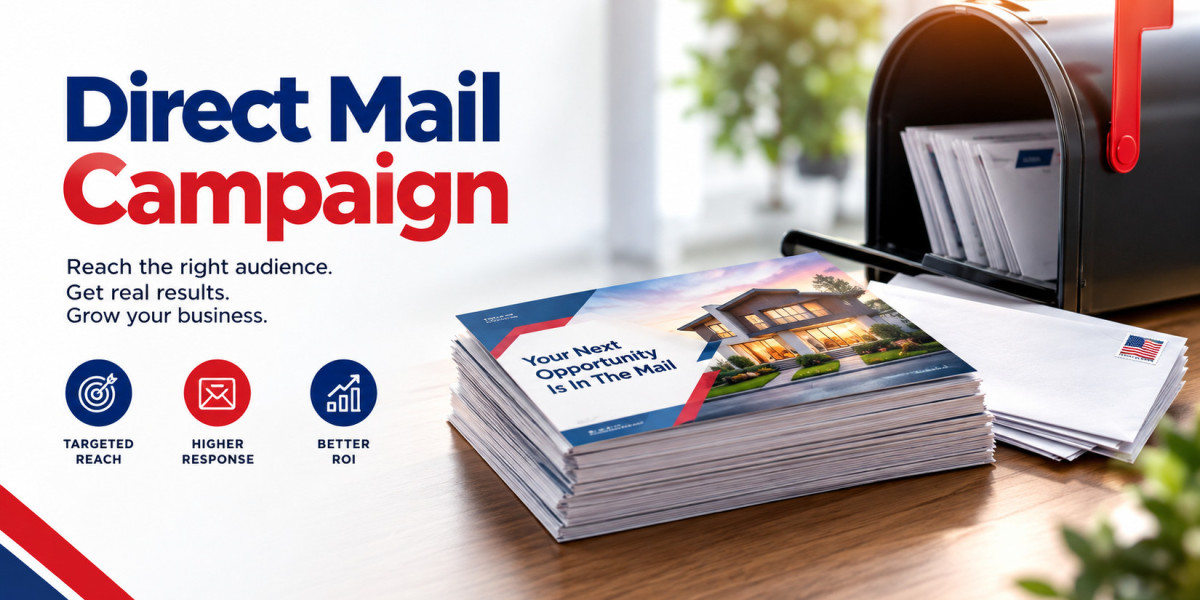

A direct mail project can look simple from the outside: choose a postcard, print a list, send the pieces, and wait for responses. In practice, the campaigns that struggle usually run into problems much earlier. The audience may not match the offer, the message may ask readers to process too much information, or the team may start printing before anyone decides how to measure results.
When we plan a Direct Mail Campaign, we treat printing as one part of a larger process. The list, offer, creative, format, production specifications, mailing schedule, landing experience, and response tracking all need to support the same objective. If one element breaks that connection, even strong artwork cannot fully compensate.
The most reliable planning process starts with a business goal and works forward in a logical order. We define who should receive the piece, why they should care, what action we want them to take, and how we will know whether the campaign produced worthwhile results.
A High-Converting Direct Mail Campaign Starts With One Clear Goal
Campaign teams often begin with design because a postcard feels tangible. We prefer to start with the business objective because every later decision depends on it.
A campaign that aims to generate first-time appointments needs a different audience and offer from one that aims to reactivate former customers. A retail grand opening requires different timing from a seasonal home service reminder. Defining the goal early keeps the mailing from becoming a collection of unrelated ideas.
Choose One Primary Outcome
A mailpiece should give the recipient one obvious next step.
That action may involve calling for an estimate, scheduling an appointment, visiting a location, scanning a QR code, using a promotional code, attending an event, or ordering a specific service. Businesses sometimes include several equal calls to action because they do not want to limit response options.
Too many choices can create hesitation. We usually identify one primary action and treat everything else as supporting information.
Connect The Goal To A Measurable Result
“Generate awareness” can describe a marketing objective, but it does not provide enough information for evaluating a campaign.
Whenever possible, connect the goal to leads, appointments, purchases, store visits, estimates, renewals, or another measurable outcome. That gives the team something concrete to evaluate after the mailing reaches recipients.
It also helps determine how much the campaign can reasonably cost.
Define The Audience Before Choosing The Mailpiece
One of the most expensive direct mail mistakes involves printing before finalizing the audience.
Quantity affects printing, postage, format decisions, mailing preparation, and the overall budget. More importantly, the audience determines what the message should say.
Start With The Customer Most Likely To Need The Offer
We recommend describing the intended recipient in practical terms. Consider geography, customer status, service need, property type, business type, purchase history, or another characteristic that actually influences whether the offer makes sense.
Avoid creating an overly detailed fictional persona that does not affect campaign decisions. Useful targeting criteria should help determine who receives the piece or how the message changes.
A roofing contractor may care about homeowners and housing characteristics. A dental office may focus on households within a realistic travel radius. A B2B service provider may need company size and job function instead.
Separate Prospects From Existing Customers
New prospects and existing customers should rarely receive identical messages.
Prospects need enough context to understand the business and why the communication matters. Existing customers already know the company, so the message can focus on a related service, renewal, reactivation, or another logical next step.
Even a simple split between acquisition and retention audiences can make a campaign more relevant.
Mailing List Quality Can Make Or Break The Campaign
A beautifully produced postcard cannot correct an inaccurate mailing list.
Duplicate records, outdated addresses, poor geographic filters, and irrelevant recipients increase printing and postage costs without creating meaningful opportunities. We often spend time reviewing list logic before discussing paper stock or finishing because the data influences every later decision.
Clean Customer Data Before Segmentation
Existing databases commonly contain inconsistent names, outdated records, duplicate households, old customer statuses, and missing fields.
We recommend standardizing the records before creating segments. Remove obvious duplicates, exclude recipients who should not receive the offer, and separate active customers from prospects where appropriate.
A clean list makes later reporting more trustworthy as well.
Do Not Add Filters Without A Reason
Mailing list providers can offer many demographic and business filters. That availability can tempt marketers to create highly complicated audiences.
Every filter should connect logically to the purchase decision. Homeownership matters for some home services. Company size may matter for B2B offers. Household income may support certain decisions, but it should not replace evidence of need or geographic fit.
More filters do not automatically create a better mailing list.
Build An Offer Around A Real Customer Need
A direct mail offer does not always need a large discount.
The strongest offer gives the recipient a clear reason to act now or remember the business when a relevant need appears. That might include a consultation, estimate, seasonal service, free assessment, product bundle, event invitation, introductory package, useful resource, or time-sensitive service reminder.
Make The Value Easy To Understand
Recipients should not need to calculate whether an offer matters.
If the piece includes a discount, clearly state what it applies to. If it promotes a consultation, explain what the customer receives. If it announces a new service, connect that service to a recognizable problem.
Ambiguous value weakens even attractive creative.
Avoid Offers That Create Operational Problems
Marketing teams sometimes approve an offer without checking whether the business can fulfill the resulting demand.
We encourage clients to consider staffing, appointment capacity, inventory, geographic limits, expiration periods, and redemption rules before printing. A campaign should create manageable opportunities rather than operational confusion.
The fulfillment experience also affects whether first-time responders become long-term customers.
Choose The Right Direct Mail Format For The Message
Format should follow content rather than habit.
Postcards work well for concise offers and quick visual communication. Letters allow more explanation and personal context. Folded mailers support multiple sections, while self-mailers can balance visual impact with more informational space.
Postcards Reward Simplicity
A postcard works best when the recipient can understand its purpose within seconds.
We typically prioritize one strong headline, one central visual, concise supporting copy, and one obvious response path. Trying to place every product, service, credential, and promotion on one postcard usually produces a crowded layout.
Whitespace often improves performance more than another paragraph.
Letters Support More Complex Decisions
Some services require explanation before a customer feels comfortable responding.
Professional services, financial topics, healthcare communications, B2B offers, and high-value purchases may benefit from a letter format. The additional space allows the business to provide context, explain the process, and establish credibility without shrinking the type.
Longer does not mean less disciplined, though. Every paragraph should still serve a purpose.
Write The Headline Before Decorating The Design
The headline carries more responsibility than most graphic elements.
A recipient may never read the body copy if the headline fails to establish relevance. We recommend writing several headline options before the designer begins building the final layout.
Make The Headline Specific
Generic language such as “Quality You Can Trust” can fit almost any company, which means it tells the recipient very little.
A stronger headline connects to the service, problem, location, season, or customer need. It does not need clever wordplay. It needs clarity.
Direct mail has limited attention time, so straightforward language often works better than a slogan that requires interpretation.
Let Supporting Copy Answer The Next Question
After the headline attracts attention, supporting copy should explain why the information matters.
Readers usually want to know what the business provides, whether it applies to them, what benefit they receive, and what to do next. Organize the copy around those questions instead of writing a miniature company biography.
The company history can support credibility where relevant, but it should not dominate the piece.
Design For Real-World Reading Conditions
A mailpiece rarely reaches someone under ideal viewing conditions.
People read mail while standing at a counter, sorting several envelopes, carrying groceries, or checking their mailbox after work. Designs need enough contrast, spacing, and hierarchy to survive those everyday conditions.
Make The Reading Order Obvious
The eye should naturally move from headline to supporting information to the call to action.
We use size, spacing, type weight, contrast, and positioning to establish that sequence. If every element looks equally important, readers must work too hard to understand the piece.
A good layout directs attention without making the design feel rigid.
Keep Body Text Comfortable
Small type may create more room for copy, but that does not mean recipients will read it.
We prefer editing unnecessary text rather than shrinking the font. Comfortable line lengths, clear paragraph spacing, and sufficient contrast make the piece easier to scan.
A printed proof often reveals readability problems that remain invisible on a large computer monitor.
Use Images That Support The Message
Photography can establish context faster than several sentences.
However, stock imagery that feels unrelated to the business can weaken credibility. We encourage businesses to use genuine location, team, product, project, or service photography when quality files exist.
Check Resolution Before Production
Images copied from social media or websites often lack enough resolution for quality printing.
Whenever possible, start with the original image files. Review crops at final print size rather than assuming a photograph that looks sharp on a phone will reproduce well on paper.
Poor imagery can make an otherwise professional mailpiece look unfinished.
Avoid Visual Clutter
More images do not necessarily create more interest.
One strong photograph often works better than five small images competing for space. Give the primary image enough room to communicate its purpose.
Supporting graphics should help the recipient understand the offer, not decorate unused corners.
Make The Call To Action Specific And Easy
A call to action should remove uncertainty.
“Learn More” may work when the next step remains obvious, but specific instructions usually provide better direction. “Schedule Your Estimate,” “View Available Dates,” or “Bring This Card to Your Appointment” explains what happens next.
Reduce Response Friction
Every additional step creates another opportunity for the prospect to stop.
If the postcard sends recipients to a landing page, that page should match the mailpiece and continue the same message. If recipients need to call, make the number easy to locate. If the campaign uses a QR code, test the full mobile experience before printing.
A technically working QR code does not guarantee conversions. Our guide to QR code conversion problems explains why scans can increase while sales remain flat when the destination experience creates friction.
Keep Online And Offline Messaging Consistent
If the postcard promotes a specific offer but the landing page opens to a generic homepage, the recipient must search for the information again.
That disconnect causes unnecessary drop-off.
We recommend repeating the headline, offer, and visual cues on the landing page whenever possible. The transition from mailbox to phone should feel like one continuous experience.
Plan Tracking Before The Mail Goes Out
Tracking should not become an afterthought.
We often see businesses remember measurement only after the campaign has entered homes. By then, they may have no reliable way to separate direct mail leads from search, referrals, social media, or normal customer activity.
Use Trackable Response Methods
Depending on the campaign, tracking may include a dedicated phone number, QR code, personalized URL, landing page, coupon code, CRM source field, offer code, or customer intake question.
The method does not need to become complicated.
It simply needs to connect enough responses to the mailing so the business can evaluate what happened.
Track Conversions Beyond Initial Responses
A scan, phone call, or form completion represents activity, not necessarily revenue.
When practical, follow leads through appointments, estimates, purchases, and customer value. A campaign with fewer responses may still outperform another campaign if those responses convert into stronger customers.
Response rate provides only one part of the picture.
Calculate Campaign Economics Before Finalizing Quantity
Printing and postage should fit within the economics of the offer.
We recommend working backward from customer value rather than choosing the largest mailing quantity the budget allows.
Estimate The Cost Per Acquisition You Can Support
Suppose an average new customer produces substantial long-term revenue. The campaign may justify a higher acquisition cost than a low-margin, one-time purchase campaign.
Estimate printing, postage, design, list costs, preparation, landing-page costs, and any promotional expense. Then determine how many conversions the campaign needs to reach a reasonable business outcome.
This exercise creates more useful expectations than focusing only on cost per mailpiece.
Do Not Confuse Low Unit Cost With High Value
Large print quantities can reduce unit costs, but cheaper pieces do not automatically create a better campaign.
Mailing 20,000 poorly targeted households usually wastes more money than mailing 7,500 carefully selected prospects.
Quantity should follow audience opportunity.
Review Print Specifications Before Production
Direct mail has physical constraints that digital campaigns do not.
Size, folds, paper stock, coating, addressing space, barcode clearances, bleed, mailing orientation, and postage requirements all affect production.
Finalize Size Early
Changing dimensions after design approval often causes unnecessary rework.
The designer may need to rebuild margins, resize photographs, adjust copy, and relocate postal elements. We recommend deciding the finished size before the layout develops too far.
That keeps the creative and production process aligned.
Choose Paper For Function As Well As Appearance
A heavier stock can create a substantial feel, while certain coatings can improve color reproduction or resistance to handling.
However, paper also affects writing ability, postage, folding, finishing, and overall cost.
The best stock supports how the recipient will use the mailpiece rather than simply feeling expensive.
Proof Every Detail Before Printing
One typo on a website can undermine thousands of otherwise usable mailpieces.
Political dates, promotional deadlines, phone numbers, QR codes, prices, offer terms, addresses, names, and landing-page links all deserve careful review before approval.
Test Every Response Path
Scan QR codes from the actual proof.
Type the printed URL into a browser. Call the phone number. Submit the form from a mobile device. Verify the promotional code in the checkout or CRM system.
This takes minutes and can prevent an entire campaign from directing recipients toward a broken response path.
Use A Fresh Reviewer
People who have worked on a project for days often start reading what they expect to see.
A fresh reviewer can catch duplicated words, incorrect dates, outdated prices, missing punctuation, and inconsistent information more easily.
We recommend separating copy approval from final production approval whenever the schedule allows it.
Coordinate Printing And Mailing Dates Carefully
Direct mail timing involves more than choosing the date recipients should see the offer.
Design approval, list preparation, printing, finishing, data processing, postal preparation, entry, and delivery all take time.
Work Backward From The Desired Response Window
Seasonal offers require particular care.
A holiday promotion that arrives after the relevant shopping period loses value even if the design and targeting were excellent. Home service campaigns may need to reach prospects before peak demand rather than during the busiest week.
Build enough production time into the schedule to avoid rushed approvals.
Keep Expiration Dates Realistic
Recipients may not open the mailpiece immediately.
Very short redemption windows can eliminate potential customers before they have a reasonable opportunity to respond.
The expiration period should create enough urgency without making the offer impractical.
Test One Major Variable At A Time
Testing can improve direct mail, but only when businesses can identify what changed.
If the team changes the audience, headline, offer, format, image, and landing page simultaneously, a better result provides very little insight into why performance improved.
Split Test Meaningful Variables
Useful tests may compare two headlines, two audience segments, different offers, or different formats.
The variables should differ enough to provide meaningful information.
Changing one word in a headline rarely teaches as much as comparing two genuinely different messaging approaches.
Keep Records Across Campaigns
Document quantity, audience criteria, mail date, format, offer, creative version, cost, responses, conversions, and revenue where possible.
A simple spreadsheet can provide considerable value.
Over several mailings, the business starts building its own direct mail performance history instead of relying entirely on broad industry assumptions.
Evaluate The Campaign After Responses Slow Down
Campaign analysis should answer more than “Did we get calls?”
Look at which audience groups responded, which offers converted, what customers purchased, and what the business spent to acquire them.
Separate Leads From Customers
A campaign may generate many inquiries but few sales.
That could point to a weak audience, confusing offer, poor lead handling, price mismatch, or problems after the prospect responds.
Understanding where prospects drop out helps the business decide whether the next change belongs in the mailpiece or somewhere later in the sales process.
Look For Patterns By Geography And Segment
When tracking allows it, compare responses across ZIP Codes, customer segments, or mailing lists.
Some areas may consistently outperform others.
Those patterns can help refine the next mailing and prevent the business from repeatedly spending on weak locations.
A Start-To-Finish Direct Mail Campaign Checklist
We follow a straightforward sequence because skipping ahead usually creates extra work.
First, define the measurable business goal and the action recipients should take. Next, identify and clean the audience, build the offer, choose the mail format, write the message, and develop the design.
Then finalize the mailing list, set up response tracking, confirm print and postal specifications, proof every detail, test QR codes and landing pages, approve production, coordinate mailing dates, and document the campaign.
After delivery, track both initial responses and completed conversions. Use those results to refine the audience, message, timing, offer, and quantity for the next mailing.
Frequently Asked Questions About Direct Mail Campaign Planning
How Far In Advance Should We Plan A Direct Mail Campaign?
The timeline depends on quantity, format, design complexity, mailing data, finishing requirements, and the desired arrival window. We recommend working backward from the date recipients should receive the piece and allowing separate time for creative approval, proofing, printing, data preparation, and postal processing. Seasonal campaigns usually benefit from additional planning time.
What Makes A Direct Mail Campaign Convert Better?
No single element guarantees stronger conversion. The audience, offer, timing, message, design, response path, and follow-up process all contribute. We usually focus first on audience relevance and offer clarity because an attractive mailpiece cannot create demand among recipients who have little reason to respond.
How Can We Track Results From Direct Mail?
Businesses can use dedicated phone numbers, QR codes, landing pages, offer codes, coupon codes, CRM source fields, or intake questions. The best method depends on how customers normally contact the business. Tracking should connect responses to actual sales whenever possible instead of stopping at scans or inquiries.
Is A Postcard Or Letter Better For Direct Mail?
The right format depends on how much explanation the offer requires. Postcards work well for concise, visually direct messages, while letters provide more space for higher-consideration services and detailed information. We recommend choosing the format after defining the audience, offer, and amount of content rather than starting with a preferred print product.
Conclusion
A high-converting direct mail campaign rarely comes from one clever headline or premium paper stock. Strong campaigns connect audience selection, offer strategy, messaging, design, printing, response tracking, mailing logistics, and follow-up around one clear business objective.
We recommend planning in that order rather than jumping directly into artwork. Define the customer, give that customer a relevant reason to respond, make the next step easy, test every response path, and measure what happens after the mail reaches the household or business.
At MailProsUSA, we approach direct mail as a coordinated marketing and production process rather than a printing task in isolation. Before launching the next campaign, reviewing each step from audience selection through measurement can help uncover expensive problems while they are still easy to fix.