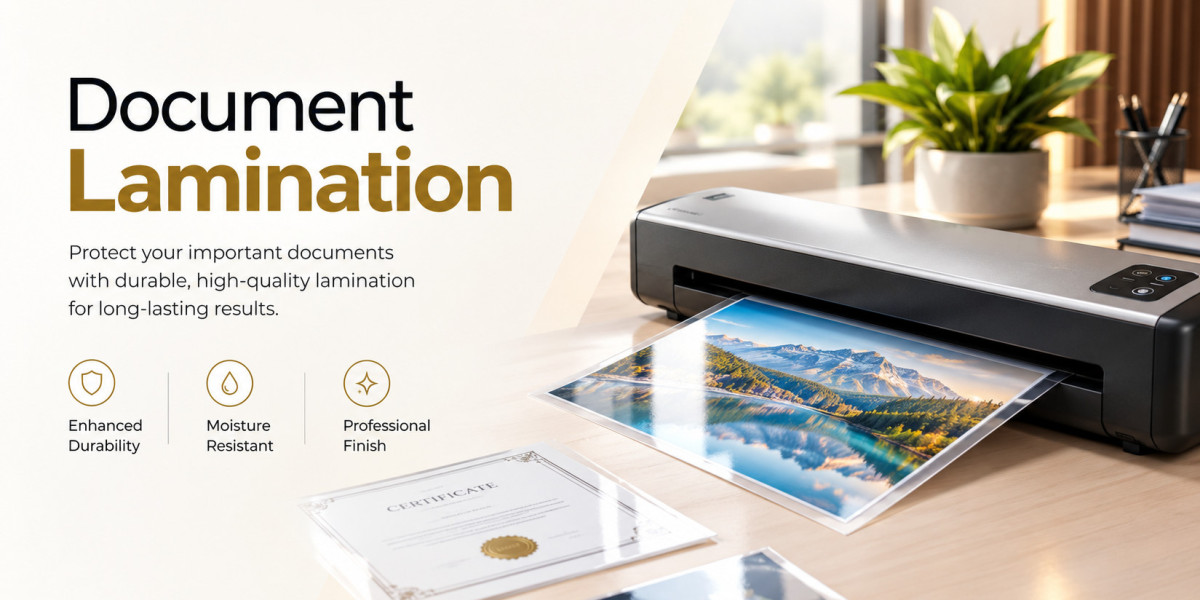

A printed piece can look perfect when it leaves the press and still lose that polished appearance surprisingly quickly. Frequent handling, fingerprints, spilled drinks, moisture, dirty work surfaces, bent corners, and repeated cleaning can turn an otherwise professional document into something that looks tired long before its information becomes outdated.
We often see businesses focus heavily on paper stock, color accuracy, and design while overlooking what happens after someone starts using the finished piece. Document Lamination adds a protective layer that can help printed materials handle daily use more effectively while keeping text, graphics, and important information easier to preserve.
The right lamination choice depends on much more than appearance. We look at how often people will touch the material, where they will use it, whether it faces moisture or dirt, how long it needs to remain in service, and whether users need to write on it, clean it, display it, or carry it regularly.
How Document Lamination Protects Printed Materials From Daily Wear
Printed documents face more physical stress than many businesses expect. A sheet that stays inside a file cabinet may remain clean for years, while a menu, instruction card, sign, checklist, or training sheet may pass through dozens of hands in a single day.
Lamination creates a barrier between the printed surface and that everyday contact. It does not make a document indestructible, but it can reduce the direct wear that paper and toner or ink receive during normal handling.
It Helps Reduce Fingerprints And Surface Marks
Frequently handled pieces quickly collect fingerprints, oils, dust, and small stains. Dark backgrounds and solid-color areas often show those marks more clearly than light designs.
A laminated surface makes routine cleaning easier because the user can wipe the protective film instead of rubbing directly against the printed sheet. That matters for menus, instruction cards, reference sheets, price lists, and other materials that several people handle throughout the day.
We still recommend choosing the finish carefully. Some glossy surfaces show fingerprints more readily than matte options, even though both finishes add physical protection.
It Helps Protect Corners And Edges
Paper corners often show the first signs of wear. People bend them while turning pages, catch them on bags or folders, and crease them when moving documents between workstations.
Lamination adds stiffness and surface support around the sheet. When production includes an appropriate sealed edge, the film also helps protect the paper perimeter from fraying and repeated contact.
The benefit becomes especially noticeable with single-sheet reference materials that stay in regular circulation.
Lamination Helps Protect Documents From Moisture And Spills
Water causes immediate problems for unprotected paper. Even a small spill can create waves, discoloration, ink damage, weakened fibers, or permanently curled edges.
Businesses that use printed materials near food, beverages, cleaning areas, outdoor spaces, workshops, medical environments, or reception desks should consider how likely those pieces are to encounter moisture.
Laminated Surfaces Handle Routine Wiping Better
Restaurants provide an obvious example. Staff frequently need to wipe menus after customers use them, and an untreated paper menu would not tolerate that routine for long.
The same logic applies to workshop instructions, classroom materials, hotel information sheets, cleaning checklists, training cards, and operating guides. Lamination allows staff to clean the surface more easily without repeatedly exposing the paper itself to moisture.
That does not mean every laminated piece becomes completely waterproof. Edge construction, cuts, holes, film type, and finishing method all influence how well the material resists water.
Sealed Edges Matter Around Wet Environments
When moisture protection represents a major goal, we pay close attention to the film extending beyond the paper edge.
A completely flush cut can expose the paper at the perimeter. Water may eventually work its way between the layers if the piece spends enough time in damp conditions.
Leaving a suitable sealed border can provide better protection for materials used near pools, kitchens, outdoor stations, cleaning areas, or other moisture-prone environments.
Lamination Adds Useful Strength Without Changing The Information
Sometimes businesses replace damaged sheets repeatedly when the information itself has not changed. The problem comes from the physical material, not the content.
Lamination can extend the useful life of those pieces by adding stiffness and reducing direct wear. That becomes valuable when a business needs the same instructions, diagrams, rules, schedules, or reference information for months at a time.
Thin Paper Can Become Easier To Handle
Standard paper works well for many office documents, but frequent use can make it curl, fold, or tear.
A suitable film can make a single sheet feel more substantial without requiring extremely heavy paper. Users may find the finished piece easier to pick up, place on a counter, move between stations, or store with other materials.
We still choose the underlying paper with care because lamination cannot solve every structural problem. A poorly printed or damaged sheet will not suddenly become a high-quality product simply because film covers it.
Reusable Materials Benefit Most
The longer a printed piece needs to remain in circulation, the stronger the case for added protection.
Training guides, emergency instructions, equipment procedures, cleaning schedules, price lists, identification cards, reference charts, and frequently used signs often justify lamination more easily than short-term flyers.
We recommend comparing the expected service life with the finishing cost rather than treating lamination as an automatic upgrade.
Lamination Can Preserve Print Appearance Over Time
Surface wear changes more than paper condition. Scratches, scuffs, rubbing, and repeated handling can also damage the visual quality of the printed image.
Strong colors may lose their clean appearance when the surface picks up abrasion. Large dark areas often make small scratches even more noticeable.
Protective Film Takes The First Contact
Once we laminate the piece, the film receives much of the routine physical contact instead of the printed surface underneath.
That can help preserve photographs, graphics, logos, text, and brand colors during normal handling. The protection matters particularly when the printed piece represents the company in front of customers.
A worn menu, counter card, presentation cover, or product guide can affect the overall impression even when every word remains readable.
Scratch Resistance Depends On The Film
Not every laminate responds to abrasion in the same way.
Some applications need more resistance to visible scuffs, especially dark printed surfaces, premium cards, presentation pieces, and materials that rub against other objects. Our anti-scratch lamination guide explains why finish selection matters when surface scuffing creates a concern.
We recommend discussing the actual use environment rather than simply asking for “lamination” as though every film produces the same result.
Gloss Lamination Changes Both Protection And Appearance
Gloss film creates a smooth, reflective surface that can make colors appear more vivid and increase visual contrast.
That finish often works well for pieces where photography, bright graphics, product imagery, or bold colors play an important role. The glossy layer also gives the surface a noticeably finished look.
Gloss Works Well For Visual Impact
Brochures, presentation covers, display cards, menus, educational graphics, and promotional materials may benefit from the extra vibrancy that gloss creates.
We often see the strongest visual effect on saturated colors and photography. The reflected light can make those elements feel brighter and more pronounced.
However, the same reflection can create glare under strong lighting, so gloss does not suit every reading environment.
High-Touch Surfaces Need Practical Consideration
Gloss surfaces can show fingerprints and certain surface marks more clearly than matte finishes.
For items that users constantly handle under bright lighting, we consider both visual impact and maintenance. A finish that looks impressive on a sample may behave differently after dozens of people touch it.
The best choice balances appearance with actual use.
Matte Lamination Creates A Softer, Lower-Glare Finish
Matte lamination produces a quieter visual surface. It reduces strong reflections and often gives printed materials a more subdued, refined appearance.
Businesses frequently choose matte when readability, presentation, or understated styling matters more than maximum color shine.
Matte Can Improve Reading Comfort
Strong overhead lighting can create reflections on glossy materials. Those reflections may interfere with reading depending on the angle.
Matte film reduces much of that glare, which can help with informational documents, presentation materials, menus, instructional pieces, and items that people need to read for longer periods.
The printed colors may appear slightly less vibrant than under gloss, but many designs benefit from the softer effect.
Matte Surfaces Still Need Appropriate Care
People sometimes assume matte lamination cannot scratch because it does not shine.
That assumption creates problems. Standard matte film can still show rubbing or scuffing, especially on dark backgrounds and frequently handled items.
If surface abrasion represents a major concern, we evaluate films specifically designed for better scratch resistance rather than relying on finish name alone.
Lamination Works Well For Important Documents That Need Handling
Not every important document belongs permanently inside a frame or archive box.
Businesses often need working copies of certificates, licenses, reference documents, identification materials, emergency information, instructions, and frequently consulted records.
Lamination can protect working copies while making them easier to handle in day-to-day situations.
Preserve Originals Before Laminating Irreplaceable Documents
We urge clients to think carefully before laminating unique historical, legal, collectible, or irreplaceable originals.
Some archival and conservation contexts require different preservation methods. Lamination can become difficult or impossible to reverse without damaging the paper.
When a document has permanent historical, legal, or sentimental value, creating a high-quality copy and laminating the copy may make more sense than altering the original.
Working Copies Often Make Better Candidates
A frequently handled copy of an instruction sheet or certificate faces a very different requirement from an archival original.
Businesses can keep the original safely stored while using a protected laminated reproduction for display or routine reference.
That approach separates preservation from everyday use and can prevent unnecessary damage to the source document.
Lamination Supports Better Use In Work Environments
Printed materials often fail because designers think about how they look on screen rather than how people will physically use them.
A warehouse employee, restaurant worker, technician, teacher, healthcare worker, or receptionist may need to touch the same document repeatedly while performing another task.
Lamination can turn a disposable-looking sheet into a more practical working tool.
Checklists Can Last Through Repeated Use
Cleaning checklists, opening procedures, maintenance schedules, and task instructions often receive heavy handling.
A laminated version can remain usable longer and, with the appropriate surface and marker, may support temporary writing that staff can wipe away later.
We recommend testing marker compatibility before producing large quantities because different films and writing tools behave differently.
Instructions Stay Easier To Keep Near Equipment
Machinery instructions and process guides often need to remain close to the area where employees use them.
Unprotected paper may absorb grease, dust, moisture, or other contaminants. A laminated surface helps isolate the printed information from some of that exposure and makes routine cleaning simpler.
Businesses should still follow all safety and regulatory requirements when deciding how and where to display instructions.
Restaurants And Hospitality Businesses Use Lamination For Practical Reasons
Hospitality environments combine constant handling with spills, cleaning, and frequent customer interaction.
Menus provide the most familiar example, but hotels, cafés, spas, event venues, and food-service operations use laminated pieces in many other ways.
Menus Need To Survive More Than Reading
A menu moves between tables, servers, storage areas, and cleaning stations throughout the day.
Without protection, corners bend, surfaces stain, and printed areas show wear quickly. Lamination can reduce those problems while making cleaning more practical.
The right finish depends on lighting, menu design, frequency of updates, and the visual experience the business wants to create.
Guest Information Needs A Clean Appearance
Hotel directories, spa instructions, pool rules, event guides, room information, and service cards often remain visible to customers for extended periods.
A damaged or stained piece can make an otherwise well-maintained environment feel less organized.
Lamination helps businesses maintain cleaner-looking printed information without constantly replacing the same material.
Educational Materials Gain Durability From Lamination
Teachers, trainers, tutors, childcare facilities, and educational organizations often reuse the same printed resources.
Flash cards, diagrams, instructional charts, worksheets, classroom signs, activity cards, and reference sheets can benefit from added surface protection.
Reusable Learning Materials Reduce Reprinting
A teacher may use the same visual aid across several classes or terms.
Laminating frequently reused materials can reduce the need to print another copy every time corners bend or the surface becomes dirty.
The economics make the most sense when the information stays relevant long enough to justify the finishing step.
Hands-On Materials Need Extra Protection
Children and group learning environments create heavy handling.
Cards move across desks, fall onto floors, pass between students, and sometimes encounter food or drinks. Lamination can help these materials tolerate that routine more effectively than plain paper.
Rounded corners may also improve handling comfort for certain applications.
Signs And Notices Benefit From Added Surface Protection
Indoor signs do not always need rigid plastic, metal, or permanent display systems.
Businesses often print temporary or semi-permanent notices, schedules, instructions, warnings, directional information, and event signage on paper or cardstock.
Lamination can add enough protection for many controlled environments without turning every sign into a permanent fixture.
Temporary Signs Can Still Look Professional
A short-term notice may remain visible for several weeks.
Without protection, humidity, handling, tape, dust, and cleaning can quickly make the sign look neglected. Lamination can help maintain a cleaner appearance through the full display period.
We still select the material according to location. Outdoor exposure, strong sunlight, rain, and wind may require more specialized substrates than laminated paper.
Frequently Updated Information Needs Cost Balance
Some businesses laminate information that changes every few days, then discard the entire piece.
That approach may create unnecessary finishing cost.
Before recommending lamination, we ask how often the content changes. A reusable holder, sleeve, rigid display, or dry-erase system may make more sense when updates happen frequently.
Lamination Thickness Affects Flexibility And Strength
Clients sometimes choose laminate thickness based only on the idea that thicker must mean better.
In reality, thickness changes the feel, stiffness, weight, and flexibility of the finished piece. The right choice depends on what the user needs the document to do.
Flexible Pieces Need Lighter Construction
Menus, presentation covers, instructional sheets, and materials that users need to turn or handle comfortably may benefit from a less rigid finish.
Too much stiffness can make large sheets awkward.
We evaluate both the film and paper together because their combined thickness creates the final physical feel.
Heavily Used Cards May Need More Support
Reference cards, ID-style pieces, tags, or frequently handled small-format materials may benefit from greater rigidity.
The goal does not involve making the item as thick as possible. It involves creating enough structure to support the intended use without making storage, carrying, or handling inconvenient.
Testing a sample often answers this question faster than comparing specifications alone.
Lamination Requires The Right File And Print Preparation
A protective finish cannot correct weak print production.
Low-resolution images, poor color choices, incorrect margins, misaligned text, or unfinished artwork remain visible after lamination. In some cases, the finish can make those defects even more noticeable.
We treat lamination as part of the full production workflow rather than a final step that operates independently from printing.
Finalize Content Before Finishing
Once a piece receives lamination, changing a phone number, price, date, or paragraph becomes much more difficult.
We encourage clients to complete a careful proofing process before production. Check spelling, dates, names, URLs, prices, contact details, and legal language at the final printed size.
A few extra minutes during proofing can prevent an entire laminated run from becoming unusable.
Allow For Trimming And Sealed Edges
Designers should understand whether the project needs film extending beyond the paper or a nearly flush finished edge.
That decision affects trim planning and the final dimensions.
When a sealed perimeter matters for moisture protection, production needs enough film outside the printed sheet to create that seal.
Common Lamination Mistakes Businesses Can Avoid
Most lamination problems do not come from the concept itself. They come from choosing the finish without considering how the printed material will function after production.
We see businesses choose glossy film because it looks bright on a sample, request extremely thick construction because they assume it lasts longer, or laminate information that changes too frequently to justify the cost.
Choosing Finish Only By Appearance
A finish should support both design and use.
Gloss may strengthen color impact, while matte may improve reading comfort under bright light. Anti-scratch options may make more sense for surfaces that regularly rub against other materials.
We recommend making the decision with an actual use case in mind.
Laminating Before Checking Final Copy
Production moves quickly when deadlines approach, and teams sometimes approve finishing before everyone completes the content review.
Once hundreds of laminated pieces exist, correcting one small typo becomes expensive.
We prefer a clear final approval step that covers both print and finishing.
Ignoring How Users Will Store The Piece
Laminated materials still need to fit inside folders, holders, drawers, binders, display stands, shipping boxes, or bags.
The added film and sealed edge can slightly change overall size and thickness.
A quick storage check before production can prevent surprisingly practical problems later.
How To Decide Whether A Printed Piece Needs Lamination
We start with four questions: How often will people handle it? What can damage it? How long must it remain useful? How often will the information change?
A piece that people handle daily for a year has a very different requirement from an event flyer that stays relevant for one weekend.
Consider Replacement Cost
If a business repeatedly reprints the same damaged piece, lamination may lower the practical replacement burden.
That does not mean every print project needs protective film. Short-life marketing pieces may work perfectly well without it.
We compare the cost of finishing against the expected service life and likelihood of damage.
Consider The Customer Experience
Protection also affects presentation.
Customers notice stained menus, curled information cards, scratched covers, and worn signage even when they do not consciously analyze the printing.
Keeping frequently viewed materials in better condition can support a cleaner and more organized physical environment.
A Practical Pre-Lamination Checklist
Before approving a job, we review the final size, paper stock, film type, finish, thickness, edge style, expected use, cleaning requirements, and production quantity.
We also check whether the user needs to write on the piece, fold it, punch holes in it, place it inside another holder, or expose it to moisture.
The best result comes from treating lamination as a functional production decision rather than simply adding a shiny or matte surface.
Frequently Asked Questions About Document Lamination
Does Lamination Make Paper Completely Waterproof?
Lamination can provide strong protection against routine moisture and spills, but the final level of water resistance depends on the film, sealed edges, trimming, holes, cuts, and overall construction. A flush-cut edge can expose the paper perimeter, while a properly sealed border can provide better moisture protection.
Is Matte Or Gloss Lamination Better For Documents?
Neither finish works best for every project. Gloss can make colors and photographs appear more vivid, while matte reduces glare and creates a softer appearance. We recommend choosing based on lighting, handling, readability, desired appearance, and the risk of visible fingerprints or scuffing.
Can You Write On Laminated Documents?
Certain pens and markers can write on some laminated surfaces, and dry-erase or wet-erase markers may suit reusable materials depending on the film. We recommend testing the exact marker and laminate combination before producing a large order because writing and cleaning performance can vary.
What Printed Materials Benefit Most From Lamination?
Frequently handled or long-life materials usually gain the most value. Menus, instruction sheets, reference cards, training materials, signs, educational resources, price lists, checklists, presentation covers, and working copies of important documents often benefit when durability and easy cleaning matter.
Conclusion
Lamination protects printed materials by placing a durable surface between the print and the conditions that cause everyday wear. It can help reduce damage from frequent handling, moisture, fingerprints, bent corners, dirt, and surface abrasion while giving many documents a cleaner and more finished appearance.
The most important decision involves matching the film to the way people will actually use the piece. We recommend considering handling frequency, moisture exposure, desired flexibility, surface finish, document lifespan, edge treatment, cleaning needs, and how often the information changes before selecting a lamination option.
At Laguna Digital, we look at lamination as part of the complete print-production decision rather than an automatic finishing upgrade. Before laminating an important document, menu, sign, card, or reference sheet, reviewing its real working environment can help determine the finish and construction that make the most practical sense.