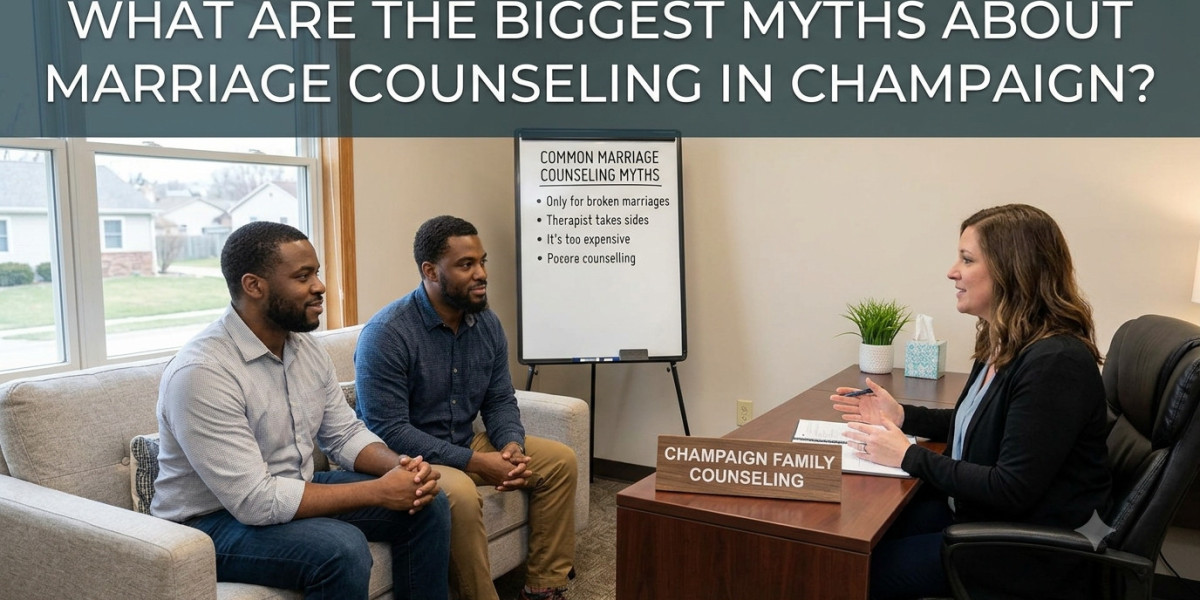

Navigating relationship challenges is a normal part of sharing a life with someone, yet when ongoing friction, silent treatment, or repeating arguments take over, many couples feel isolated and uncertain. While seeking professional help is a proactive step toward health and clarity, widespread misconceptions often hold people back. Perceptions that counseling is only a "last resort before divorce" or that a therapist will "take sides" create unnecessary hesitation. Engaging in specialized Marriage Counseling in Champaign provides couples with an evidence-based, compassionate space to unpack deep-seated issues, rebuild trust, and develop lifelong communication skills.
Debunking these common myths allows partners to approach therapy with realistic expectations, open minds, and reduced anxiety. Below, we examine and dismantle the biggest misconceptions surrounding relationship counseling, outline core therapeutic approaches, compare common assumptions with clinical realities, and provide practical steps for starting your journey in Central Illinois.
7 Major Myths About Marriage Counseling Debunked
To build a clear, realistic understanding of what relationship therapy actually involves, it is essential to dismantle the pervasive myths that frequently circulate in popular culture and everyday conversations.
Myth 1: "Therapy Is Only for Couples on the Verge of Divorce"
A very common assumption is that couples should only seek professional help when the relationship is completely falling apart or when legal separation is already being discussed.
The Reality: Waiting until a relationship is in critical condition makes healing significantly harder. Counseling is remarkably effective as a preventative tool. Many couples attend therapy to address minor communication hiccups, prepare for major life transitions (like having a baby or navigating career changes), or simply deepen their emotional intimacy.
The Impact: Seeking help early—when friction first starts—allows partners to build healthy habits before deep-seated resentment takes root.
Myth 2: "The Therapist Will Pick Sides and Decide Who Is Right"
Many individuals fear that entering a therapy room means facing a two-against-one scenario where the clinician acts as a judge, declaring one partner "wrong" and the other "right."
The Reality: Licensed marriage and family therapists view the relationship dynamic itself as the client, not either individual. A skilled clinician remains completely neutral, ensuring both partners feel equally heard, respected, and validated.
The Impact: Instead of assigning blame, the therapist helps both individuals identify how their mutual reactions create negative cycles, guiding them toward shared accountability.
Myth 3: "Marriage Counseling Is Just a Place to Vent and Fight"
Some fear that sessions will devolve into loud, unstructured shouting matches that leave everyone feeling worse than before they walked in.
The Reality: While emotional expression is a natural part of therapy, sessions are structured and guided by clear clinical goals. Therapists step in to interrupt destructive communication, reframe criticism, and guide partners toward vulnerable, productive dialogue.
The Impact: Therapy teaches you how to de-escalate tension so that discussions at home become calm, solution-focused, and meaningful.
Myth 4: "If We Need Therapy, It Means Our Relationship Is Weak"
Diet culture and social pressures often tell us that "good relationships should be easy" and that needing external support indicates failure.
The Reality: Every long-term partnership encounters complex stress, life shifts, and emotional hurdles. Recognizing when your current tools are no longer working and actively seeking expert guidance is a sign of bravery, commitment, and strength—not weakness.
The Impact: Approaching therapy as an active skill-building investment empowers couples to view challenges as opportunities for growth rather than proof of failure.
Myth 5: "Therapy Will Force Us to Stay Together Even If It Isn't Working"
A lingering misconception is that a relationship counselor's sole job is to keep a marriage intact regardless of safety, compatibility, or individual well-being.
The Reality: A therapist's goal is to foster clarity, health, and mutual respect. While saving the marriage is often the primary goal, therapy also provides a compassionate space for couples to realize if their paths are diverging.
The Impact: If partners ultimately decide to separate, therapy helps them uncouple amicably, minimize emotional harm, and build healthy co-parenting strategies for the future.
Myth 6: "Individual Therapy Can Easily Replace Couples Counseling"
Some believe that if both partners attend their own separate individual therapists, relationship problems will automatically resolve themselves.
The Reality: Individual therapy focuses primarily on one person's internal experience, personal goals, and self-advocacy. While valuable, individual care does not directly observe or treat the live, real-time communication patterns between partners.
The Impact: Conjoint couples counseling allows a clinician to observe live interactions, interrupt reactive loops, and guide real-time relational healing in a way individual sessions cannot replicate.
Myth 7: "Counseling Takes Years to See Any Real Progress"
It is easy to assume that entering therapy means committing to an endless, multi-year process with no clear endpoint in sight.
The Reality: Modern relationship therapies are goal-oriented and focused on actionable change. Many couples experience noticeable improvements in communication, de-escalation, and emotional connection within 8 to 12 structured sessions.
The Impact: Focusing on clear, measurable goals helps couples build practical tools they can carry forward independently long after formal sessions end.
Proven Therapeutic Frameworks Used in Relationship Care
Specialized clinicians draw from research-backed clinical models to guide couples out of chronic conflict and into lasting connection:
Emotionally Focused Therapy (EFT)
Based on human attachment theory, EFT helps partners identify the underlying emotional needs beneath their arguments. Instead of focusing solely on surface topics (like chores or schedules), EFT helps partners express core feelings of insecurity, fear, or loneliness, transforming destructive argument cycles into moments of deep emotional bonding.
The Gottman Method
Developed through decades of empirical research with thousands of couples, the Gottman Method provides practical, structured tools to manage conflict, deepen friendship, and create shared meaning. It focuses heavily on eliminating the "Four Horsemen" of relationship decline: criticism, contempt, defensiveness, and stonewalling.
Imago Relationship Therapy
Imago therapy explores how childhood experiences and early caregiver dynamics shape an individual's adult relationship patterns. By understanding how past emotional wounds influence current reactions, partners cultivate empathy, break reactive loops, and build conscious, compassionate partnerships.
Assumptions vs. Clinical Reality: A Clear Comparison
To understand how popular assumptions contrast with actual clinical practice, review the breakdown below:
Feature / Dimension | Common Misconception | Clinical Reality in Therapy | Long-Term Relationship Impact |
Primary Focus | Assigning blame and proving who is right or wrong. | Identifying the negative communication loop as the common enemy. | Replaces finger-pointing with collaborative problem-solving. |
Therapist Role | A judge who makes decisions for the couple. | An objective facilitator and expert communication coach. | Empowers partners to make their own informed choices. |
Session Atmosphere | An unstructured, chaotic space to air grievances. | A safe, structured environment with active de-escalation. | Reduces daily relationship anxiety and household stress. |
Timing of Care | A desperate, last-ditch effort right before filing for divorce. | A proactive tool for skill-building, maintenance, and growth. | Prevents minor friction from turning into severe resentment. |
Core Goal | Forcing two people to stay together at all costs. | Cultivating health, clarity, mutual respect, and emotional connection. | Restores genuine emotional intimacy or provides peaceful clarity. |
Practical Action Steps for Champaign-Urbana Couples
If you and your partner are ready to explore counseling in Central Illinois, these practical steps can make starting therapy smooth and productive:
1. Establish Shared Goals Before Your First Session
Take a few quiet minutes together to discuss what you hope to achieve. Frame your goals around positive growth rather than listing grievances:
Instead of "I want my partner to stop nagging," try framing it as "We want to learn how to discuss household tasks without getting defensive."
2. Practice the "5-to-1" Positive Interaction Ratio
Research shows that stable relationships require at least five positive interactions for every single negative one during conflict. Practice incorporating small expressions of gratitude, physical affection, or verbal appreciation into your daily routine at home to build an emotional buffer.
Frequently Asked Questions
How do we choose the right relationship therapist in Champaign?
Look for a licensed clinician (LMFT, LCSW, or LCPC) who specializes specifically in couples therapy and utilizes evidence-based models like Gottman Method or EFT. Ensure both partners feel respected, comfortable, and heard during the initial consultation.
What should we do if my partner refuses to attend counseling?
You can begin by attending individual therapy or seeking discernment guidance on your own. Changing your own communication habits, emotional regulation, and boundary setting often creates a positive shift in the relationship dynamic, which frequently encourages a hesitant partner to join later.
Is couples counseling covered by health insurance in Central Illinois?
Coverage varies based on your specific insurance provider and policy details. While many health insurance plans cover individual mental health treatment, conjoint couples counseling is evaluated differently. It is advisable to consult your insurance representative and local clinic billing office directly to verify your coverage and out-of-pocket options.
How long do we need to stay in therapy before seeing results?
While every couple's situation is unique, many partners report an initial reduction in argument intensity and increased clarity within 6 to 12 sessions. Resolving complex betrayals or years of accumulated emotional distance may require several months of consistent work.
Can therapy help if we are dealing with high-stress academic or professional schedules?
Yes. Counselors in the Champaign-Urbana area frequently work with couples navigating demanding professional shifts, tenure tracks, and busy household schedules. Therapy provides time-efficient, practical tools to help you stay connected even during high-stress periods.
Building a Stronger Future Together
Dismantling the pervasive myths surrounding relationship therapy allows you to view seeking help for what it truly is: a brave, proactive investment in your shared health and happiness. You do not need to wait for a major crisis or live in constant friction to deserve dedicated support, understanding, and expert guidance.
By addressing communication barriers early, unlearning reactive habits, and cultivating mutual empathy, you and your partner can build a resilient, deeply fulfilling bond that withstands life's challenges.
At Insight Therapy LLC, our experienced clinical team is dedicated to providing compassionate, evidence-based care tailored to your unique relationship needs. Whether you are seeking to resolve long-standing conflicts, deepen emotional intimacy, or navigate major life transitions, we offer a neutral, supportive space where both partners feel heard and valued. Contact Insight Therapy LLC today to schedule a consultation and take the first step toward a stronger, healthier partnership.