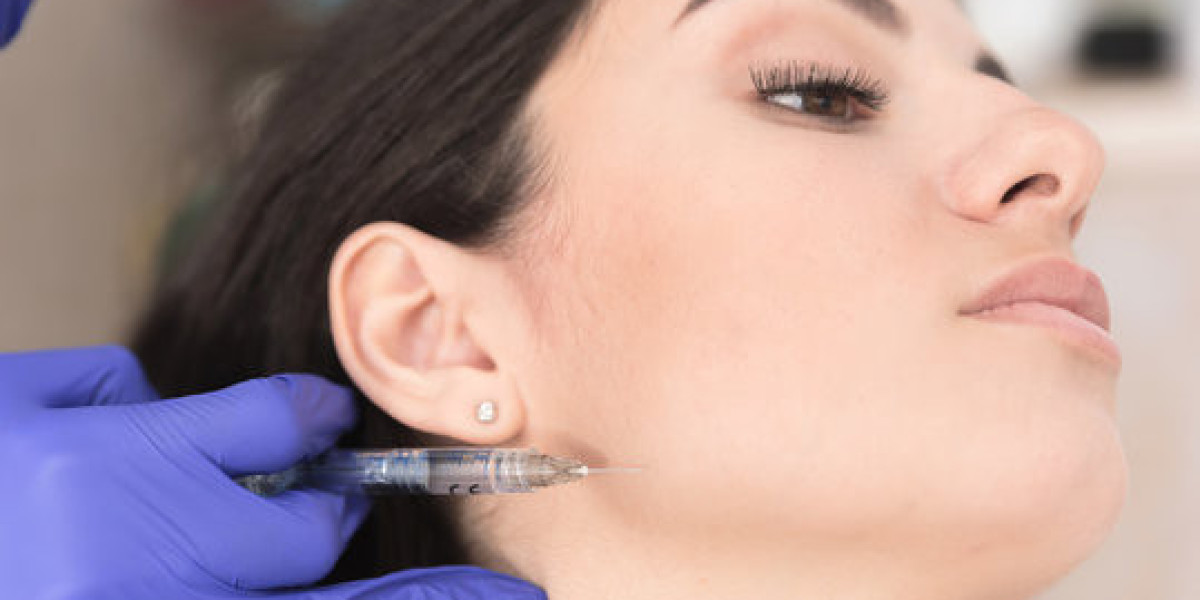

Facial Botox injections in Dubai can be used for more than traditional forehead or facial-line concerns. In selected cases, Botox may be considered for the masseter muscles, which are located at the sides of the jaw and play an important role in chewing. Temporarily reducing excessive activity in these muscles can create a softer or more refined lower-face appearance for suitable individuals.
What Are the Masseter Muscles?
The masseter muscles are powerful muscles located near the back of the cheeks and jaw.
They help with chewing and become active when you clench your teeth or bite down.
Some people naturally have stronger or more developed masseter muscles. This can contribute to a wider or more angular lower-face appearance.
When muscle bulk is a significant contributor to facial width, reducing activity may influence the contour over time.
Facial Botox Injections in Dubai for the Lower Face
Traditional facial Botox is often associated with expression lines, but treatment can also target specific muscles outside the upper face.
The masseter region is one example.
Rather than filling or surgically reshaping the jaw, Botox works by temporarily reducing selected muscle activity.
As the treated muscle becomes less active, its bulk may gradually decrease, potentially creating a narrower-looking lower face.
Who May Consider Masseter Botox?
People with prominent masseter muscles may consider this approach when they want a softer lower-face contour without surgery.
The treatment may be particularly relevant when facial width is influenced substantially by muscle development rather than bone structure or excess tissue.
However, not every broad jaw is caused by the masseter muscles.
Understanding the source of facial width is therefore an important part of deciding whether this approach is appropriate.
Muscle-Related Jaw Width Versus Bone Structure
Facial width can result from different anatomical factors.
A wider jaw may be influenced by the shape of the underlying bone, muscle size, facial fat distribution, or a combination of these features.
Botox affects muscle activity but does not reshape the jawbone.
This means the treatment is more relevant when enlarged muscle bulk is contributing significantly to the appearance.
How Clenching Can Affect the Jaw Muscles
Frequent clenching can keep the masseter muscles highly active.
Over time, repeated contraction may contribute to increased muscle development in some individuals.
People may notice a firmer or more prominent area near the angle of the jaw when they clench their teeth.
Aesthetic treatment targeting muscle activity may be considered in selected cases where this contributes to facial bulk.
Jawline Refinement Without Surgery
Some people want a more tapered facial appearance but do not want surgical contouring.
Masseter Botox offers a non-surgical approach because it does not involve cutting or reshaping the jawbone.
The effect comes from changing muscle activity rather than physically removing tissue.
This makes it fundamentally different from surgical jaw-contouring procedures.
How the Contour Changes Gradually
Masseter Botox does not instantly make the jaw look narrower.
The treatment first reduces activity in the targeted muscles.
Over time, decreased use can lead to a gradual reduction in muscle bulk.
Because this process develops progressively, changes in facial contour are generally evaluated over a period rather than immediately after the injections.
Why the Result Can Look Subtle
The objective is not necessarily to create a dramatically narrow face.
A moderate reduction in masseter prominence may produce a more balanced or tapered appearance while preserving the individual's facial identity.
The degree of visible change depends on how much muscle contributes to the original facial width.
People with primarily structural jaw width may see less contour change.
Facial Proportions Matter
A person's jaw should be considered in relation to the rest of the face.
Cheek width, chin shape, facial length, and overall proportions can influence whether a narrower lower face looks balanced.
Reducing masseter bulk without considering these relationships may not produce the desired aesthetic effect.
Facial contouring should therefore be approached as a matter of overall proportion rather than jaw width alone.
What Happens During Masseter Treatment?
Small injections are placed into the targeted masseter muscles.
The exact treatment points depend on the individual's muscle position, strength, and facial anatomy.
Because the injections are localized, the treatment does not require surgical incisions.
Temporary tenderness, redness, or swelling can occur around injection sites.
What to Expect After Treatment
The lower face generally does not change dramatically immediately after treatment.
The muscles gradually become less active, and the contour may change as muscle bulk decreases.
This gradual process is one reason why patience is important when evaluating the aesthetic outcome.
Individual responses can vary depending on muscle size, activity level, and other anatomical factors.
How Long Can the Effect Last?
The muscle-relaxing effect of Botox is temporary.
As normal muscle activity returns, the masseter muscles may gradually regain their previous level of activity.
The visible duration of contour improvement varies between individuals.
Factors such as muscle strength, chewing habits, metabolism, and individual response can influence how long the effect remains noticeable.
Does Masseter Botox Change the Bone?
No.
Botox does not reshape or reduce the jawbone.
Its effect is limited to the targeted muscle activity.
This distinction is important for anyone expecting a permanent structural change in the lower face.
If the desired result requires alteration of bone structure, a muscle-relaxing treatment would not provide that type of change.
Can It Affect Facial Expression?
The masseter muscles primarily support chewing rather than the expressive movements of the forehead or eye area.
However, the lower face contains many interconnected structures, so treatment should still be planned carefully.
The objective is to reduce excessive muscle bulk while maintaining normal facial function.
Individual anatomy plays an important role in achieving a balanced result.
Why the Amount of Treatment Matters
More Botox does not automatically mean a better contour.
The appropriate approach depends on muscle size and the desired degree of refinement.
Excessive reduction of muscle activity may produce unwanted functional or aesthetic changes.
A measured strategy can focus on achieving the desired contour while respecting the muscle's role in everyday jaw movement.
Maintaining a Refined Lower-Face Appearance
Because the effect is temporary, future treatment may be considered if muscle activity and bulk become noticeable again.
However, maintenance should be based on the individual's current appearance and goals.
There is no need to assume that exactly the same approach will always be required.
Facial proportions and aesthetic preferences can change over time.
When Masseter Botox May Not Be Suitable
If facial width is primarily caused by bone structure, significant soft tissue, or another anatomical factor, Botox may provide limited contouring benefit.
Likewise, sudden jaw changes, significant pain, or functional problems should not be approached solely as cosmetic concerns.
Aesthetic treatment is most relevant when muscle activity is an important contributor to the desired change.
Final Thoughts
Facial Botox injections in Dubai can also be considered for masseter muscle activity when prominent jaw muscles contribute to a wider-looking lower face. By temporarily reducing selected muscle activity, treatment may gradually create a softer or more refined facial contour without surgical jaw reshaping. The outcome depends heavily on individual anatomy and whether muscle bulk is actually responsible for facial width. For those exploring non-surgical jawline refinement, TAJMEELS CLINIC can be considered when evaluating suitable facial aesthetic options.