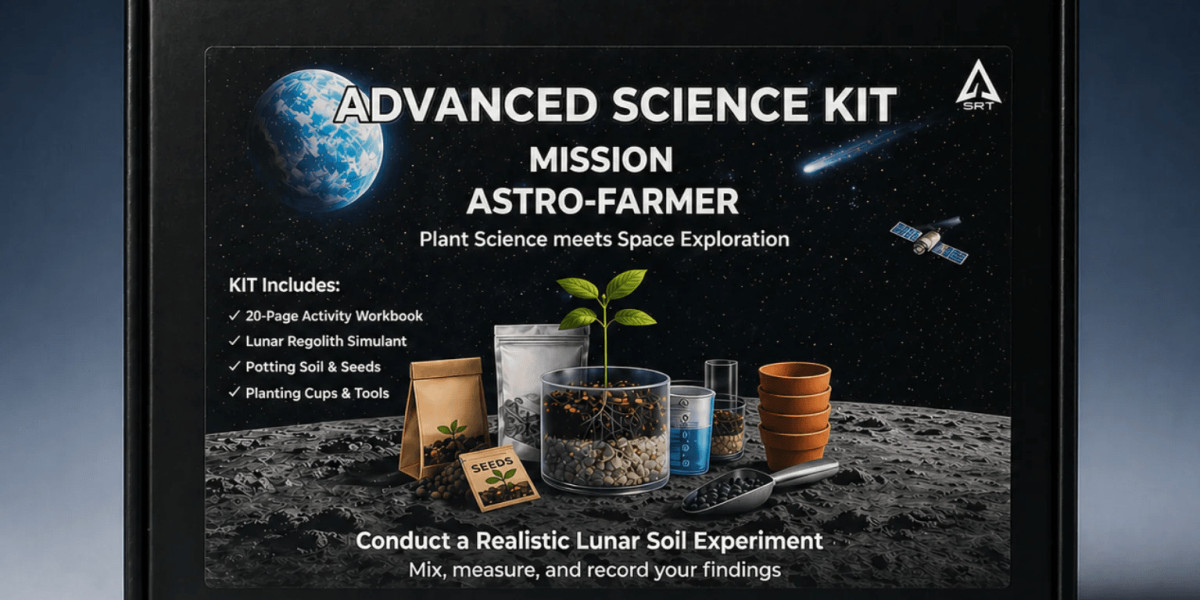

Not every science activity needs to be part of a formal science fair or classroom assignment. Sometimes the goal is simply to spark curiosity on a rainy afternoon, and a STEM Space kit is perfect for exactly that kind of casual, hands-on exploration. Here are seven experiments families can try together using simulated moon soil, most requiring less than thirty minutes to complete.
1. The Texture Detective Challenge
Give your child a magnifying glass and ask them to describe the moon soil's texture compared to backyard dirt, sand, or potting soil. This simple observation activity builds descriptive vocabulary and gets kids comfortable handling the material before moving into more structured testing.
2. Sink or Float Water Test
Drop small amounts of moon soil simulant into a clear glass of water and observe what happens. Does it sink immediately, float briefly, or create cloudy sediment? Recording observations over several minutes teaches basic density concepts in a visually engaging way that younger kids especially enjoy.
3. Magnet Mineral Hunt
Many soil simulants contain trace amounts of iron-rich minerals. Running a strong magnet through a sample and observing what sticks introduces basic mineralogy concepts while feeling more like a treasure hunt than a formal experiment.
4. Build a Mini Moon Base Model
After testing the soil's properties, challenge kids to sketch or build a small model of what a lunar habitat might look like, using their experiment data to justify design choices. For example, if their water absorption test showed low retention, they might explain why astronauts would need to bring or extract water separately.
5. Compare Two Worlds Side-by-Side
If your STEM Science kit includes both lunar and Martian soil simulant, set up a side-by-side comparison table testing color, texture, and weight. Kids are often surprised by how different two "space soils" can be, which opens up great conversation about how each planet formed differently.
6. Sunlight Reflection Test
On a sunny day, place small samples of moon soil simulant and regular garden soil side by side outdoors and observe which one feels warmer after ten minutes in direct sunlight. This introduces the concept of albedo, or how much light a surface reflects versus absorbs, in a simple and safe way.
7. Create a Family Science Journal
Rather than treating each experiment as a one-off activity, encourage kids to keep a simple journal recording what they tested, what they observed, and what questions came up along the way. Over several weeks, this journal becomes a genuine record of scientific thinking and makes a great keepsake to look back on.
Tips for Making Experiments More Engaging
Turning results into a simple chart or drawing, rather than just writing numbers, helps younger children process what they've learned. Asking open-ended questions like "why do you think that happened?" instead of immediately explaining the science yourself also encourages independent critical thinking.
Adapting Activities for Different Age Groups
Preschool and early elementary children can focus entirely on sensory observation activities like the texture challenge and sink-or-float test. Upper elementary and middle schoolers can move into measurement-based activities like the sunlight reflection test, while older kids can be encouraged to design their own follow-up experiment based on something unexpected they noticed.
Turning Casual Play Into Deeper Learning
If a particular activity sparks strong interest, it's worth extending it into a more structured mini-project. A child fascinated by the magnet mineral hunt, for example, might enjoy researching what specific minerals are found in real lunar samples and why scientists are interested in extracting them for future missions.
Turning a Rainy Afternoon Into a Mini Science Camp
If you have a free weekend, consider stringing several of these activities together into a self-guided "space camp" experience at home. Starting with the texture detective challenge in the morning, moving into the sink-or-float test after lunch, and finishing with the mini moon base design activity in the afternoon gives kids a full day of varied, hands-on learning without ever feeling repetitive.
Involving Friends for a Playdate With Purpose
These activities also work wonderfully for playdates or small group gatherings. Setting up two or three stations, each focused on a different experiment, allows small groups of kids to rotate through activities together, comparing observations and turning what could be a solitary project into a genuinely social science experience.
Keeping the Excitement Going Beyond One Session
If a particular activity sparks strong interest, consider revisiting it a few weeks later with a slight variation, such as testing a different soil comparison or trying the same experiment with a new prediction. Repetition with small changes reinforces learning far more effectively than doing an activity once and moving on permanently.
Final Thoughts
Science doesn't always need to be formal to be valuable. These seven activities offer low-pressure, genuinely fun ways to explore space science at home, while still building real scientific thinking skills. Keeping a kit on hand for random afternoons, rather than saving it exclusively for big projects, often leads to some of the most memorable learning moments.