
In today's competitive business environment, attracting prospects is only one part of the growth equation. The real challenge lies in guiding potential buyers through a structured journey that builds trust, answers questions, and encourages confident purchasing decisions. This is where digital sales funnels become an essential part of every successful marketing strategy.
Unlike traditional sales methods that often rely on cold outreach and manual follow ups, digital sales funnels create a systematic process for engaging prospects at every stage of the buyer journey. They help businesses generate qualified leads, improve conversion rates, and build long term customer relationships while making sales and marketing efforts more efficient.
As buying behaviour continues to evolve, organisations that invest in well designed digital sales funnels are better positioned to achieve consistent and scalable growth.
What Is a Digital Sales Funnel?
A digital sales funnel is a structured online process that moves potential customers from initial awareness to becoming paying clients. Each stage of the funnel is designed to provide relevant information, address concerns, and encourage prospects to take the next step.
For organisations, purchasing decisions are often complex and involve multiple stakeholders. A digital sales funnel ensures that every interaction delivers value while helping prospects gain confidence in your products or services.
Rather than focusing solely on closing sales, an effective funnel builds relationships and establishes credibility throughout the buying journey.
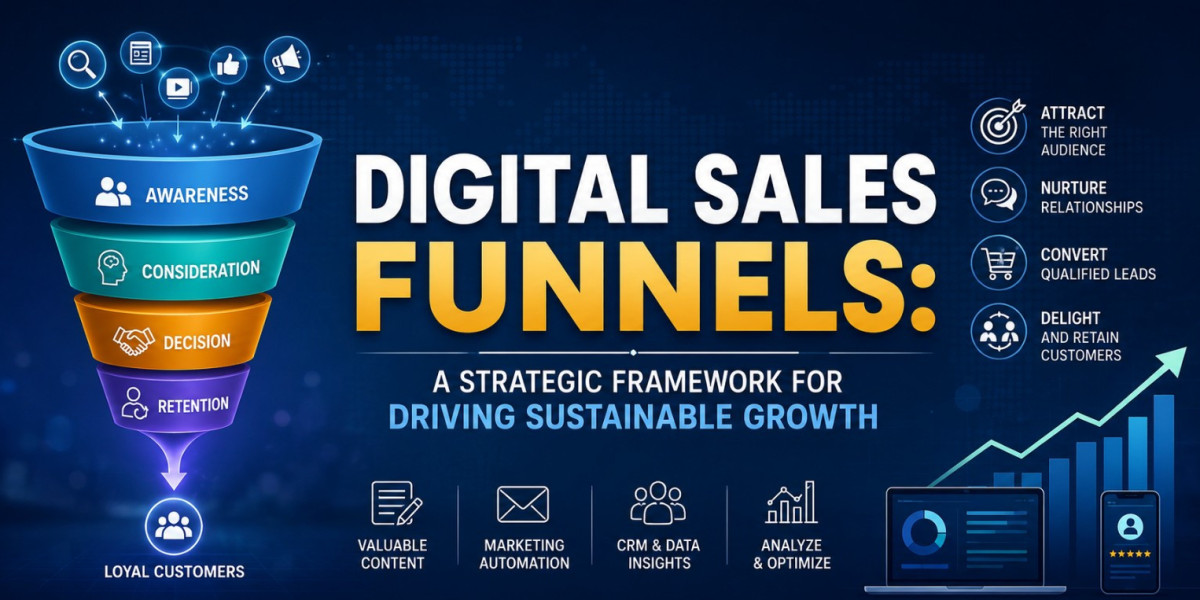
The Core Stages of a Digital Sales Funnel
Understanding each stage of the funnel helps businesses create content and campaigns that align with customer needs.
Awareness
The awareness stage introduces your business to potential customers who may not yet know about your solutions. Search engine optimization, educational blog articles, industry reports, webinars, and social media content are commonly used to increase visibility.
The objective is to attract the right audience by addressing their challenges and demonstrating expertise.
Consideration
Once prospects become aware of your business, they begin evaluating available solutions. During this stage, they compare providers, research features, and seek evidence that a company understands their specific needs.
Case studies, white papers, comparison guides, email campaigns, and product demonstrations help prospects make informed decisions while strengthening trust.
Decision
The decision stage focuses on converting qualified leads into customers. At this point, buyers require reassurance that your solution delivers measurable value.
Clear pricing information, testimonials, personalised consultations, free trials, and detailed proposals can reduce uncertainty and encourage purchasing decisions.
Retention
The customer journey does not end after the first sale. Strong digital sales funnels include strategies for customer retention through onboarding, ongoing support, educational resources, and regular communication.
Satisfied customers often become repeat buyers and valuable advocates for your brand.
Why Digital Sales Funnels Matter for Companies
Business purchasing decisions typically involve longer sales cycles than consumer purchases. Decision makers conduct extensive research before engaging with suppliers, making digital engagement more important than ever.
A well structured digital sales funnel offers several business advantages.
It improves lead quality by attracting prospects who match your ideal customer profile.
It supports consistent communication throughout the buying process, ensuring potential customers receive relevant information when they need it most.
It enables marketing and sales teams to work together more effectively by providing greater visibility into buyer behaviour and lead readiness.
Most importantly, it creates a repeatable process that can scale as the business grows.
Essential Elements of a High Performing Digital Sales Funnel
Creating an effective funnel requires more than simply collecting leads. Every component should contribute to moving prospects closer to a purchasing decision.
High quality content remains one of the most valuable assets within any digital sales funnel. Educational articles, industry insights, videos, and downloadable resources establish authority while addressing common customer concerns.
Landing pages should present a clear message with a focused call to action. Simplicity often improves conversion rates by reducing distractions.
Marketing automation also plays a significant role. Automated email sequences allow businesses to nurture leads consistently without requiring manual follow up for every interaction.
Customer relationship management platforms provide valuable data that helps sales teams prioritise opportunities and personalise conversations based on prospect behaviour.
Analytics complete the process by revealing where visitors enter, engage, or exit the funnel. Continuous measurement enables businesses to identify opportunities for improvement and optimise conversion performance over time.
Common Mistakes That Reduce Funnel Performance
Many organisations invest heavily in generating traffic but overlook the importance of the overall customer journey.
One common mistake is creating content that focuses exclusively on products instead of solving customer problems. Buyers respond more positively to educational information that addresses their business challenges.
Another issue is failing to qualify leads effectively. Not every visitor is ready to purchase, making lead nurturing an important part of the sales process.
Poor follow up timing can also result in lost opportunities. Businesses that respond quickly to enquiries are more likely to maintain prospect interest and build momentum.
Finally, neglecting ongoing optimisation limits long term success. Digital sales funnels should evolve alongside changing customer expectations, market conditions, and business objectives.
Best Practices for Long Term Success
Successful organisations view digital sales funnels as living systems rather than one time projects.
Regularly updating content ensures that information remains relevant and valuable to target audiences.
Personalisation can significantly improve engagement by delivering content that reflects each prospect's interests, industry, or stage in the buying process.
Strong collaboration between marketing and sales teams creates a seamless customer experience while improving lead quality and conversion rates.
Businesses should also establish clear performance indicators such as lead generation, conversion rates, customer acquisition cost, and customer lifetime value to measure success accurately.
Continuous testing and refinement allow organisations to improve results while adapting to changing buyer expectations.
Conclusion
Digital sales funnels have become a fundamental component of successful growth strategies. They provide a structured framework for attracting qualified prospects, nurturing relationships, and converting leads into loyal customers through meaningful and timely engagement.
By combining valuable content, marketing automation, data driven insights, and customer focused communication, businesses can create predictable sales processes that support long term growth. As digital competition continues to increase, organisations that invest in optimising their sales funnels will be better equipped to build stronger customer relationships and achieve sustainable business success.
Frequently Asked Questions
What is the primary purpose of a digital sales funnel?
A digital sales funnel guides potential customers through each stage of the buying journey, helping businesses generate qualified leads, improve conversions, and increase customer retention.
How does a digital sales funnel benefit companies?
It streamlines the buying process, nurtures prospects with relevant content, improves collaboration between marketing and sales teams, and supports consistent revenue growth.
Which channels are commonly used in digital sales funnels?
Businesses often use search engine optimization, content marketing, email marketing, webinars, social media, paid advertising, and customer relationship management systems to engage prospects throughout the funnel.
How often should a digital sales funnel be optimised?
Digital sales funnels should be reviewed regularly using performance data. Continuous optimization helps improve conversion rates, enhance customer experience, and adapt to evolving market trends.