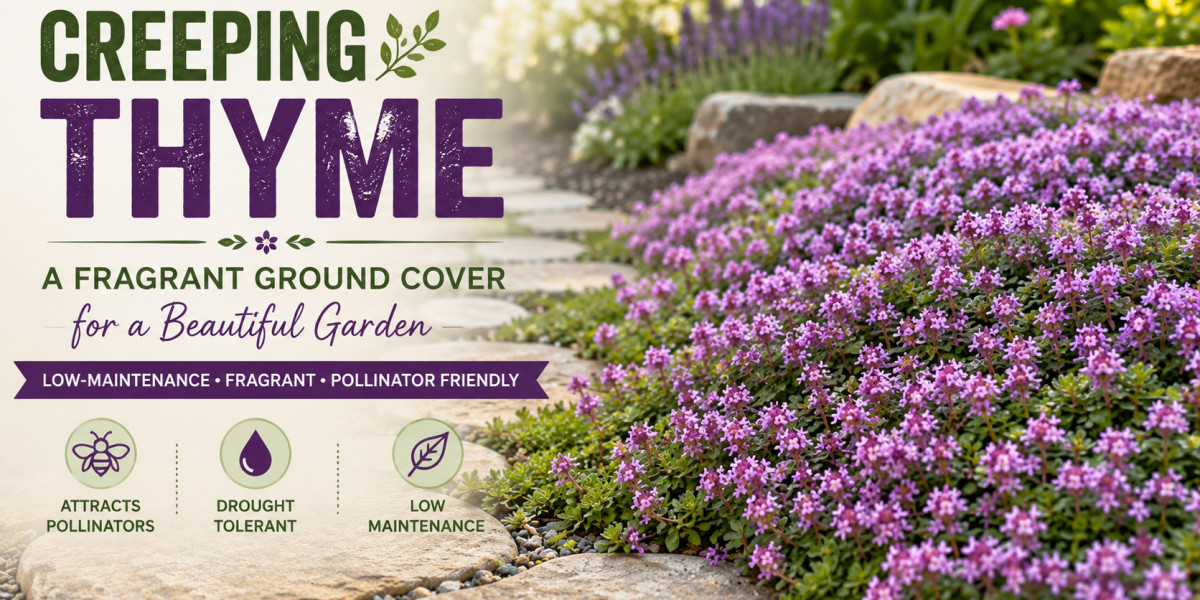

Creeping thyme is one of the most appealing and useful ground cover shrubs for the home garden. With its small scented leaves and vibrant flowers, it's a very easy to maintain hardy perennial that spreads easily to blanket the ground in a thick green layer. Creeping thyme makes a great choice to fill in between stepping stones, cover slopes and provide texture for flower beds. It is a popular choice among gardeners for its attractive appearance and its drought resistance as well as its nectar-producing properties that bring pollinators to the garden.
Characteristics and Appearance
Creeping thyme is a low-growing herb in the genus Thymus that has dense mats of foliage. It blooms in clusters of fragrant pink, purple, white or lavender flowers in late spring/early summer. The flowers are a great source of nectar for bees, butterflies, and other beneficial insects, making this plant environmentally friendly. In many climates the evergreen or semi-evergreen foliage adds to the year round beauty of the plant after flowering season.
Ideal Growing Conditions
Creeping thyme grows best in locations that receive full sunlight. Adequate sunlight (at least 6 hours a day) results in good growth and prolific flowering. The plant will grow in part shade but will not produce as many flowers or form as closely mounded if not enough light is provided. Excellent growth in well-drained and in sandy or rocky soils where many plants fail. Soils that are heavy and waterlogged should be avoided as they can cause root issues if there are too many wet days.
Planting and Watering Tips
Creeping thyme has many benefits, one being its drought resistance. After the plants have taken root, little watering is needed, and they can survive extended periods of drought. This is a great choice for water-saving gardens and areas with hot summers. Creeping thyme will require supplemental watering only during prolonged dry periods, unless it has been recently planted, in which case it should be watered regularly until it is established.
The best time to plant creeping thyme is in the spring or early fall when the temperature is moderate enough for the roots to take root before really bad weather hits. Space plants several inches apart so they can grow out in their natural manner. They will soon start to fill in the gaps and form a lovely groundcover in a few years time.
Maintenance and Care
It is very easy to maintain. In reasonably fertile soils, creeping thyme seldom needs fertilization. Excessive feeding can cause the plant to put more leaves than flowers. Light pruning after flowering promotes tidiness and re-growth. Dead or damaged stems should also be removed, which will help keep the plant healthy all year and improve air circulation.
Landscaping Uses
It can be used in many ways for landscaping. When placed between stepping stones, the soft leaves give off a lovely herbal aroma when stepped on. Creeping thyme is also excellent for borders, rock gardens and as a living mulch plant for ornamental plants. It is highly spreading on gentle slopes and helps to prevent soil erosion and provide an appealing natural screen. It is their success that gardeners frequently use it with lavender, sedum, ornamental grasses, and other drought-tolerant perennials to form attractive, easy-to-care-for landscaping.
Common Problems
Creeping thyme is relatively free from pests and diseases, but may be a problem when growing conditions are not conducive. The most common problem is drainage, which can lead to root rot. Fungal diseases are normally prevented with good air circulation and appropriate soil preparation. Occasionally, aphids or spider mites may occur but rarely cause serious damage and if they do may be controlled by a good spray of water or insecticidal soap.
Benefits of Growing Creeping Thyme
Creeping thyme is used as an ornamental but also contributes to the environment. The flowers are a valuable source of nectar for pollinators, which contributes to the biodiversity in the area during the flowering period. The high leaf area density also suppresses weed growth through shading of the soil, reducing the requirement of chemical herbicides and regular weeding. The above characteristics make creeping thyme a good option for sustainable and sustainable gardens.
Overall
An excellent ground cover, creeping thyme offers beauty, fragrance and durability all in one plant that is easy to grow. The flowers, the fragrance of the leaves and its low maintenance qualities make it an excellent choice for novice and advanced gardeners. Creeping thyme is a low maintenance plant, providing long-lasting beauty in pathways, brightening rock gardens, or carpeting open spaces. It's an attractive and fragrant perennial that can bring years of color to your garden with minimal maintenance, if you can provide the necessary conditions.