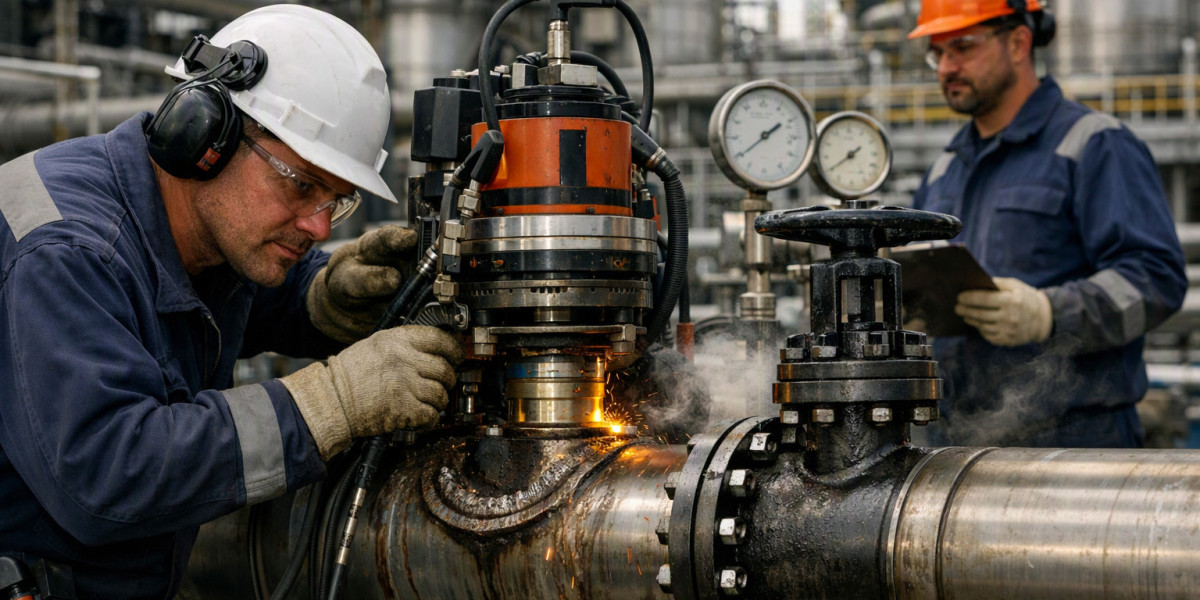

Industrial pipeline systems often need maintenance, changes, or new connections while the system is still operating. Hot tapping services in Ajman are used for this purpose because they allow a new branch connection to be made on an active pipeline without stopping the complete flow. This method can help reduce downtime and support maintenance work in many industrial facilities. It is commonly considered when shutting down a pipeline would affect important operations.
What Is Hot Topping?
Hot tapping is a pipeline maintenance method that allows workers to create a new connection on a pipe or vessel that is still in service. The process usually involves attaching a fitting and valve to the existing pipeline. A special cutting machine is then used to make an opening through the valve while the pipeline remains under pressure.
After the cut is completed, the cutting tool is removed and the valve can be closed when needed. The new branch connection can then be used for further pipeline work. The exact method depends on the pipe material, size, pressure, temperature, and type of fluid inside the system.
Why Is Hot Topping Needed?
One main reason for using hot tapping is to avoid a full pipeline shutdown. Industrial systems may carry water, gas, oil, or other process fluids that are important for daily operations. Stopping the entire system may affect production and require significant planning.
Hot tapping provides an option for making a connection while the existing pipeline continues to operate. This can be useful when a facility needs to add a branch line, install new equipment, or make changes to an existing pipeline network.
How Does Hot Tapping Reduce Downtime?
A complete pipeline shutdown can take time because the system may need to be isolated, drained, cleaned, and prepared for maintenance. After the work is completed, the pipeline may also need to be tested and returned to service.
Hot tapping can reduce some of these steps because the existing pipeline does not always need to be emptied or taken completely out of operation. This can help maintenance teams complete certain connection tasks with less disruption to normal activities.
However, hot tapping is not suitable for every situation. Engineers must first check the pipeline conditions and determine whether the work can be completed safely.
Common Uses in Industrial Pipeline Systems
Hot tapping is used for several types of pipeline work. One common application is adding a new branch connection to an existing line. This may be required when a facility expands its pipeline network or connects new equipment.
It can also be used when installing monitoring instruments, creating temporary connections, or supporting pipeline modifications. In some cases, the method is considered for maintenance projects where stopping the whole system is difficult.
The application depends on the design and operating conditions of the pipeline. Each project needs its own technical assessment before work begins.
What Factors Must Be Checked Before Hot Tapping?
Before starting a hot tapping operation, several important factors should be reviewed. The pipe material and wall thickness must be checked to confirm that the pipeline can support the work. Operating pressure and temperature are also important because they affect the equipment and working method.
The type of fluid inside the pipeline must also be considered. Some fluids may create additional risks because of their temperature, pressure, chemical properties, or flammability.
Engineers may also review the condition of the pipe for corrosion, damage, or other weaknesses. A proper assessment helps determine whether hot tapping is technically suitable for the specific pipeline.
Safety Planning for Hot Tapping
Safety planning is an important part of any hot tapping project. The work involves operating on a live pipeline, so the risks must be carefully assessed before the operation starts.
The work area should be properly prepared, and suitable equipment should be selected for the pipeline conditions. Workers should follow established procedures and use appropriate personal protective equipment.
Monitoring pressure and temperature during the operation is also important. The team should understand the pipeline layout and have clear procedures for handling unexpected conditions. Good planning helps reduce risks and supports a controlled operation.
Benefits of Using Hot Topping
Hot tapping can provide several practical benefits for industrial facilities. The main benefit is that certain pipeline connections can be completed without shutting down the entire system. This may help maintain production and reduce interruptions.
The method can also reduce the need to drain large amounts of fluid from a pipeline. In some situations, this may reduce waste and make the maintenance process more efficient.
Another benefit is flexibility. Industrial facilities can make selected changes to existing pipeline networks without completely rebuilding or stopping the system. However, these benefits depend on proper engineering review and suitable site conditions.
Why Professional Assessment Matters
Hot tapping requires careful planning because every pipeline system is different. Pipe size, material, pressure, temperature, fluid type, and operating conditions can all affect the process.
A professional assessment helps identify possible risks and determine the correct equipment and working procedure. It also helps ensure that the planned connection is suitable for the existing pipeline system.
For this reason, hot tapping should be approached as a technical engineering activity rather than a simple pipeline modification. Proper preparation, inspection, and planning are important parts of the overall process.
Understanding the purpose and limitations of Hot tapping services in Ajman can help industrial operators make better decisions when pipeline planning modifications, new connections, or maintenance work on systems that need to remain operational.














