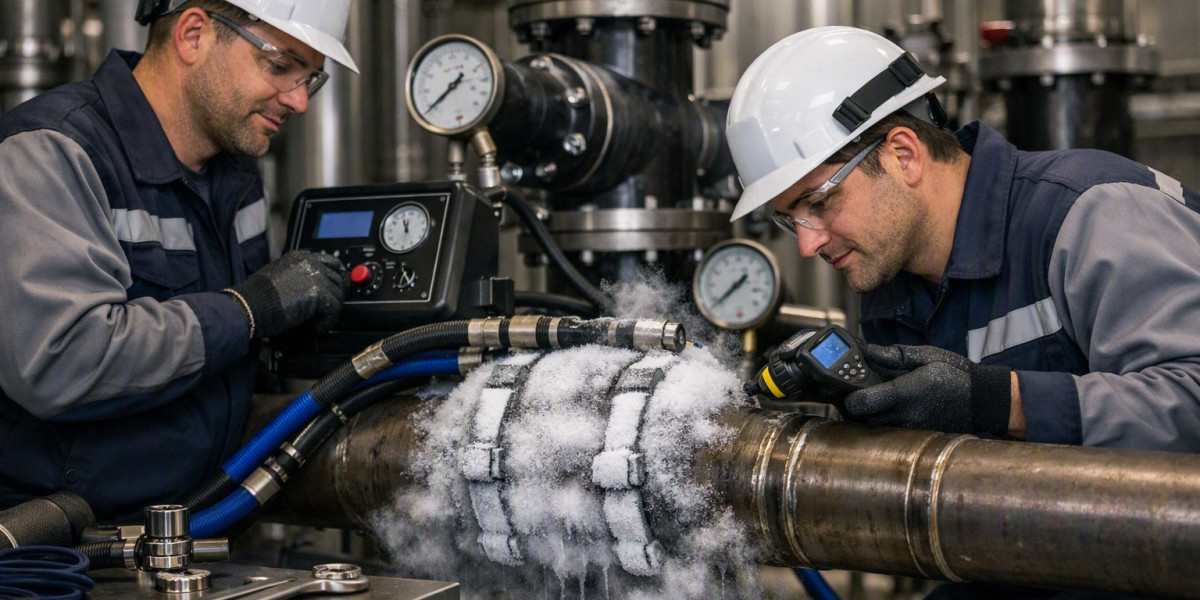

Pipe freezing services in UAE are used in commercial and industrial systems when a section of pipe needs to be worked on without draining the entire system. The basic idea is simple. A special cooling method creates a solid ice plug inside the pipe. This ice plug can temporarily stop the flow of liquid, allowing technicians to repair or replace a valve, fitting, or other part of the system.
This method can be useful in large buildings, factories, hospitals, hotels, and other facilities where shutting down the full water or process system may cause major disruption. Pipe freezing is carefully planned because the pipe material, liquid, pressure, temperature, and system condition all affect the work.
What is Pipe Freezing?
Pipe freezing is a temporary method used to isolate a section of a live pipe system. A freezing unit is placed around the outside of the pipe. The unit removes heat from the pipe until the liquid inside becomes frozen.
The frozen section forms an ice plug that acts like a temporary barrier. When the plug is strong enough, technicians can work on the isolated part of the system. The rest of the system can continue operating if the conditions are suitable.
Once the repair is complete, the freezing equipment is removed. The ice plug is then allowed to melt slowly, and normally flow through the pipe can resume.
How the Freezing Process Starts
Before starting the work, technicians inspect the pipe and identify the exact area where the ice plug needs to form. They check the pipe size, material, wall thickness, liquid inside the pipe, and operating pressure.
The pipe surface is cleaned so the freezing equipment can make good contact. A freezing jacket or clamp is then placed around the selected section.
A cooling agent is passed through the equipment. This removes heat from the pipe wall and gradually lowers the temperature of the liquid inside. The liquid begins to freeze around the inner pipe wall.
As the temperature continues to fall, the frozen area becomes thicker. The ice grows toward the center of the pipe until it creates a solid plug.
How the Ice Plug Stops Flow
The ice plug works as a temporary isolation point. When it becomes strong enough, it can hold back the pressure from the liquid on one side of the frozen section.
The strength of the plug depends on several factors. These include pipe size, liquid temperature, pressure, pipe material, and the length of the frozen section.
Technicians monitor the freezing process to make sure the plug has reached the required condition before starting repair work. The system should not be disturbed until the isolation is confirmed.
This step is important because starting work too early may allow liquid to pass through the frozen section.
Preparing the Commercial System
Commercial systems can be more complex than small residential pipe networks. They may include long pipe runs, multiple branches, pumps, valves, and different types of equipment.
Before pipe freezing begins, the system is reviewed carefully. Technicians need to understand how the pipe connects to other parts of the system. They also need to identify whether there are pressure changes or flow paths that could affect the ice plug.
The working area is prepared to provide safe access to the pipe. The freezing equipment, monitoring instruments, and other required tools are positioned before the process begins.
Good preparation helps reduce unexpected problems during the repair.
Monitoring Temperature and Pressure
Temperature and pressure monitoring are important parts of pipe freezing. The pipe must become cold enough to create a reliable ice plug, while the system pressure must remain within safe working limits.
Technicians use suitable instruments to monitor conditions during the process. They watch for changes in temperature and pressure and check that the frozen section remains stable.
The monitoring continues while the repair work is being completed. If the conditions change, the work may need to be paused until the situation is checked.
This careful approach helps maintain control over the temporary isolation point.
Carrying Out Repairs After Freezing
Once the ice plug is confirmed, technicians can begin work on the isolated section. Depending on the system, this may involve replacing a valve, repairing a fitting, changing a section of pipe, or carrying out maintenance on connected equipment.
The repair area should remain controlled throughout the work. Tools and replacement parts are prepared in advance so the repair can be completed without unnecessary delay.
The main purpose of pipe freezing is to provide temporary isolation. It does not replace proper repair procedures or system checks. The actual repair still needs to be completed correctly according to the requirements of the pipe system.
Removing the Ice Plug
After the repair is finished, the freezing equipment is removed carefully. The ice plug is allowed to melt gradually as the pipe temperature returns to normal.
The timing of this step depends on the pipe size, liquid temperature, and surrounding conditions. Technicians monitor the system while the frozen section returns to normal flow.
The repaired area is then checked for leaks or other problems. Pressure may also be monitored to confirm that the system is operating correctly after the repair.
Why Pipe Freezing Can Be Useful
Pipe freezing can be helpful when draining a large commercial system would take a long time or cause major disruption. It may allow work to be completed on a specific section instead of stopping the entire system.
This approach can also reduce the amount of water or process liquid that needs to be removed from the system. In some facilities, this can make maintenance planning easier.
However, pipe freezing is not suitable for every situation. The condition of the pipe, type of liquid, operating pressure, pipe material, and location all need to be considered before the method is selected.
Important Factors Before Pipe Freezing
Several factors should be checked before freezing a pipe. The pipe must be in suitable condition, and the liquid inside it must be capable of forming a stable ice plug.
Pipe size and material also affects the freezing process. Larger pipes may require more time to reach the required temperature. The surrounding environment can also influence how quickly the pipe loses heat.
System pressure is another important factor. A proper assessment helps determine whether the ice plug can provide the required temporary isolation.
Careful planning and monitoring are therefore essential when using Pipe freezing services in UAE for commercial systems.