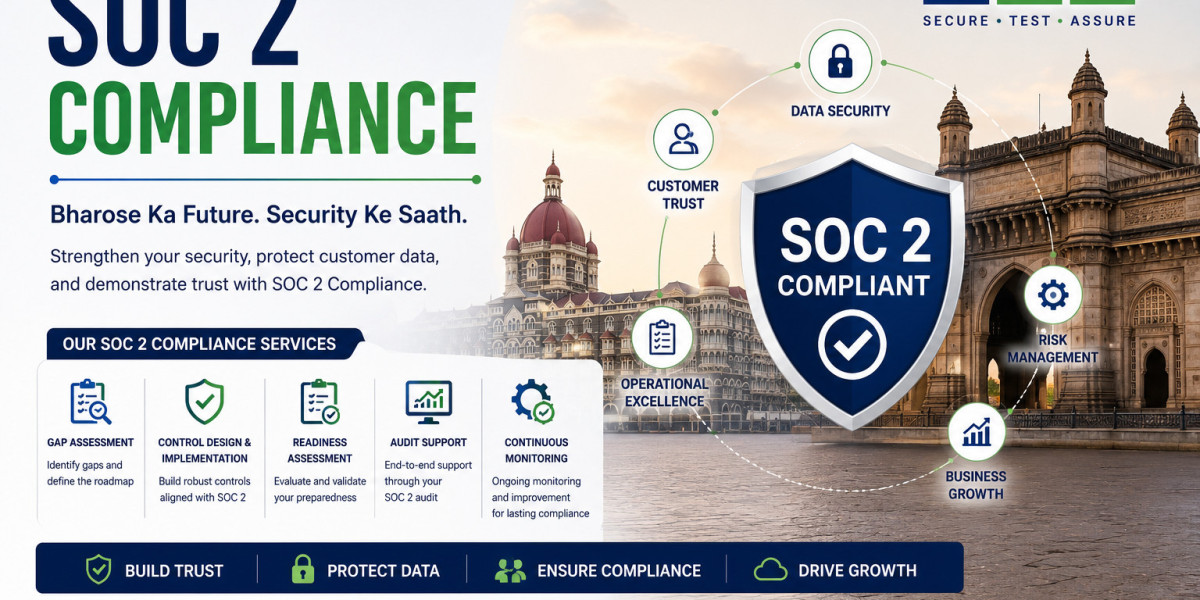

Choosing a SOC 2 Auditor is one of the most important decisions an organisation makes during its compliance journey. While many businesses invest significant effort in strengthening security controls and documenting internal processes, the quality of the audit experience often depends on selecting an auditor who understands both the technical and operational realities of modern businesses.
For startups, SMEs, and enterprises in India, the challenge is rarely finding an audit provider. The market offers numerous firms with different levels of expertise, methodologies, and industry experience. The real challenge is identifying an auditor whose approach aligns with your business goals, technology environment, and future growth plans.
Rather than treating the selection process as a procurement exercise, businesses should evaluate a potential auditor through the lens of long-term value, transparency, and professional expertise.
Start with Your Business Objectives, Not the Audit
Before speaking with any audit firm, clarify why your organisation is pursuing SOC 2.
Your priorities may include:
- Meeting enterprise customer requirements
- Expanding into international markets
- Strengthening internal governance
- Supporting investment or acquisition discussions
- Building customer confidence
- Demonstrating operational maturity
Understanding these objectives helps you identify a SOC 2 Auditor with relevant experience instead of choosing solely based on pricing or availability.
Verify Experience with Similar Business Models
An auditor who regularly works with SaaS companies may approach an engagement differently from one whose primary experience is in manufacturing or financial services.
When evaluating providers, consider whether they understand environments such as:
- Cloud-native applications
- Software-as-a-Service platforms
- Multi-tenant infrastructure
- API-driven ecosystems
- Remote work environments
- Managed cloud services
Industry familiarity allows discussions to focus on meaningful security controls instead of explaining basic operational concepts throughout the engagement.
Evaluate the Auditor's Methodology
Every audit follows recognised standards, but individual firms often differ in how they manage the engagement.
Ask prospective auditors how they approach:
- Audit planning
- Scope definition
- Evidence collection
- Communication during the engagement
- Reporting timelines
- Clarification of observations
A clearly explained methodology demonstrates professionalism and helps internal teams understand what to expect at each stage.
Communication Should Be Clear and Consistent
An audit involves collaboration between leadership, engineering, operations, human resources, and compliance teams.
For that reason, effective communication is just as important as technical expertise.
A reliable SOC 2 Auditor should:
- Explain technical requirements in understandable language.
- Provide realistic project timelines.
- Clarify documentation requests.
- Respond promptly to queries.
- Keep stakeholders informed throughout the engagement.
Strong communication reduces delays and ensures that expectations remain aligned.
Assess Whether Your Business Is Audit-Ready
Many organisations approach an auditor before fully preparing their internal controls.
This can result in unnecessary delays, additional effort, and avoidable findings.
Before beginning the audit, businesses should evaluate whether they have:
- Documented security policies
- Defined access management procedures
- Incident response processes
- Risk assessment practices
- Change management controls
- Monitoring activities
- Evidence supporting implemented controls
If these elements are still evolving, preparation may be beneficial before the formal assessment begins.
The Role of a SOC 2 Compliance Consultant
Many businesses choose to work with a SOC 2 compliance consultant before engaging an auditor.
Although consultants and auditors perform different roles, they often complement each other.
A consultant typically helps organisations:
- Conduct readiness assessments
- Identify compliance gaps
- Develop required policies
- Implement security controls
- Organise audit evidence
- Improve governance processes
By addressing these areas in advance, organisations can approach the audit with greater confidence and fewer operational disruptions.
Look Beyond the Current Audit Cycle
SOC 2 is rarely a one-time initiative.
As businesses introduce new products, expand infrastructure, or enter new markets, future audits may become part of an ongoing compliance programme.
Choosing an auditor capable of supporting long-term engagements can provide several advantages, including:
- Greater consistency across reporting periods
- Better understanding of business operations
- Reduced onboarding effort for future audits
- More efficient planning
Considering the long-term relationship helps businesses maximise the value of their compliance investment.
Questions Worth Asking Before Making a Decision
A conversation with prospective audit firms should go beyond timelines and pricing.
Useful questions include:
- Which industries do you commonly audit?
- What documentation should we prepare?
- How do you define audit scope?
- How frequently will progress be communicated?
- How are observations discussed during the audit?
- What should internal teams expect throughout the engagement?
The answers often provide valuable insight into the firm's experience and working style.
Common Mistakes Businesses Should Avoid
Selecting an auditor too quickly can create unnecessary challenges later.
Some common mistakes include:
- Choosing based only on the lowest quotation
- Failing to define the audit scope
- Beginning the audit without adequate preparation
- Underestimating documentation requirements
- Involving only technical teams while excluding business stakeholders
- Delaying compliance until customer pressure becomes urgent
Avoiding these issues helps create a smoother and more productive audit experience.
Making the Final Decision
The ideal SOC 2 Auditor combines technical expertise with industry knowledge, structured communication, and an organised audit methodology.
Businesses should evaluate whether the auditor understands their operational model, provides clear expectations, and demonstrates experience working with organisations of similar size and complexity.
A thoughtful selection process contributes not only to a successful audit but also to stronger governance and improved operational maturity over time.
Final Thoughts
Selecting the right SOC 2 Auditor is about finding a trusted professional who can independently evaluate your organisation while supporting an efficient and transparent audit process. Businesses that carefully assess industry experience, communication, methodology, and long-term compatibility are better positioned for successful compliance outcomes. Working alongside an experienced SOC 2 compliance consultant before the audit further strengthens readiness by helping implement effective controls and organise documentation. For startups, SMEs, and enterprises in India, choosing the right audit partner lays the foundation for stronger customer confidence, improved governance, and sustainable business growth.