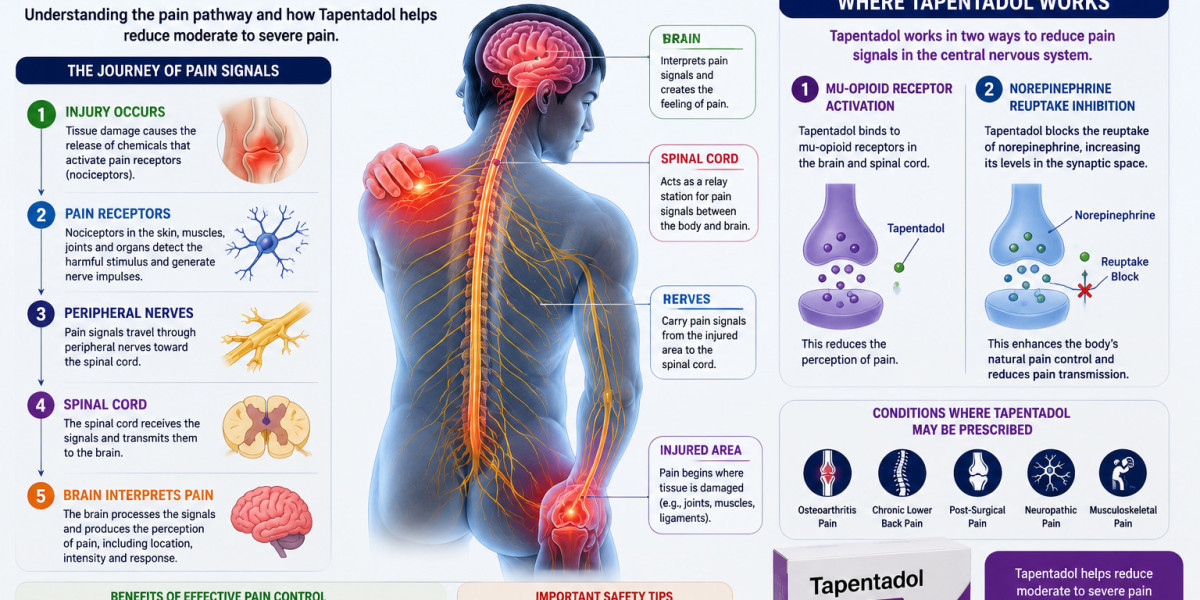

How Pain Travels Through the Nervous System and Where Tapentadol Works
Pain is more than just an uncomfortable feeling—it is the body's built-in warning system. Whether you accidentally touch a hot surface, sprain your ankle, or recover from surgery, your body immediately sends pain signals to your brain. These signals alert you that something is wrong and encourage you to protect the injured area.
However, when pain becomes moderate to severe or persists for a long time, it can interfere with daily life, sleep, work, and physical recovery. Understanding how pain travels through the nervous system can help explain why medications like Tapentadol are prescribed for certain painful conditions.
This article explores the journey of pain signals from the injured tissue to the brain and explains where Tapentadol works to help manage pain.
Understanding the Nervous System
The nervous system is the body's communication network. It carries messages between different parts of the body and the brain.
It consists of two major parts:
Central Nervous System (CNS)
The CNS includes:
- The brain
- The spinal cord
It processes information, interprets pain, and controls responses.
Peripheral Nervous System (PNS)
The peripheral nervous system includes the nerves that connect the brain and spinal cord to the rest of the body.
These nerves detect temperature, pressure, touch, and pain.
What Happens When You Feel Pain?
Pain follows a series of steps before you actually become aware of it.
Step 1: Injury Occurs
Pain begins when body tissues are damaged.
Examples include:
- Cuts
- Burns
- Broken bones
- Muscle strains
- Surgery
- Joint injuries
Damaged tissues release chemicals that activate specialized pain receptors called nociceptors.
Step 2: Pain Receptors Detect the Injury
Nociceptors are sensory nerve endings located throughout the body.
When activated, they generate electrical signals.
These receptors respond to:
- Heat
- Cold
- Pressure
- Chemical irritation
- Tissue damage
Step 3: Pain Signals Travel Through Peripheral Nerves
The electrical signals move through peripheral nerves toward the spinal cord.
Think of these nerves as highways carrying information from the injured area to the brain.
Step 4: The Spinal Cord Relays the Message
The spinal cord acts like a communication center.
Here, pain signals are:
- Processed
- Amplified or reduced
- Sent upward toward the brain
Some protective reflexes occur even before the brain processes the pain. For example, you may quickly pull your hand away from a hot object before consciously realizing it is hot.
Step 5: The Brain Interprets the Pain
Once the signals reach the brain, different regions work together to answer several questions:
- Where is the pain?
- How intense is it?
- What caused it?
- How should the body respond?
Only after the brain processes these signals do you consciously experience pain.
Why Some Pain Lasts Longer
Normally, pain decreases as injured tissues heal.
However, pain may continue when:
- Nerves remain damaged
- Inflammation persists
- Chronic medical conditions develop
- The nervous system becomes overly sensitive
This is one reason why chronic pain can be more difficult to manage than acute pain.
Different Types of Pain
Understanding pain types helps explain why different treatments are used.
Acute Pain
Acute pain develops suddenly and usually improves as healing occurs.
Examples include:
- Surgical pain
- Sports injuries
- Fractures
- Burns
Chronic Pain
Pain lasting more than three months is often considered chronic.
Examples include:
- Chronic back pain
- Osteoarthritis
- Certain cancer-related pain
- Persistent musculoskeletal pain
Neuropathic Pain
Neuropathic pain results from damage or dysfunction within the nervous system itself.
Examples include:
- Diabetic peripheral neuropathy
- Spinal nerve injuries
- Nerve compression
Patients often describe it as:
- Burning
- Shooting
- Tingling
- Electric shock-like pain
Where Does Tapentadol Work?
Tapentadol helps manage pain by acting within the central nervous system, primarily in the brain and spinal cord.
Unlike many traditional opioids, it works through two complementary mechanisms.
1. Activation of Mu-Opioid Receptors
Tapentadol binds to mu-opioid receptors located in the brain and spinal cord.
This reduces the brain's perception of incoming pain signals, making pain feel less intense.
Rather than stopping the injury itself, Tapentadol changes how the brain interprets pain.
2. Norepinephrine Reuptake Inhibition
Tapentadol also blocks the reuptake of norepinephrine, an important neurotransmitter involved in pain regulation.
Higher norepinephrine levels strengthen the body's natural pain-control pathways, helping reduce the transmission of pain signals within the spinal cord.
This dual mechanism makes Tapentadol different from many traditional opioid medications.
Conditions Where Tapentadol May Be Considered
Healthcare providers may prescribe Tapentadol for selected patients experiencing moderate to severe pain associated with:
- Surgical recovery
- Orthopedic injuries
- Severe musculoskeletal pain
- Chronic lower back pain
- Certain neuropathic pain conditions, such as diabetic peripheral neuropathy
- Selected cancer-related pain under specialist supervision
The decision to prescribe Tapentadol depends on the patient's diagnosis, medical history, and overall treatment plan.
Benefits of Effective Pain Control
When pain is managed appropriately, patients may experience:
- Improved mobility
- Better sleep
- Greater participation in physical therapy
- Easier performance of daily activities
- Reduced stress related to persistent pain
- Improved quality of life
Pain management aims to improve function while supporting recovery and overall well-being.
Safe Use of Tapentadol
Because Tapentadol is a prescription opioid analgesic, it should always be used responsibly.
Patients should:
- Take it exactly as prescribed.
- Never increase the dose without medical advice.
- Avoid alcohol while taking the medication.
- Inform their healthcare provider about all medicines and supplements they use.
- Store it securely and out of reach of children.
Possible Side Effects
Common side effects include:
- Drowsiness
- Dizziness
- Nausea
- Vomiting
- Constipation
- Dry mouth
- Headache
Seek immediate medical attention if you experience serious symptoms of tapentadol such as difficulty breathing or severe allergic reactions.
Frequently Asked Questions
How does pain travel through the body?
Pain begins at specialized receptors called nociceptors, travels through peripheral nerves to the spinal cord, and is then processed by the brain.
Does Tapentadol stop the injury from healing?
No. Tapentadol does not heal the injury itself. It helps reduce the perception and transmission of pain signals while the body recovers.
Why is Tapentadol different from some other opioids?
Tapentadol combines mu-opioid receptor activation with norepinephrine reuptake inhibition, giving it a dual mechanism of action.
Can Tapentadol be used for every type of pain?
No. It is prescribed only for selected patients with moderate to severe pain when clinically appropriate.
Conclusion
Pain is a complex process involving the nervous system, spinal cord, and brain. From the moment an injury occurs, pain signals travel through specialized nerve pathways before the brain recognizes them as pain. Understanding this process helps explain why effective pain management often requires more than simply treating the injury itself.
Tapentadol works within the central nervous system by reducing how pain signals are processed and strengthening the body's natural pain-control pathways. When prescribed appropriately and used under medical supervision, it can play an important role in helping selected patients manage moderate to severe pain while supporting recovery and daily function.