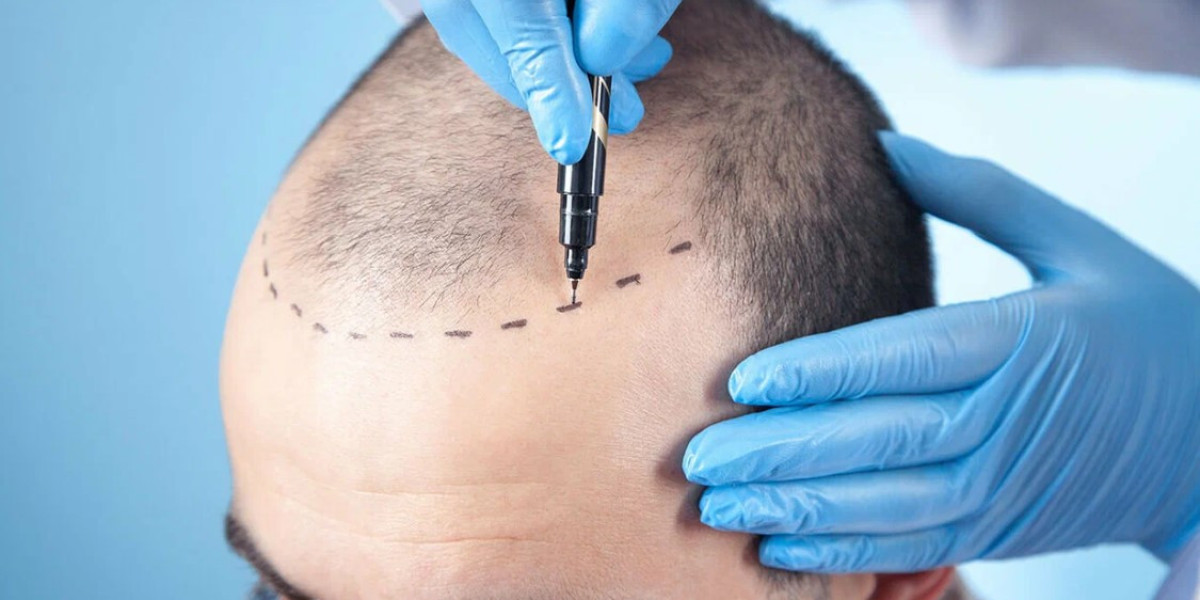

When evaluating a hair transplant in Dammam or across Saudi Arabia's Eastern Province, the concept of hair density sits at the heart of your results. Achieving a natural look is not simply about covering bald skin with hair; it is about recreating the optical illusion of full, thick coverage while making efficient use of a limited donor supply.
Understanding how hair density is measured, calculated, and artistically recreated allows you to set realistic expectations and make informed decisions during your clinical consultation.
Hair transplant in Dammam is a popular hair restoration solution for individuals seeking natural-looking results, improved hair density, and long-term confidence through advanced transplantation techniques.
1. Defining Hair Density: Natural vs. Transplanted
To understand how restoration works, it helps to distinguish between the density you were born with and what a surgeon can realistically reconstruct during a procedure.
Natural Hair Density: A healthy, un-thinned scalp typically features 60 to 100 follicular units (grafts) per square centimeter ($cm^2$), which translates to roughly 120 to 200 individual hairs per $cm^2$.
Transplanted Hair Density: Hair transplantation relies on a biological phenomenon known as the 50% rule. The human eye cannot perceive hair loss until a scalp loses approximately 50% of its original natural density. Therefore, surgeons do not need to replace 100% of your original density. Implanting 35 to 55 grafts per $cm^2$ is usually sufficient to create the optical illusion of a completely full head of hair.
+--------------------------------------------------------------------+| DENSITY DYNAMICS COMPARISON |+---------------------+----------------------------------------------+| Original Scalp | 60 – 100 grafts per cm² (Full natural cover) || Transplant Goal | 35 – 55 grafts per cm² (Illusion of fullness)|| Low Density Area | < 20 grafts per cm² (Visible scalp skin) |+---------------------+----------------------------------------------+2. Factors That Influence "Visual" Density
Two patients receiving the exact same number of grafts per square centimeter can end up with drastically different visual fullness. Physical hair characteristics play a major role in how density appears to the naked eye.
A. Hair Shaft Thickness (Caliber)
Hair shaft thickness—measured in micrometers during diagnostic trichoscopy—is often more important than the absolute graft count. A coarse, thick hair strand occupies significantly more surface area than a fine hair strand. Increasing hair caliber by just 20% can double the visual volume of coverage on the scalp.
B. Hair Texture and Wave
Straight Hair: Straight hair strands lie flat against the scalp, providing less overlapping coverage. As a result, straight hair often requires slightly higher packing density to prevent light from reflecting off the scalp skin.
Wavy and Curly Hair: Wavy or curly hair naturally bends, creating an overlapping canopy above the scalp. This built-in volume covers more surface area, allowing surgeons to achieve an apparently dense result using fewer grafts per square centimeter.
C. Scalp-to-Hair Color Contrast
High contrast between dark hair and light scalp skin makes gaps between hair shafts more noticeable. Conversely, low contrast (such as brown hair on olive skin or fair hair on light skin) masks underlying skin, allowing lower graft densities to look fuller.
3. High-Yield Placement Strategies Across the Scalp
Because your donor supply is limited (typically yielding 6,000 to 8,000 lifetime extractions), surgeons in Dammam allocate density strategically across different regions of the head rather than spreading grafts uniformly.
| Scalp Zone | Target Graft Density | Graft Selection Strategy |
| Frontal Transition Line | 30 – 40 grafts per $cm^2$ | Fine, single-hair grafts for a soft, feathered boundary. |
| Definitive Hairline (Core) | 45 – 55 grafts per $cm^2$ | Dense double-hair grafts to block light reflection. |
| Mid-Scalp Region | 35 – 45 grafts per $cm^2$ | Combination of multi-hair grafts (2 to 4 hairs) for structural volume. |
| Crown / Vertex | 30 – 40 grafts per $cm^2$ | Arranged in a natural spiral pattern; prioritizes visual fill over heavy packing. |
The Gradient Density Approach
Placing maximum density directly at the leading frontal edge and gradually tapering off toward the mid-scalp creates a natural transition. This mirrors natural hair growth patterns, ensuring your hairline looks completely authentic from every angle.
4. The Risks of Over-Dense Packing
A common misconception among patients is that packing as many grafts as possible into a single square centimeter yields a better result. In reality, over-dense packing (attempting to plant more than 60+ grafts per $cm^2$ in a single session) carries significant clinical risks:
Vascular Compromise: Extracted hair follicles rely on microscopic capillary blood flow in the scalp to survive. Placing incisions too close together can compromise local blood supply, leading to graft failure or tissue necrosis.
Graft Competition: Newly implanted roots compete with neighboring grafts for oxygen and nutrients during the vital first 72 hours. Overcrowding lowers overall graft survival rates.
Donor Depletion: Attempting excessive density in one area wastes valuable donor reserves that may be needed later in life if native hair elsewhere continues to thin.
Clinical Practice: High-quality clinics in Dammam focus on safe packing density (35 to 50 grafts/$cm^2$), which yields high survival rates (typically 90–95%) while protecting your donor area.
5. Maximizing and Maintaining Long-Term Density
A hair transplant successfully relocates hair to balding areas, but maintaining total visual density over time requires protecting the surrounding native hair.
Combining Surgery with Medical Maintenance
Non-transplanted native hair surrounding your new grafts remains susceptible to ongoing genetic thinning driven by dihydrotestosterone (DHT). If native hair thins while transplanted hair stays permanent, overall visual density decreases over time.
Dermatologists in Dammam frequently recommend integrating supportive therapies into your routine:
Topical Stimulants (Minoxidil): Expands blood vessels around hair roots, encouraging thicker strand diameters.
DHT Blockers (Finasteride): Protects native hair from miniaturization, preserving the natural background density around your new grafts.
Maintenance PRP Therapy: Injections of Platelet-Rich Plasma deliver concentrated growth factors to strengthen existing roots and enhance hair shaft caliber.
Key Takeaway
Achieving density during a hair transplant in Dammam is a balance of surgical technique, artistic design, and anatomical limits. Rather than chasing artificial numbers, focus on finding a specialist who evaluates your hair shaft thickness, curl pattern, and long-term donor reserve to create a natural, long-lasting look.