
Mole Removal in Riyadh: Frequently Asked Questions
Navigating the process of mole removal involves understanding both the medical realities and the aesthetic outcomes of the procedure. For residents in Riyadh, where high solar radiation makes skin care a year-round priority, being informed about dermatological care is essential. Below are the most frequently asked questions regarding mole removal in the capital, designed to provide clear, actionable insights for your health and confidence. Mole Removal in Riyadh is a popular solution for removing unwanted or suspicious moles, helping improve skin appearance while supporting overall skin health through safe and effective treatment options.
1. Is mole removal a painful procedure?
The procedure itself is highly comfortable. Before any mole is removed—whether surgically or via laser—the dermatologist administers a local anesthetic to numb the specific area. You will feel a brief, minor pinch during the initial injection, but within seconds, the site becomes entirely numb. During the removal, you will feel no pain, only light pressure. Once the anesthesia wears off later in the day, any minor tenderness can be easily managed with standard over-the-counter pain relievers recommended by your doctor.
2. What are the main methods used for mole removal in Riyadh?
Dermatologists select a technique based on the mole's size, depth, and whether it requires a laboratory check:
Surgical Excision: The doctor cuts out the full thickness of the mole and closes the wound with fine stitches. This is required for deep or clinically suspicious moles.
Shave Excision: Best for raised, benign moles. The doctor uses a small blade to slice the mole flush with the skin surface, rarely requiring stitches.
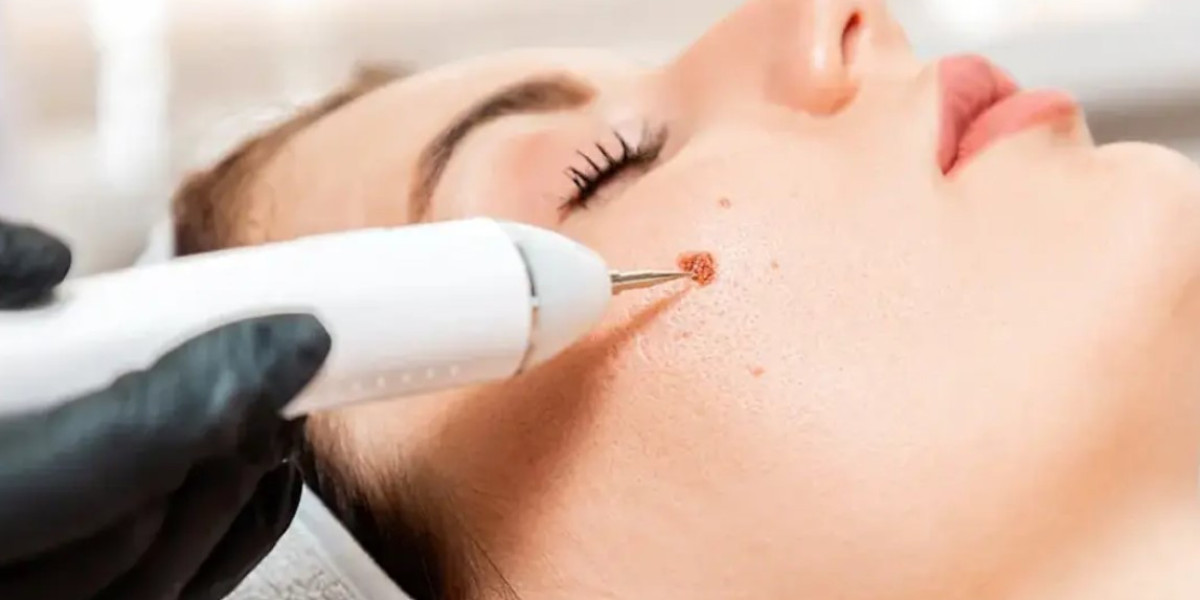
Laser Removal: Ideal for flat, entirely benign cosmetic moles. It uses light energy to break down the pigment cells without incisions.
3. Will I be left with a permanent scar?
Any procedure that alters the deeper layers of the skin carries a potential for a mark, but modern dermatological techniques focus heavily on minimizing scarring. A surgical excision typically leaves a faint, thin line that fades from pink to white over several months. Shave excisions usually leave a flat, slightly pale patch of skin. Your final result depends drastically on your aftercare discipline, particularly your use of silicone gels and sun protection once the wound closes.
4. How long does the entire recovery process take?
The healing timeline is split into two distinct phases:
Surface Healing (1 to 2 weeks): This is the time it takes for the wound to close, scabs to naturally flake away, or stitches to be professionally removed.
Deep Tissue Maturation (3 to 12 months): While the skin looks closed on top, the tissue underneath is actively remodeling its collagen structures. The redness or pinkness of a fresh scar will gradually fade and blend into your natural skin tone over this period.
5. Why is sun protection so critical after removal in Riyadh?
Riyadh’s high UV index is the primary threat to a beautifully healed scar. Newly generated skin cells are incredibly fragile and lack normal melanin defenses. If a fresh healing site is exposed to direct sunlight, it will trigger post-inflammatory hyperpigmentation. This causes the healing spot to turn dark brown or muddy gray, making the scar far more visible than it should be. You must apply a broad-spectrum, high-SPF sunscreen daily and use physical shields like wide-brimmed hats when outdoors.
6. When can I resume my normal daily activities?
Most patients can return to a standard office desk job or light routine on the exact same day as their procedure. However, specialized activities require a temporary pause:
Vigorous Exercise: Wait one to two weeks before returning to heavy weightlifting or intense running. Straining raises your blood pressure and stretches the skin, which can cause stitches to pop or the wound to split.
Swimming and Saunas: Avoid pools, hot tubs, and steam rooms until the skin is fully closed or stitches are out. Soaking a fresh wound softens the tissue and invites bacterial infection.
7. Does health insurance cover the cost of mole removal?
Coverage depends entirely on medical necessity. If a board-certified dermatologist evaluates a mole and determines it exhibits irregular features (using the ABCDE criteria) that require a biopsy to rule out skin cancer, the procedure is classified as a medical necessity. In these cases, insurance providers typically cover the cost of the extraction and the subsequent laboratory analysis. If the mole is entirely benign and you are choosing to remove it simply because you dislike how it looks, it is classified as a cosmetic enhancement and must be paid out-of-pocket.
8. Can I remove a mole at home using natural remedies or creams?
You should absolutely never attempt to remove a mole at home. Over-the-counter mole removal pens, chemical burning pastes, or cutting tools carry severe risks. First, without a professional dermoscopic exam, you cannot know if the mole is dangerous; burning or slicing the top layer off a malignant growth allows deeper cancerous cells to spread unchecked. Second, home methods lack surgical precision, almost always resulting in severe chemical burns, painful infections, and permanent, jagged scars that are far more difficult to treat than the original mole.
9. How do I know if a mole needs to be checked by a professional?
You should routinely check your skin for changes using the classic ABCDE rule:
Asymmetry: One half of the mole does not match the other.
Border: The edges are irregular, jagged, notched, or blurred.
Color: The shade is not uniform; it contains mixes of brown, black, red, or white.
Diameter: The growth is larger than 6 millimeters (roughly the size of a pencil eraser).
Evolving: The mole is actively changing in size, shape, color, or has started itching, oozing, or bleeding.
10. Can a mole grow back after it has been removed?
If a mole is removed via full surgical excision, it is highly unlikely to return because the deep root cells are completely cut away. However, if a mole is treated with surface-level methods like a shave excision or laser, there is a small chance that a few microscopic pigment cells remain deep within the dermis. Over time, these remaining cells can replicate, causing a faint patch of pigment to reappear at the site. If you notice a mole returning, simply visit your dermatologist to have it evaluated and touched up.












