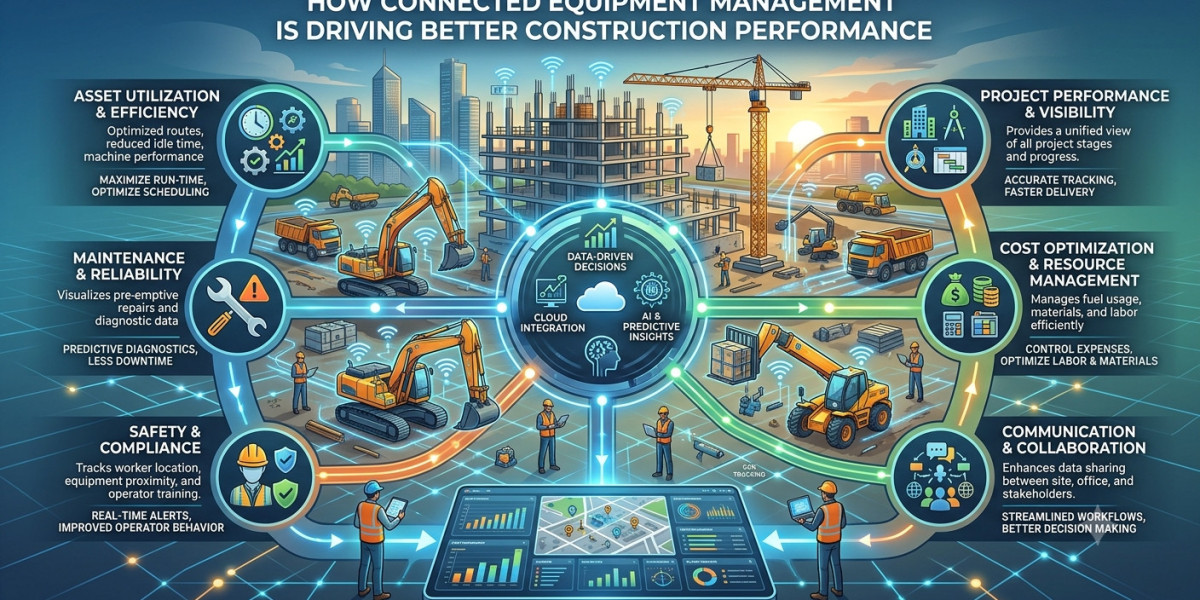

Construction companies invest heavily in equipment because it is the backbone of nearly every project. Excavators, loaders, cranes, dozers, compact machines, and specialized tools are expected to perform reliably under demanding conditions while supporting tight project schedules. As fleets grow and projects become more complex, managing these assets efficiently is no longer just an operational responsibility; it has become a strategic business priority.
For years, many contractors managed equipment using spreadsheets, paper records, and disconnected systems. While these methods may have been sufficient for smaller operations, they often fall short when managing multiple jobsites, large equipment fleets, and increasing customer expectations. Construction equipment management software is helping contractors gain better visibility, improve decision-making, and maximize the value of every asset throughout its lifecycle.
Equipment Management Has Evolved Beyond Record Keeping
Equipment management is no longer limited to tracking ownership records or scheduling maintenance. Modern construction companies need a complete view of how equipment is being used, where it is located, how efficiently it performs, and what it costs to operate.
Without that visibility, businesses often face challenges such as:
Equipment sitting idle while additional machines are rented
Poor coordination between jobsites
Rising maintenance and operating costs
Delays caused by unavailable equipment
Difficulty forecasting replacement needs
Limited insight into fleet performance
Managing equipment strategically allows contractors to make informed decisions that improve both project delivery and long-term profitability.
Why Equipment Visibility Matters More Than Ever
Construction equipment constantly moves between projects, storage facilities, workshops, and rental locations. Without accurate information, locating available machinery can become time-consuming and disruptive.
Better visibility helps contractors answer critical operational questions:
Which machines are currently in use?
Which assets are available for upcoming projects?
Which equipment has been idle for extended periods?
Which machines require servicing before redeployment?
Having immediate access to this information improves planning while reducing unnecessary project delays.
Connected Equipment Improves Operational Efficiency
Modern construction equipment generates valuable operational data that can be used to improve business performance.
Connected equipment allows contractors to monitor:
Equipment utilization
Operating hours
Idle time
Fuel consumption
Maintenance history
Machine availability
Rather than relying on assumptions or outdated reports, managers can make decisions using current operational data.
This visibility enables organizations to allocate equipment more efficiently while reducing waste across multiple projects.
Better Planning Leads to Better Project Outcomes
Equipment availability has a direct impact on construction schedules.
When project managers know exactly which machines are available and where they are located, they can coordinate work with greater confidence.
Improved planning helps organizations:
Reduce Scheduling Conflicts
Equipment can be assigned based on actual availability instead of estimates or manual updates.
Improve Resource Allocation
Machines are distributed where they create the greatest operational value.
Increase Project Productivity
Reliable equipment planning helps crews begin work on time without waiting for delayed equipment deliveries.
Effective equipment management supports smoother project execution from start to finish.
Turning Equipment Data into Better Decisions
Construction companies collect more operational data than ever before, but data only becomes valuable when it supports better decision-making.
Using construction equipment management software, contractors can analyze trends that influence both day-to-day operations and long-term business strategy.
Examples include:
Fleet utilization patterns
Maintenance costs
Equipment downtime
Operating efficiency
Asset lifecycle performance
Ownership costs
These insights help organizations determine whether equipment should be repaired, reassigned, replaced, or expanded based on measurable performance rather than assumptions.
Equipment Management Supports Cost Control
Heavy equipment represents one of the largest capital investments for construction companies. Maximizing that investment requires careful oversight throughout the equipment lifecycle.
Improved equipment management helps reduce costs by:
Increasing equipment utilization
Minimizing unnecessary rentals
Reducing emergency repairs
Improving maintenance planning
Extending equipment lifespan
Supporting more informed purchasing decisions
Instead of reacting to operational challenges, contractors can proactively manage equipment costs while improving project profitability.
Strong Equipment Management Improves Collaboration
Construction operations involve project managers, equipment coordinators, mechanics, operators, dispatchers, and executives.
Without consistent information, communication gaps can affect project performance.
Connected equipment management allows teams to work with the same operational data, improving coordination between field operations and office staff.
Better collaboration supports faster decisions while reducing confusion during equipment scheduling and project planning.
Supporting Safer Construction Operations
Reliable equipment contributes directly to jobsite safety.
Equipment that is properly monitored and maintained is less likely to experience mechanical failures that create risks for operators and surrounding workers.
Connected management systems also help organizations maintain accurate inspection and maintenance records, supporting safer equipment operations across every project.
Safety and operational efficiency work together to improve overall project performance.
The Future of Connected Construction Equipment
The construction industry continues to adopt technologies that improve equipment management through automation and real-time insights.
Emerging trends include:
Artificial intelligence (AI)
Internet of Things (IoT) connectivity
Remote diagnostics
Predictive maintenance
Digital inspections
Automated reporting
Equipment performance analytics
These technologies help contractors move beyond reactive equipment management toward a more proactive, data-driven approach that supports long-term business growth.
As digital transformation accelerates, connected equipment will become a standard component of modern construction operations.
Best Practices for Effective Equipment Management
Technology delivers the greatest value when combined with strong operational processes.
Successful contractors often focus on:
Maintaining accurate equipment records
Reviewing utilization regularly
Planning maintenance proactively
Monitoring equipment performance
Coordinating equipment across projects
Evaluating lifecycle costs
Continuously improving operational efficiency
These practices help organizations maximize equipment value while reducing unnecessary operational expenses.
Equipment Management Creates a Competitive Advantage
Construction companies operate in an increasingly competitive environment where productivity, cost control, and project reliability determine long-term success.
Organizations with effective equipment management can:
Complete projects more efficiently
Improve equipment availability
Reduce operating costs
Increase workforce productivity
Make better investment decisions
Strengthen client confidence
Rather than viewing equipment as isolated assets, successful contractors manage them as strategic resources that support every stage of project delivery.
Surgery
Construction equipment is one of the most valuable resources on any jobsite, and managing it effectively has become essential for maintaining productivity, controlling costs, and delivering projects on time. Traditional management methods often lack the visibility needed to support today's fast-moving construction environment.
By adopting construction equipment management software, contractors can connect equipment data, improve resource planning, strengthen maintenance strategies, and make informed decisions throughout the equipment lifecycle.
When combined with disciplined operational practices, connected equipment management helps businesses maximize asset performance, reduce downtime, and improve overall construction outcomes.
As construction continues to embrace digital innovation, organizations that prioritize connected equipment management will be better equipped to adapt to changing project demands, improve operational efficiency, and achieve sustainable long-term growth.