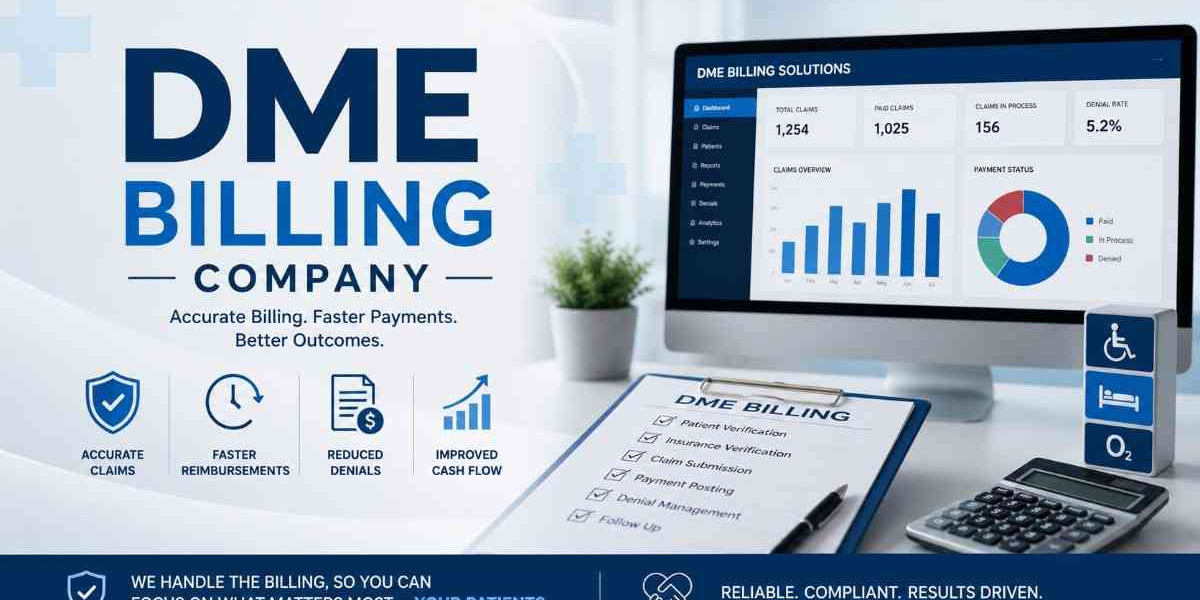

Durable Medical Equipment (DME) plays a vital role in helping patients manage chronic illnesses, recover after surgery, and maintain independence at home. From wheelchairs and walkers to CPAP machines, oxygen equipment, and diabetic supplies, these products improve patient outcomes while reducing hospital readmissions.
However, getting paid for DME services is rarely straightforward. Billing involves strict documentation requirements, payer-specific rules, medical necessity verification, prior authorizations, and accurate coding. Even a small error can result in delayed reimbursements or claim denials.
For healthcare providers and DME suppliers, understanding DME billing in Chicago is essential for maintaining a healthy revenue cycle. Whether you serve Medicare beneficiaries, commercial insurance patients, or Medicaid recipients, following best billing practices can significantly improve your cash flow while ensuring compliance.
This guide explains the DME billing process, common challenges, compliance requirements, and proven strategies to maximize reimbursement.
Understanding DME Billing in Chicago
DME billing is the process of submitting insurance claims for durable medical equipment supplied to eligible patients. Unlike many other healthcare services, DME billing requires extensive documentation to demonstrate that the equipment is medically necessary and meets payer guidelines.
Common DME products include:
- Wheelchairs and mobility scooters
- Hospital beds
- CPAP and BiPAP machines
- Oxygen concentrators
- Nebulizers
- Walkers and crutches
- Diabetic testing supplies
- Orthopedic braces
- Compression devices
Providers offering DME billing in Chicago often work with multiple insurance carriers, each having unique billing requirements. Medicare remains one of the largest payers, but commercial insurance companies frequently apply additional documentation and authorization rules.
Successful billing depends on:
- Accurate patient eligibility verification
- Proper HCPCS coding
- Correct modifier usage
- Physician documentation
- Proof of medical necessity
- Timely claim submission
Missing any of these steps can delay payments or trigger costly audits.
Common Challenges in DME Billing
Many providers experience reimbursement issues because DME billing involves more than simply assigning codes and submitting claims. The process requires careful coordination between physicians, billing teams, and insurance companies.
Medical Necessity Documentation
Insurance companies require documentation showing why the equipment is necessary for the patient's condition. Physicians must provide detailed clinical notes supporting the prescribed equipment.
Incomplete documentation often leads to:
- Claim denials
- Additional documentation requests
- Payment delays
- Audit risks
Prior Authorization Requirements
Many insurance plans require authorization before equipment is dispensed. Failure to obtain approval can result in automatic claim rejection.
Billing teams should always verify:
- Authorization requirements
- Covered equipment
- Quantity limitations
- Rental versus purchase policies
Coding Accuracy
Using incorrect HCPCS codes or modifiers can significantly impact reimbursement.
Common coding issues include:
- Incorrect modifiers
- Invalid diagnosis linkage
- Missing documentation
- Outdated code usage
Regular coding updates help providers remain compliant with changing payer requirements.
Medicare Compliance
Medicare has detailed requirements regarding supplier enrollment, documentation standards, and proof of delivery. Failure to comply can lead to payment recoupments or audits.
Providers involved in DME billing in Chicago should maintain organized records and conduct periodic internal audits to ensure ongoing compliance.
Best Practices for Accurate DME Billing in Chicago
Improving billing accuracy begins with establishing standardized workflows across the organization. Every step—from patient intake to claim submission—should follow documented procedures.
Verify Insurance Before Equipment Delivery
Eligibility verification should confirm:
- Active insurance coverage
- Deductibles
- Copayment responsibility
- Prior authorization requirements
- Covered DME benefits
This reduces unexpected claim denials and billing disputes.
Maintain Complete Documentation
Documentation should include:
- Physician orders
- Face-to-face encounter notes (when required)
- Medical necessity documentation
- Delivery confirmation
- Signed patient acknowledgments
Well-organized documentation supports faster claim processing.
Submit Clean Claims
Clean claims include:
- Accurate HCPCS codes
- Correct diagnosis codes
- Required modifiers
- Provider identifiers
- Complete patient information
Submitting clean claims reduces rework and speeds reimbursement.
Monitor Claim Status Regularly
Claims should never be submitted and forgotten.
A proactive follow-up process helps identify:
- Pending claims
- Missing documentation requests
- Denials
- Underpayments
- Payment delays
Prompt follow-up often shortens the reimbursement cycle.
Analyze Denial Trends
Tracking denial patterns helps billing teams identify recurring issues such as:
- Authorization failures
- Coding mistakes
- Documentation deficiencies
- Eligibility errors
Corrective action based on denial analytics improves future claim acceptance rates.
How Professional Medical Billing Services Improve DME Revenue
Managing DME billing internally can become increasingly challenging as payer regulations continue to evolve. Many healthcare providers choose to outsource billing functions to experienced medical billing professionals.
Professional billing teams provide expertise in:
Insurance Verification
Dedicated specialists verify patient eligibility before services are provided, reducing preventable claim denials.
Coding Accuracy
Certified billing professionals stay updated with changing coding guidelines and payer policies to improve claim accuracy.
Faster Claims Processing
Experienced billing teams streamline workflows, allowing claims to be submitted quickly with fewer errors.
Denial Management
When claims are denied, specialists investigate the cause, prepare appeals, and work toward successful reimbursement.
Compliance Support
Billing experts help providers maintain documentation standards while reducing audit risks through consistent quality control.
Revenue Cycle Optimization
Professional billing services continuously monitor financial performance through:
- Accounts receivable management
- Payment posting
- Denial tracking
- Performance reporting
- Revenue analysis
These services allow providers to focus more on patient care while improving overall financial performance.
Frequently Asked Questions
What is DME billing?
DME billing is the process of submitting insurance claims for durable medical equipment such as wheelchairs, oxygen equipment, CPAP machines, walkers, hospital beds, and other medically necessary devices provided to patients.
Why are DME claims frequently denied?
Common reasons include incomplete documentation, incorrect HCPCS codes, missing modifiers, lack of prior authorization, patient eligibility issues, and insufficient proof of medical necessity.
Does Medicare cover durable medical equipment?
Yes. Medicare generally covers medically necessary durable medical equipment when eligibility requirements are met and the equipment is prescribed by an authorized healthcare provider. Coverage depends on Medicare guidelines and specific equipment categories.
What documentation is required for DME billing?
Typical documentation includes physician orders, clinical notes, proof of medical necessity, prior authorization (when required), delivery confirmation, and complete patient information.
How can providers improve DME reimbursement rates?
Providers can improve reimbursement by verifying insurance coverage, maintaining complete documentation, submitting clean claims, following payer-specific guidelines, monitoring claim status regularly, and addressing denials promptly.
Conclusion
Efficient DME billing in Chicago requires much more than accurate coding. Success depends on strong documentation, payer compliance, timely claim submission, insurance verification, and proactive denial management. As billing regulations continue to evolve, providers must remain current with changing requirements to avoid revenue loss and maintain operational efficiency.
Partnering with experienced Medical Billing Services can simplify complex DME billing processes, improve claim accuracy, reduce denials, and accelerate reimbursements. By leveraging knowledgeable billing professionals and proven revenue cycle management strategies, healthcare providers can strengthen financial performance while dedicating more time to delivering high-quality patient care.