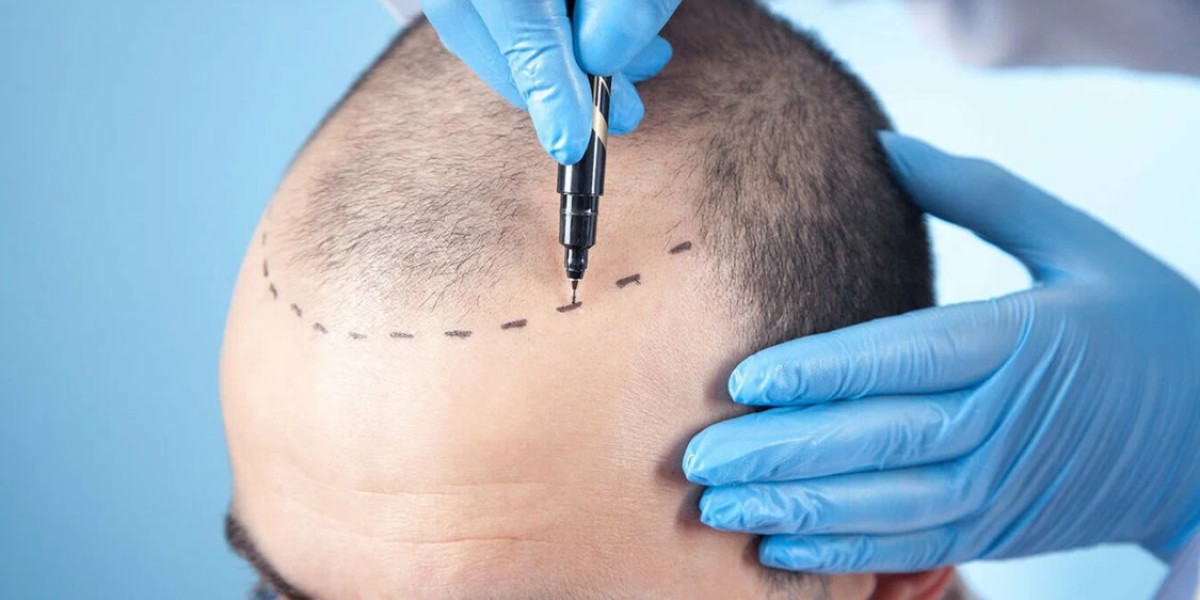

Hair Transplant for Genetic Hair Loss Conditions
Introduction
Genetic hair loss is the most common cause of baldness worldwide, affecting both men and women. Often referred to as androgenetic alopecia, it follows a predictable pattern and gradually worsens over time if left untreated. For many individuals, this condition can significantly impact confidence and appearance.
Hair transplant in Dammam is becoming an increasingly popular option for people seeking a long-term solution to hair loss and thinning hair.
A hair transplant has become one of the most effective long-term solutions for managing genetic hair loss. Unlike temporary treatments, it offers a permanent restoration method by relocating healthy, genetically resistant hair follicles to thinning or bald areas.
Understanding Genetic Hair Loss
Genetic hair loss is primarily inherited and influenced by hormones, especially dihydrotestosterone (DHT).
How it develops
- Hair follicles become sensitive to DHT
- Follicles gradually shrink (miniaturization)
- Hair becomes thinner and weaker over time
- Eventually, follicles stop producing visible hair
Common patterns
In men:
- Receding hairline
- Thinning at the crown
- Progression toward partial or complete baldness
In women:
- Diffuse thinning on the top of the scalp
- Widening of the central parting
- Generally preserved frontal hairline
Why Hair Transplant Works for Genetic Hair Loss
Hair transplant surgery is effective because it uses the principle of donor dominance.
What this means
- Hair from the back and sides of the scalp is genetically resistant to DHT
- These follicles retain their characteristics even after being transplanted
- Once moved, they continue growing permanently in the new location
This makes hair transplant a reliable solution for long-term restoration.
Suitable Candidates for Hair Transplant
Not everyone with genetic hair loss is immediately suitable for surgery. Proper evaluation is essential.
Ideal candidates usually have:
- Stable pattern of hair loss
- Sufficient donor hair density
- Realistic expectations
- Good overall health
- No active scalp infections
Not ideal candidates:
- Very young individuals with rapidly progressing hair loss
- Poor donor area density
- Untreated scalp conditions
- Unrealistic expectations about density or coverage
Best Hair Transplant Techniques for Genetic Hair Loss
Different surgical methods are used depending on the severity and pattern of hair loss.
1. FUE (Follicular Unit Extraction)
FUE is widely used for treating genetic hair loss.
How it works
Individual follicles are extracted from the donor area and implanted into thinning regions.
Benefits
- Minimal scarring
- Natural-looking results
- Faster recovery
- Suitable for both mild and moderate hair loss
Limitations
- Time-consuming for large bald areas
- Requires skilled precision for high density
2. FUT (Follicular Unit Transplantation)
FUT is often used for more advanced cases.
How it works
A strip of scalp is removed from the donor area, and follicles are extracted from it.
Benefits
- High number of grafts in a single session
- Cost-effective option
- Efficient for extensive baldness
Limitations
- Linear scar in donor area
- Longer healing time
3. DHI (Direct Hair Implantation)
DHI is an advanced technique often used for hairline design and density refinement.
How it works
Follicles are implanted directly using a specialized pen-like tool.
Benefits
- Precise control of angle and direction
- Higher density placement
- Natural hairline results
- Reduced handling of grafts
Limitations
- Higher cost
- Requires advanced surgical expertise
Treatment Planning for Genetic Hair Loss
Hair transplant planning depends heavily on the progression stage of hair loss.
Early stage
- Focus on preserving existing hair
- Small graft sessions for hairline restoration
- Medical therapy often recommended alongside surgery
Moderate stage
- Combination of hairline and mid-scalp restoration
- Balanced graft distribution
- Possible need for future sessions
Advanced stage
- Large graft sessions (often FUT or combined techniques)
- Focus on covering critical areas first
- Strategic density planning
Importance of Donor Area in Genetic Hair Loss
The donor area determines the success and longevity of the transplant.
Key factors
- Hair thickness and density
- Stability of donor follicles
- Long-term availability of grafts
Why it matters
Since genetic hair loss continues over time, preserving donor hair for future use is essential.
Role of Medications Alongside Transplant
Hair transplant alone does not stop genetic hair loss. Supporting treatments are often recommended.
Common medications
- Minoxidil (topical growth stimulant)
- Finasteride (DHT blocker, for men)
Benefits
- Slows further hair loss
- Protects existing natural hair
- Improves overall density results
Expected Results and Timeline
Hair restoration for genetic hair loss follows a gradual timeline.
0–2 weeks
- Healing phase
- Mild swelling and scabbing
2–4 weeks
- Shedding of transplanted hair (normal)
3–6 months
- Early regrowth begins
6–9 months
- Noticeable improvement in density
12–18 months
- Final natural results achieved
Challenges in Genetic Hair Loss Treatment
While hair transplant is highly effective, genetic hair loss presents ongoing challenges.
Key challenges
- Continued progression of non-transplanted hair loss
- Need for future procedures in some cases
- Limited donor hair supply
- Requirement for long-term maintenance
Proper planning helps minimize these issues.
Advantages of Hair Transplant for Genetic Hair Loss
- Permanent restoration of bald areas
- Natural appearance when done correctly
- Improved facial aesthetics
- High patient satisfaction
- Long-term confidence boost
Limitations to Consider
- Does not cure genetic hair loss completely
- May require multiple sessions over time
- Results depend on donor hair availability
- Full density may not always be achievable
Conclusion
Hair transplant surgery is one of the most effective solutions for managing genetic hair loss conditions. By relocating DHT-resistant hair follicles from the donor area to thinning regions, it provides a permanent and natural-looking restoration.