
True luxury has always been defined by its ability to stand out, command attention, and celebrate significant life milestones. In the world of fine jewelry, few statements are as powerful or instantly recognizable as a substantial, double digit carat weight.
Historically reserved for museum collections or the ultra elite, a gemstone of this scale carries a unique prestige. However, as the jewelry landscape evolves, what collectors and modern couples expect from high end pieces has transformed. Today’s luxury buyers seek more than just pure size they demand precision, custom engineering, structural security, and design innovation that aligns with 21st century lifestyles.
A monumental ring is no longer just a passive display of wealth kept in a vault; it is a wearable piece of art. Achieving this balance requires a deep understanding of gemology and structural design, ensuring that a prominent centerpiece feels balanced, comfortable, and tailored to the wearer’s personality.
The Visual Mechanics and Physical Dimension of Substantial Scale
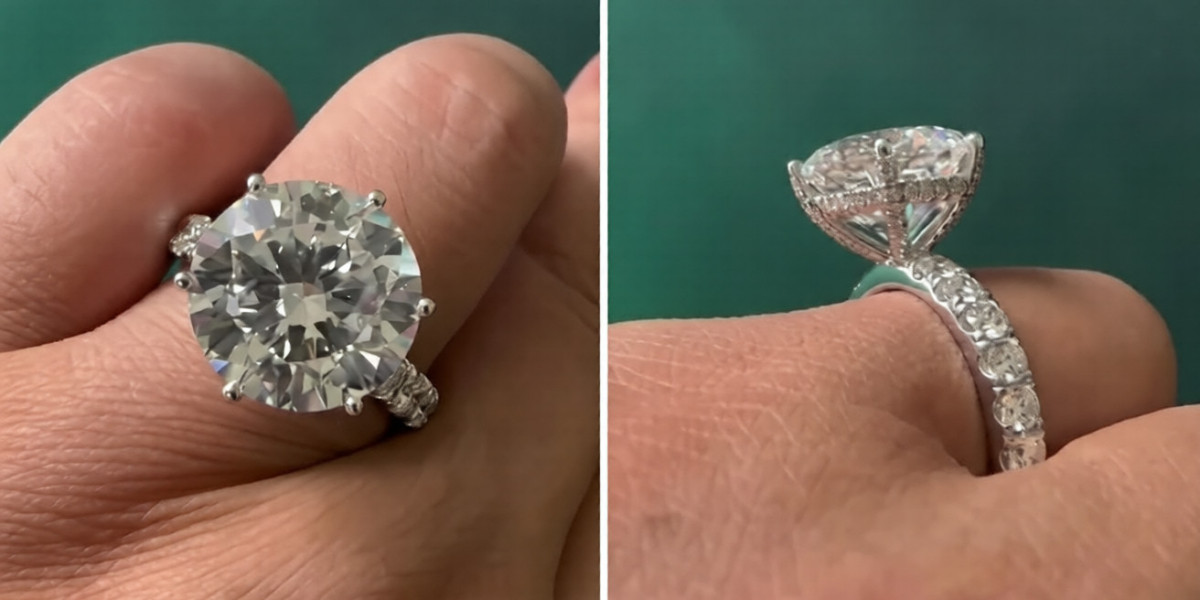
To appreciate why a large gemstone commands such authority on the hand, one must look closely at the physical architecture of a major diamond. When a gemstone reaches the ten carat milestone, it transitions from a traditional piece of jewelry into a structural masterpiece.
A standard one carat round brilliant diamond typically measures around 6.5 millimeters in diameter. In contrast, a ten carat round diamond scales up to an impressive 14 millimeters or more across.
This increase in surface area completely changes how the stone interacts with light. In large scale gems, the facets are much larger, functioning like miniature mirrors that throw dramatic, sweeping flashes of light rather than the tight, pin fire sparkle seen in smaller stones. This phenomenon is known as scintillation, and it is exponentially more pronounced at a grander scale.
However, this massive surface area also introduces strict physical realities. Because the stone behaves like a magnifying glass, internal characteristics, structural patterns, and subtle color hues become far more visible to the naked eye. In a small accent stone, a minor inclusion can easily hide behind brilliant faceting.
At a monumental scale, there is nowhere to hide. This is why expert gem cutters place an absolute premium on cut proportions, ensuring the stone is deep enough to prevent light from leaking out the bottom, yet wide enough to maximize its impressive footprint.
For individuals looking to explore these monumental, masterfully engineered designs, you can find details on a 10 carat lab grown diamond ring crafted to the highest global standards.
Architectural Integrity: Designing Settings for Major Centerpieces
Mounting a heavy, ultra luxury gemstone requires far more structural planning than setting a standard engagement ring. When dealing with a stone of significant mass, the setting must act as a perfect balance between engineering security and aesthetic minimalism.
The goal is to keep the massive gem perfectly safe on the finger without burying its natural beauty in heavy, distracting metal walls. For generations, the default setting for a heavy stone was a thick, industrial six prong mount. While secure, this style often made the ring look bulky and traditional.
Modern design expectations have pushed master jewelers to develop highly specialized, low profile structures. By lowering the basket closer to the finger, the ring’s center of gravity is dropped, preventing it from spinning or sliding uncomfortably to the side of the hand.
Advanced techniques like claw prongs and hidden micro halos provide exceptional stability while remaining practically invisible from the top profile. Furthermore, the choice of metal is critical.
Platinum remains the industry standard for securing major stones due to its incredible density and resistance to bending over time. However, modern trends have seen a massive surge in high tensile 18k yellow and rose gold alloys, which add a warm, contemporary contrast to an icy, white center stone.
Moving Beyond the Round Brilliant: The Rise of Elongated and Antique Shapes
While the classic round brilliant cut will always have a dedicated audience, modern aesthetic expectations lean heavily toward customization and personal expression. Today's luxury buyers are increasingly moving away from uniform designs in favor of distinctive, fancy shaped cuts that offer unique visual silhouettes and maximize their physical dimensions.
Elongated shapes such as the sleek oval, the romantic pear, and the sophisticated marquise are particularly prized at large carat weights. Because of their stretched proportions, these cuts distribute their weight across a wider horizontal or vertical plane.
A ten carat oval or pear cut gemstone often boasts a significantly larger visual appearance than a round brilliant of the exact same weight, providing an even more striking presence on the hand while elegantly elongating the wearer’s fingers.
Simultaneously, step cuts like the emerald and Asscher cut appeal to those who value architectural clean lines. Known as "the honest cuts," these shapes feature open, parallel facets that do not mimic the chaotic sparkle of a round brilliant but instead create a mesmerizing "hall of mirrors" effect.
For connoisseurs seeking a blend of historic romance and modern execution, old world cutting styles like the Old Mine or Old European cut provide a pillowy, soft silhouette that feels deeply personal and historically rich.
Aligning Grand Scale with Modern Millennial and Gen Z Expectations
The modern fine jewelry collector approaches a major purchase with a completely different mindset than previous generations. Today's consumers are highly educated, research driven, and intensely focused on the long term impact of their choices.
When investing in a substantial piece of jewelry, they expect absolute clarity regarding the stone's origins, verified laboratory grading, and a pricing structure that reflects genuine value rather than hyper inflated retail markups.
This shift in consumer behavior has completely changed how elite jewelry brands operate. Modern buyers are less interested in paying massive premiums for a brand name stamped inside a ring box; instead, they want to invest directly in the quality of the raw materials and the artistry of the craftsmanship.
They expect full transparency throughout the sourcing process, preferring clean, direct supply chains over convoluted networks of traditional brokers and middlemen.
This emphasis on clarity and intentional design is precisely where elite craftsmanship thrives. Brands that manage every phase of production from the initial selection of the rough crystal to the final hand polishing and custom setting are uniquely equipped to meet these demanding modern criteria.
By blending advanced master cutting techniques with transparent, direct pricing, these creators ensure that a monumental jewelry piece feels entirely relevant to contemporary values.
For individuals looking to explore these monumental, masterfully engineered designs, you can find details on a 10 carat lab grown diamond ring crafted to the highest global standards.
These statement pieces reflect the ultimate culmination of modern technical capability, offering flawlessly cut, globally certified stones set into bespoke, high precision mountings that honor both classic beauty and modern structural innovation.
The Art of Bespoke Personalization and In House Perfection
A truly impactful ring cannot be pulled off a standard retail shelf; it must be built entirely from the ground up around the specific stone and the individual hand it will adorn. Every major gemstone possesses its own unique optical personality, requiring a tailor made approach to its creation.
Master designers must carefully calibrate the thickness of the band, the placement of accent side stones like classic tapered baguettes or custom trapezoids and the exact height of the prongs to complement the stone's precise millimeter dimensions.
By taking a fully customized, in house approach, designers can eliminate the unnecessary markups and quality control issues common in mass produced luxury jewelry.
This ensures that every single angle is structurally optimized, every stone is globally certified by premier gemological institutes like the IGI or GIA, and the final piece stands as a durable, lifelong heirloom.
At the pinnacle of this direct to consumer luxury experience is Antiquecut. Operating directly from their specialized production facilities, they eliminate independent middlemen to deliver elite, factory direct craftsmanship. By controlling the entire cutting, polishing, and setting process in house, they blend world class technical precision with accessible, transparent value, creating breathtaking custom statements built to last for generations.
Conclusion
The traditional world of high jewelry has broken wide open, replaced by a modern era that celebrates scale, technical ingenuity, and absolute transparency.
A monumental gemstone ring is no longer bound by old, restrictive rules; it has evolved into a dynamic statement of modern luxury.
By combining precise physics, custom engineered settings, and personalized design styles, these iconic pieces successfully honor the classic romance of high carat jewelry while fulfilling the rigorous structural and ethical expectations of today's discerning collectors.