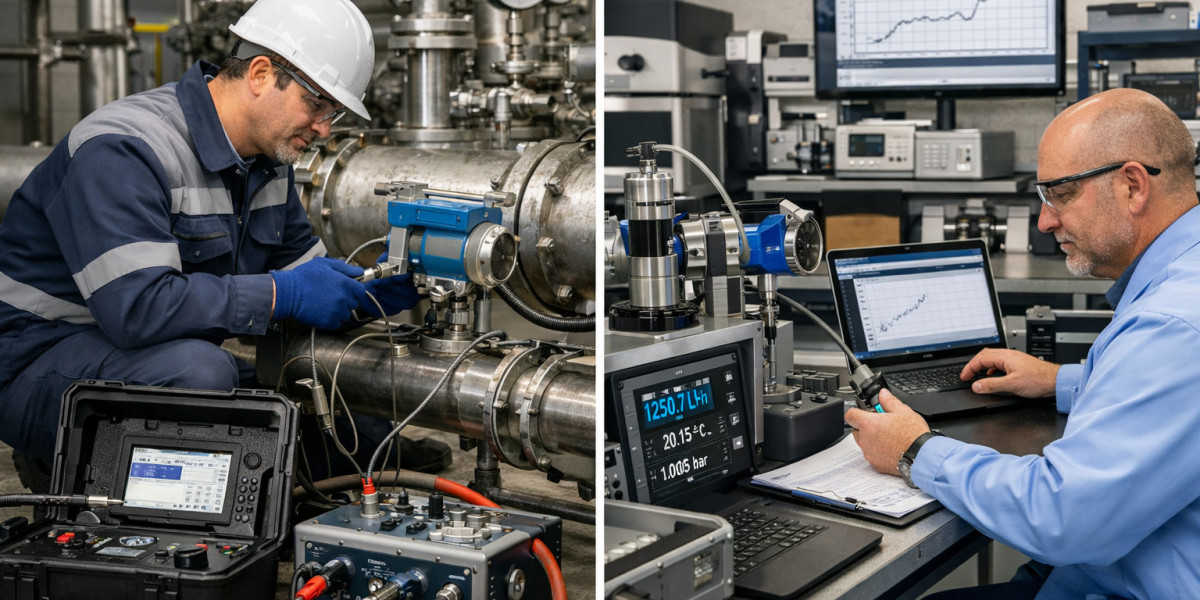

Flowmeters are important instruments used to measure the movement of liquids and gases in many industries. Accurate flow measurement helps improve process control, product quality, and operational efficiency. Regular calibration ensures that flowmeters continue to provide reliable readings over time. Many organizations use Flowmeter Calibration Services in Abu Dhabi to maintain measurement accuracy and comply with quality requirements.
There are two common methods used for flowmeter calibration: on-site calibration and laboratory calibration. Each method has its own benefits and limitations. Understanding the differences can help businesses choose the most suitable option for their equipment and operating conditions.
What Is Flowmeter Calibration?
Flowmeter calibration is the process of comparing the readings of a flowmeter with a known and traceable reference standard. This process helps identify measurement errors and allows adjustments if needed.
Over time, factors such as wear, environmental conditions, vibration, and continuous operation can affect flowmeter performance. Calibration helps detect these changes and ensures that measurements remain accurate and dependable.
Understanding On-Site Flowmeter Calibration
On-site calibration is performed at the facility where the flowmeter is installed. Calibration technicians bring portable calibration equipment and test the instrument without removing it from the process line.
This method is commonly used in industries where removing equipment can be difficult or where continuous production is important. Since the flowmeter remains in its operating environment, the calibration process reflects actual working conditions.
On-site calibration can be useful for large systems, critical processes, and locations where transportation of equipment is not practical.
Benefits of On-Site Calibration
One of the main advantages of on-site calibration is reduced downtime. Equipment does not need to be disconnected, packaged, and transported to another location.
Another benefit is convenience. Calibration can be scheduled without major disruptions to operations. This allows maintenance teams to verify instrument performance while keeping production interruptions to a minimum.
On-site calibration also helps technicians evaluate the flowmeter under real operating conditions, including temperature, pressure, and flow characteristics present in the system.
Limitations of On-Site Calibration
Although on-site calibration offers convenience, it may have some limitations. Portable calibration equipment may not always achieve the same level of precision as specialized laboratory systems.
Environmental factors such as vibration, weather conditions, or limited workspace can also influence the calibration process. In some situations, certain adjustments or repairs may be difficult to perform while the instrument remains installed.
Because of these factors, the achievable accuracy may depend on the specific equipment and site conditions.
Understanding Laboratory Flowmeter Calibration
Laboratory calibration is performed in a controlled environment using specialized calibration systems and reference standards. The flowmeter is removed from its installation point and sent to a calibration laboratory.
In the laboratory, technicians can perform detailed testing under carefully controlled conditions. Advanced equipment allows them to evaluate the performance of the flowmeter with high precision.
Laboratory calibration is often selected when the highest level of measurement accuracy is required.
Benefits of Laboratory Calibration
A major advantage of laboratory calibration is improved accuracy. Controlled conditions help reduce external influences that could affect measurement results.
Laboratories often use highly accurate reference standards that provide reliable and traceable calibration data. This allows for detailed analysis of instrument performance and measurement uncertainty.
Another benefit is the opportunity for a complete inspection. Technicians can check for wear, contamination, damage, or other issues that may affect the operation of the flowmeter.
Limitations of Laboratory Calibration
The main limitation of laboratory calibration is the need to remove the instrument from service. This may result in downtime if spare equipment is not available.
Transportation can also increase the total time required for calibration. Packaging, shipping, testing, and reinstallation may take several days depending on the location and equipment type.
For large flowmeters or systems that are difficult to disconnect, laboratory calibration may require additional planning and resources.
Factors to Consider When Choosing a Calibration Method
Several factors can influence the choice between on-site and laboratory calibration.
Required Accuracy
If the process requires very high measurement accuracy, laboratory calibration may be the preferred option. Controlled testing environments can provide highly reliable results.
Equipment Accessibility
Flowmeters that are difficult to remove may be better suited for on-site calibration. This can reduce labor and minimize operational disruptions.
Downtime Requirements
Facilities that operate continuously often prefer calibration methods that reduce production interruptions. On-site calibration can help support these requirements.
Cost Considerations
Costs can vary depending on transportation, labor, equipment size, and calibration requirements. Evaluating the total operational impact can help determine the most practical choice.
Industry Requirements
Some industries may have specific quality standards or regulatory requirements that influence the calibration method selected. Understanding these requirements is important before scheduling calibration activities.
Comparing Accuracy and Practicality
Both calibration methods play an important role in maintaining reliable flow measurement. On-site calibration offers convenience, reduced downtime, and testing under actual operating conditions. Laboratory calibration provides controlled testing environments and the potential for higher measurement accuracy.
The best choice depends on the application, equipment type, operational needs, and quality requirements. By understanding the strengths and limitations of each method, organizations can make informed decisions about calibration planning and instrument maintenance. Many industries continue to rely on Flowmeter Calibration Services in Abu Dhabi to support accurate measurements and maintain consistent operational performance.