
Introduction
A factory can pass an audit on Monday and experience a major quality failure on Friday.
That reality highlights one of the biggest challenges facing manufacturers, importers, retailers, and sourcing professionals today. While factory audits have long been considered a cornerstone of supplier qualification and risk management, modern supply chains have become far more complex than they were even a decade ago.
Global sourcing networks now involve multiple suppliers, subcontractors, raw material providers, logistics partners, and regulatory requirements. In such an environment, relying solely on a periodic factory audit is like taking a single photograph and assuming it represents everything happening over an entire year.
Many businesses still treat factory audits as a one-time approval process. However, leading manufacturers increasingly recognize that traditional audits alone cannot provide the visibility needed to manage today's supply chain risks.
This is why modern factory audit services have evolved beyond simple compliance checks. They now play a critical role within broader supplier quality management, risk assessment, and continuous improvement strategies.
In This Guide, You Will Learn:
Why traditional factory audits are becoming less effective on their own
The limitations of conventional audit approaches
How modern manufacturing has changed supplier risk
The evolution of factory audit services
New strategies manufacturers use to monitor suppliers
Common mistakes businesses make when relying solely on audits
Practical ways to strengthen supplier oversight and reduce risk
The Original Purpose of Factory Audits
Factory audits have been a fundamental part of supplier evaluation for decades.
Traditionally, businesses used audits to determine whether a factory could meet basic requirements before placing orders.
A standard factory audit typically evaluates:
Production capabilities
Manufacturing capacity
Quality management systems
Workforce conditions
Equipment and facilities
Regulatory compliance
Documentation procedures
For many years, this approach worked reasonably well because supply chains were relatively straightforward and production cycles were more predictable.
However, today's manufacturing environment is significantly different.
Actionable Takeaway
Factory audits remain valuable, but businesses should view them as a starting point rather than a complete supplier risk management solution.
Why Modern Manufacturing Has Changed the Rules
Global manufacturing has undergone a dramatic transformation.
Today's products often involve components sourced from multiple countries, assembled in different regions, and shipped across global markets.
As complexity increases, so does risk.
Multi-Tier Supply Chains
Many organizations only audit their direct suppliers.
However, critical risks frequently originate deeper within the supply chain.
For example:
Raw material shortages
Subcontractor quality issues
Component supplier failures
Ethical sourcing violations
These risks may remain completely invisible during a traditional factory audit.
Example
A factory may demonstrate excellent quality controls during an audit.
However, if one of its raw material suppliers experiences disruptions, production quality and delivery performance may still suffer.
Rapid Operational Changes
Factories evolve continuously.
Changes may include:
New production lines
Equipment upgrades
Workforce turnover
Management restructuring
Capacity expansions
An audit performed six months ago may no longer accurately reflect current operating conditions.
Actionable Takeaway
Businesses should supplement audits with ongoing supplier performance monitoring to capture operational changes in real time.
The Major Limitations of Traditional Factory Audits
Factory audits provide valuable insights, but they also have inherent limitations.
Understanding these limitations helps organizations build stronger supplier management systems.
Audits Represent a Snapshot in Time
A factory audit shows what auditors observe during a specific visit.
It does not necessarily reveal:
Daily operational performance
Seasonal challenges
Ongoing production issues
Emerging supplier risks
A supplier may perform exceptionally during an audit while struggling with consistency throughout the year.
Audit Preparation Can Distort Reality
Factories often prepare extensively before scheduled audits.
This preparation may include:
Organizing documentation
Improving housekeeping
Adjusting workflows
Assigning key personnel to support the audit
While preparation is not inherently problematic, it can sometimes create a more favorable impression than day-to-day operations reflect.
Hidden Risks Remain Undetected
Traditional audits may overlook:
Financial instability
Cybersecurity vulnerabilities
Supply chain dependencies
Workforce retention issues
Geopolitical exposure
These factors increasingly influence supplier reliability.
Actionable Takeaway
Use audit findings alongside financial reviews, supplier scorecards, and risk assessments for a more complete supplier evaluation.
Why Modern Factory Audit Services Are Evolving
The role of factory audit services has expanded significantly.
Forward-thinking organizations now use audits as part of a broader supplier oversight framework.
From Compliance to Performance
Historically, audits focused primarily on compliance.
Modern audits increasingly evaluate:
Operational efficiency
Process capability
Risk exposure
Supply chain resilience
Continuous improvement practices
The objective is no longer simply determining whether a factory meets minimum requirements.
Instead, businesses want to know whether the supplier can consistently support long-term growth.
Integration With Supplier Risk Management
Modern audit programs often connect directly with supplier risk assessment initiatives.
This allows businesses to evaluate:
Financial risks
Operational risks
Capacity risks
Quality risks
Compliance risks
By combining audit results with performance data, organizations gain deeper visibility into supplier health.
Actionable Takeaway
Shift audit objectives from "pass or fail" evaluations toward long-term supplier performance and risk analysis.
Modern Approaches That Complement Traditional Audits
Leading manufacturers rarely rely on audits alone.
Instead, they use multiple monitoring and verification methods.
Continuous Supplier Performance Monitoring
Performance tracking provides ongoing visibility between audit cycles.
Common metrics include:
On-time delivery rates
Product defect rates
Corrective action responsiveness
Customer complaints
Production capacity utilization
Continuous monitoring often identifies emerging risks before they become major disruptions.
Supplier Quality Assessments
Supplier quality assessments go beyond facility reviews.
They examine:
Process consistency
Root cause analysis capabilities
Corrective action systems
Preventive quality practices
This approach focuses on how suppliers manage quality over time.
Data-Driven Risk Monitoring
Technology now allows companies to monitor supplier risks continuously.
Examples include:
Financial health indicators
Geopolitical developments
Compliance alerts
Market disruptions
Operational performance trends
These tools provide insights that traditional audits cannot capture.
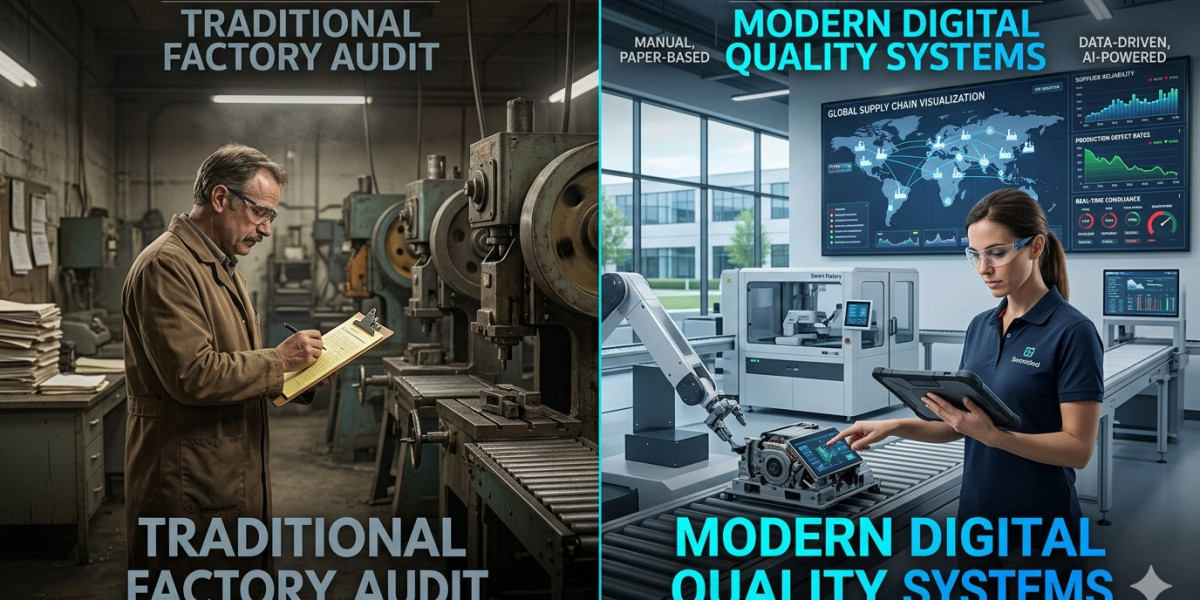
Traditional Audit vs Modern Supplier Oversight
Traditional Factory Audit | Modern Supplier Oversight |
Periodic evaluations | Continuous monitoring |
Compliance-focused | Performance-focused |
Snapshot assessment | Ongoing visibility |
Limited risk coverage | Multi-dimensional risk analysis |
Reactive approach | Proactive risk management |
Facility-focused | Supply chain-focused |
Why the Difference Matters
Companies operating in competitive markets require faster access to supplier information and greater visibility into potential disruptions.
Modern oversight provides that capability.
Actionable Takeaway
Combine audits, performance monitoring, supplier scorecards, and risk assessments to build a comprehensive supplier management strategy.
Warning Signs That Audits Alone Are Not Protecting Your Business
Many organizations believe annual audits are sufficient.
In reality, several warning signs suggest otherwise.
Recurring Quality Issues
Repeated defects despite successful audits often indicate deeper process problems.
Unexpected Delivery Delays
Suppliers may pass audits while struggling with capacity or scheduling challenges.
Rising Customer Complaints
Customer feedback frequently reveals issues not captured during audit visits.
Frequent Corrective Actions
Constant corrective actions suggest systemic weaknesses that audits may not fully address.
Supplier Transparency Concerns
Limited communication or delayed responses often signal emerging operational problems.
Actionable Takeaway
Treat recurring operational problems as indicators that supplier oversight needs strengthening beyond traditional audits.
Common Mistakes Businesses Make
Even experienced sourcing teams can overestimate the effectiveness of factory audits.
Mistake #1: Conducting Audits Only During Supplier Onboarding
Supplier conditions change over time.
A strong audit result today does not guarantee future performance.
Mistake #2: Treating Audits as a Compliance Checklist
Audits should generate actionable improvement opportunities rather than simply verifying requirements.
Mistake #3: Ignoring Supplier Performance Data
Audit reports should be combined with operational metrics.
Mistake #4: Overlooking Sub-Supplier Risks
Many disruptions originate beyond direct suppliers.
Mistake #5: Failing to Follow Up on Findings
Audit observations have little value without corrective action and continuous improvement efforts.
Consequences
These mistakes often lead to:
Production disruptions
Quality failures
Supply shortages
Increased operational costs
Customer dissatisfaction
Actionable Takeaway
Develop a formal process for tracking audit findings and monitoring improvement progress.
Real-Life Case Study: Beyond the Audit Report
A consumer electronics company sourced components from a supplier that consistently achieved excellent audit scores.
The supplier passed quality audits, compliance audits, and capability assessments.
Everything appeared stable.
However, the manufacturer later experienced significant delivery delays and rising defect rates.
A deeper investigation revealed:
Workforce turnover had increased significantly.
Production capacity was overstretched.
Subcontractors were being used without adequate oversight.
Equipment maintenance schedules were slipping.
None of these issues were fully visible during the previous audit.
In response, the company implemented:
Quarterly supplier performance reviews
Monthly quality scorecards
Capacity monitoring
Supplier risk assessments
Continuous corrective action tracking
Within a year, supplier performance improved substantially and disruption risks declined.
The lesson was clear: audits provided valuable information, but continuous oversight delivered meaningful risk prevention.
Problem vs Solution Comparison
Common Supplier Oversight Problem | Recommended Solution |
Relying only on annual audits | Continuous supplier monitoring |
Limited visibility between audits | Real-time performance tracking |
Undetected supplier risks | Supplier risk assessments |
Repeated quality failures | Supplier quality improvement programs |
Hidden capacity constraints | Production capability monitoring |
Slow corrective action implementation | Structured follow-up processes |
Expert Tips for Strengthening Supplier Oversight
Industry professionals recommend several best practices.
Audit Based on Risk
High-risk suppliers should receive more frequent evaluations.
Combine Multiple Data Sources
Use audits, scorecards, inspections, and performance metrics together.
Prioritize Supplier Relationships
Open communication often reveals risks before formal audits do.
Monitor Trends, Not Just Events
Patterns provide better risk indicators than isolated incidents.
Invest in Supplier Development
Helping suppliers improve can generate greater long-term value than replacing them.
Review Critical Suppliers More Frequently
Strategic suppliers require closer attention than low-risk vendors.
Actionable Takeaway
Think of factory audits as one layer within a broader supplier management framework rather than a standalone solution.
Frequently Asked Questions
1. What are factory audit services?
Factory audit services involve evaluating a manufacturer's capabilities, quality systems, compliance practices, production processes, and operational performance to assess supplier reliability.
2. Why are traditional factory audits no longer enough?
Traditional audits provide only a snapshot of operations and may not reveal ongoing performance issues, financial risks, supplier dependencies, or emerging disruptions.
3. How often should factory audits be conducted?
The frequency depends on supplier risk levels. High-risk or strategic suppliers often benefit from more frequent evaluations combined with continuous performance monitoring.
4. What should complement a factory audit?
Supplier scorecards, quality inspections, risk assessments, performance monitoring, and corrective action tracking should support audit programs.
5. What are the benefits of modern factory audit services?
Modern factory audit services provide deeper visibility into supplier capabilities, risks, operational stability, and long-term performance potential.
Conclusion
Factory audits remain an essential component of supplier qualification and quality assurance, but they are no longer sufficient on their own. Modern manufacturing operates within increasingly complex supply chains where risks can emerge quickly and often originate outside the factory walls.
Organizations that rely solely on periodic audits may miss critical warning signs related to supplier performance, operational stability, financial health, and supply chain resilience. By combining factory audit services with continuous monitoring, supplier risk assessments, quality performance tracking, and proactive supplier development programs, businesses can gain the visibility needed to prevent disruptions before they impact production.
In today's manufacturing environment, the goal is not simply to verify compliance. It is to build stronger, more reliable supply chains capable of supporting long-term growth, customer satisfaction, and operational excellence. Businesses seeking greater supplier transparency and risk reduction should consider partnering with experienced factory audit and quality assurance professionals who can provide comprehensive insights far beyond a traditional audit checklist.