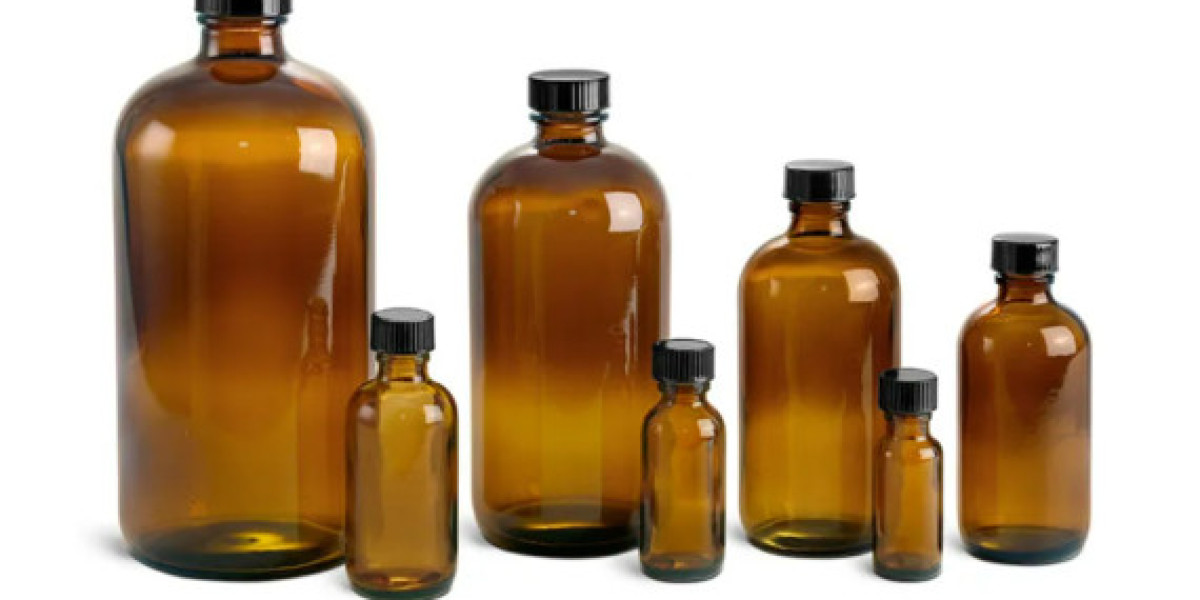

In packaging industries where product protection, shelf life, and sustainability matter, amber glass bottles have become one of the most trusted solutions worldwide. Known for their distinctive brown color and high protective qualities, amber glass bottles are widely used in pharmaceuticals, cosmetics, essential oils, food and beverage, and chemical industries.
The unique amber tint is not just aesthetic—it serves a functional purpose by protecting sensitive contents from harmful ultraviolet (UV) light. This makes amber glass bottles especially valuable for products that degrade when exposed to sunlight or heat.
In this comprehensive guide, we will explore everything about amber glass bottles, including their benefits, types, applications, manufacturing process, and how to choose the right bottle for your needs.
What Are Amber Glass Bottles?
Amber glass bottles are containers made from glass infused with iron, sulfur, and carbon, which gives them their characteristic brown or amber color. This color acts as a natural filter that blocks harmful UV rays.
These bottles are designed to:
Protect light-sensitive products
Extend shelf life
Maintain chemical stability
Provide a premium packaging appearance
Because of these properties, amber glass bottles are widely used in industries where product integrity is critical.
Why Amber Glass Bottles Are Important
The popularity of amber glass bottles is driven by their superior protective and functional qualities.
1. UV Light Protection
Amber glass blocks up to 90% of harmful UV radiation, preventing product degradation.
2. Extended Shelf Life
Products stored in amber bottles remain stable for longer periods.
3. Chemical Stability
Glass does not react with most substances, ensuring product purity.
4. Eco-Friendly Packaging
Glass is recyclable and sustainable compared to plastic alternatives.
5. Premium Appearance
Amber bottles offer a professional and high-end look for products.
Types of Amber Glass Bottles
There are several types of amber glass bottles depending on their design, shape, and usage.
1. Amber Glass Dropper Bottles
These bottles come with droppers for controlled dispensing.
Features:
Precision dosing
Leak-proof design
Small capacity
Applications:
Essential oils
Serums
Herbal extracts
Benefits:
Easy application
Prevents waste
Ideal for concentrated liquids
2. Amber Glass Spray Bottles
These bottles include spray pumps for mist or liquid dispersion.
Features:
Fine mist spray
Refillable design
Durable glass
Applications:
Skincare products
Disinfectants
Aromatherapy sprays
Benefits:
Even distribution
Convenient usage
Reusable packaging
3. Amber Glass Medicine Bottles
Used widely in pharmaceuticals.
Features:
Child-resistant caps
Sterile design
Accurate dosing compatibility
Applications:
Syrups
Liquid medicines
Supplements
Benefits:
Safety compliance
Product preservation
Tamper resistance
4. Amber Glass Cosmetic Bottles
Designed for beauty and skincare products.
Features:
Elegant design
Pump or screw caps
Various sizes
Applications:
Lotions
Serums
Face oils
Benefits:
Premium branding
Product protection
Customer appeal
5. Amber Glass Beer Bottles
Common in the beverage industry.
Features:
Strong structure
Pressure resistance
UV protection
Applications:
Beer
Craft beverages
Kombucha
Benefits:
Preserves flavor
Prevents oxidation
Extends shelf life
6. Amber Glass Laboratory Bottles
Used in scientific environments.
Features:
Chemical resistance
Heat stability
Precision design
Applications:
Chemical storage
Laboratory samples
Research materials
Benefits:
High safety
Accurate storage
Long-term stability
Benefits of Amber Glass Bottles
Using amber glass bottles provides several advantages across industries.
1. UV Protection
Prevents light-sensitive degradation of contents.
2. Product Stability
Maintains chemical and biological integrity.
3. Sustainability
Glass is 100% recyclable and eco-friendly.
4. Non-Toxic Material
Does not leach chemicals into contents.
5. Reusability
Can be cleaned and reused multiple times.
6. Premium Branding
Enhances product appearance and market value.
Industries That Use Amber Glass Bottles
Amber glass bottles are used across a wide range of industries.
Pharmaceutical Industry
Syrups
Medicines
Supplements
Importance:
Ensures drug stability
Prevents UV damage
Maintains purity
Cosmetic and Skincare Industry
Essential oils
Serums
Lotions
Importance:
Protects active ingredients
Enhances brand image
Improves shelf appeal
Food and Beverage Industry
Beer
Herbal extracts
Flavoring oils
Importance:
Preserves taste and aroma
Prevents oxidation
Chemical Industry
Laboratory chemicals
Industrial liquids
Importance:
Chemical resistance
Safe storage
Aromatherapy Industry
Essential oils
Fragrance blends
Importance:
Protects volatile compounds
Extends shelf life
How Amber Glass Bottles Are Made
Understanding the manufacturing process helps evaluate quality.
1. Raw Material Preparation
Silica sand, soda ash, and limestone are mixed with iron and sulfur for color.
2. Melting Process
Materials are melted at high temperatures to form molten glass.
3. Molding
Glass is shaped into bottles using molds.
4. Annealing
Bottles are slowly cooled to increase strength.
5. Quality Inspection
Each bottle is tested for defects and durability.
How to Choose the Right Amber Glass Bottles
Selecting the right amber glass bottles depends on several factors.
1. Intended Use
Medicine → pharmaceutical-grade bottles
Cosmetics → aesthetic designs
Food → food-safe bottles
2. Bottle Size
Choose based on product volume requirements.
3. Closure Type
Options include:
Dropper caps
Spray pumps
Screw caps
Child-resistant caps
4. Glass Thickness
Thicker glass provides better durability.
5. Branding Needs
Custom labeling or printing enhances product identity.
Environmental Impact of Amber Glass Bottles
Amber glass is one of the most sustainable packaging options.
Advantages:
Fully recyclable
No chemical leaching
Long lifecycle
Challenges:
Heavier than plastic
Higher transportation cost
Solutions:
Lightweight glass innovations
Recycling programs
Refillable bottle systems
Market Trends in Amber Glass Bottles
The amber glass bottles market is growing globally.
Key trends include:
Rising demand in cosmetics industry
Growth of organic and natural products
Sustainable packaging adoption
Custom branding solutions
Increased essential oil usage
Future of Amber Glass Bottles
The future of amber glass bottles is shaped by sustainability and innovation.
Emerging developments:
Lightweight glass technology
Smart labeling integration
Refillable packaging systems
Eco-friendly production methods
Enhanced UV protection coatings
Frequently Asked Questions (FAQs)
1. What are amber glass bottles used for?
They are used to store light-sensitive products like medicines, essential oils, cosmetics, and beverages.
2. Why are amber glass bottles brown?
The brown color is created by adding iron, sulfur, and carbon, which helps block UV light.
3. Are amber glass bottles recyclable?
Yes, they are 100% recyclable and environmentally friendly.
4. Do amber glass bottles protect against UV light?
Yes, they block most UV radiation and protect sensitive contents.
5. Are amber glass bottles safe for food and medicine?
Yes, they are non-toxic and widely used in pharmaceutical and food industries.
6. Can amber glass bottles be reused?
Yes, they can be cleaned and reused multiple times.
7. What industries use amber glass bottles the most?
Pharmaceutical, cosmetic, food, beverage, and chemical industries.
8. What is the main advantage of amber glass bottles?
Their ability to protect contents from UV light and extend shelf life.
Conclusion
Amber glass bottles are one of the most reliable and sustainable packaging solutions used across multiple industries. Their ability to protect sensitive products from UV damage, maintain chemical stability, and offer premium presentation makes them highly valuable in pharmaceuticals, cosmetics, food, and laboratory applications.
As industries shift toward eco-friendly and high-performance packaging, amber glass bottles continue to grow in popularity. Their durability, recyclability, and protective qualities make them an essential choice for businesses focused on quality, safety, and sustainability.