
Common Misconceptions About Non-Surgical Breast Enlargement
Introduction
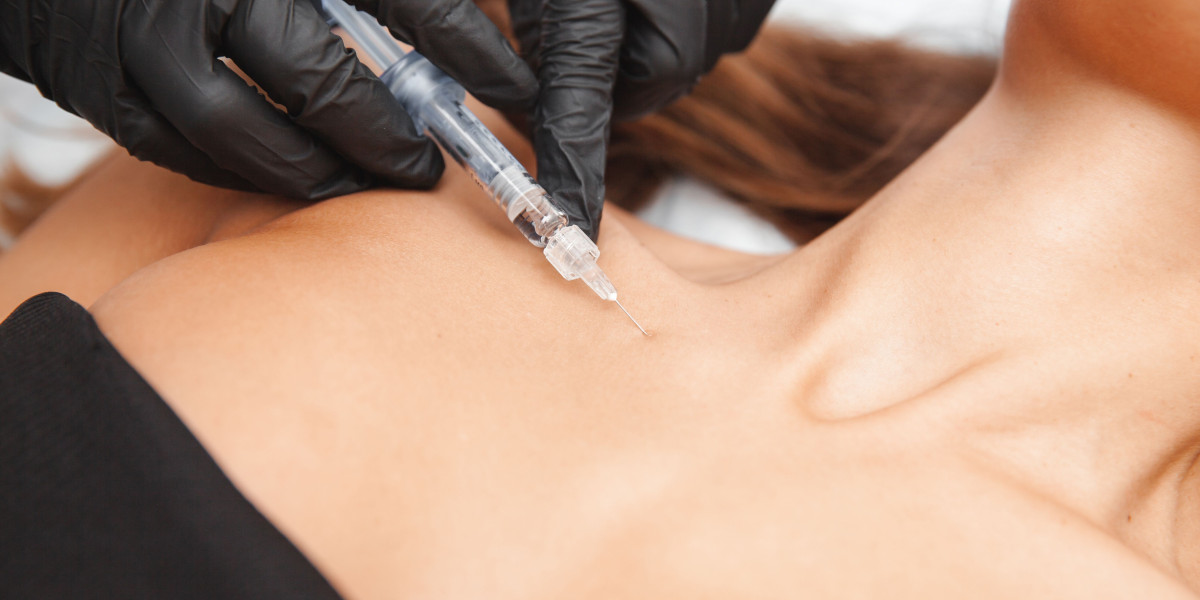
Non-surgical breast enlargement has gained significant popularity due to its promise of minimal downtime, reduced risk compared to surgery, and more natural-looking results. However, as with many cosmetic treatments, public perception is often shaped by marketing claims, social media trends, and incomplete information. Breast filler injections in Riyadh are a non-surgical cosmetic option designed to enhance breast volume and shape with temporary, minimally invasive results.
Understanding the common misconceptions about non-surgical breast enlargement is essential for making informed decisions and avoiding unrealistic expectations. While these procedures can offer subtle improvements, they are frequently misunderstood in terms of effectiveness, safety, and long-term results.
Misconception 1: Non-Surgical Methods Can Replace Breast Implants
One of the most widespread misconceptions is that injectable fillers or other non-surgical techniques can achieve the same results as breast implants.
In reality:
- Non-surgical methods provide subtle to moderate enhancement only
- Implants can achieve significant and long-lasting volume increase
- Fillers lack the structural support needed for dramatic augmentation
Non-surgical options are best suited for refinement, not full transformation.
Misconception 2: Results Are Permanent
Many people assume that once breast fillers or fat-based enhancements are done, the results will last indefinitely.
However:
- Most injectable fillers are temporary and gradually absorbed
- Even fat transfer results can partially diminish over time
- Maintenance sessions may be required to preserve volume
Unlike implants, non-surgical methods often require ongoing management.
Misconception 3: The Procedure Is Completely Risk-Free
Because non-surgical breast enlargement avoids surgery, it is often incorrectly assumed to be risk-free.
In reality, there are still medical risks, including:
- Infection or inflammation
- Uneven or lumpy results
- Filler migration
- Vascular complications in rare cases
- Tissue irregularities
While risks may be lower than surgery, they are not eliminated.
Misconception 4: Large Breast Size Increase Is Easily Achievable
Marketing images and promotional content sometimes create the impression that fillers can significantly increase breast size in a single session.
However:
- Large volume increases are not safely achievable with fillers alone
- The breast tissue has limited capacity for injectable volume
- Overfilling increases complication risks
Non-surgical methods are designed for subtle enhancement, not multiple cup-size changes.
Misconception 5: All Fillers Are the Same
Another common misunderstanding is that all injectable fillers used in breast enhancement are identical.
In fact:
- Different fillers have different consistency, longevity, and safety profiles
- Some are designed for facial use and not ideal for breast tissue
- Product quality varies significantly between manufacturers
Choosing the wrong type can impact both safety and results.
Misconception 6: The Results Look Exactly Like Natural Breasts
While non-surgical methods aim for natural-looking outcomes, there is a belief that they perfectly replicate natural breast tissue.
The reality is:
- Results depend on filler distribution and tissue response
- Slight differences in texture or shape may exist
- Natural breasts also have inherent asymmetry, which fillers may not fully correct
Experienced practitioners can achieve natural aesthetics, but perfection is not guaranteed.
Misconception 7: There Is No Recovery Time Needed
Non-surgical procedures are often perceived as “instant return to normal life” treatments.
While downtime is minimal:
- Swelling and bruising are common for several days
- Tissue adjustment takes weeks
- Certain activities may need temporary restriction
Recovery is shorter than surgery, but it still exists.
Misconception 8: Non-Surgical Breast Enlargement Is Suitable for Everyone
Many people believe these treatments are universally safe and effective.
However, suitability depends on:
- Breast anatomy and tissue quality
- Medical history
- Pregnancy or breastfeeding plans
- Desired level of enhancement
Some individuals may not be ideal candidates and may require alternative options.
Misconception 9: Fillers Cannot Move or Cause Irregularities
It is often assumed that once injected, fillers remain perfectly in place.
In reality:
- Some degree of filler movement or settling can occur
- Uneven distribution may happen during healing
- External pressure can influence final shape
Proper technique reduces these risks, but does not eliminate them entirely.
Misconception 10: More Filler Always Means Better Results
A common belief is that increasing filler volume automatically improves breast appearance.
However:
- Excess filler can distort natural shape
- Higher volumes increase complication risks
- Overfilling may lead to lumpiness or asymmetry
Balanced, conservative treatment often produces the most natural results.
Misconception 11: Non-Surgical Methods Require No Maintenance
Some assume that once the procedure is done, no further care is needed.
In reality:
- Fillers gradually break down over time
- Fat transfer results may partially reduce
- Touch-up sessions may be necessary
Long-term maintenance is often part of the treatment plan.
Misconception 12: Results Are Immediately Final
Although changes are visible right away, many believe the final result is immediate.
However:
- Swelling can temporarily exaggerate size
- Final shape typically stabilizes over several weeks
- Tissue adaptation continues during healing
Immediate appearance is not always the final outcome.
Misconception 13: Non-Surgical Means No Medical Expertise Required
Some people assume that because the procedure is non-surgical, it can be performed with minimal medical training.
This is incorrect because:
- Breast anatomy is complex and vascular
- Incorrect technique increases serious risk
- Only trained medical professionals should perform these procedures
Expertise is critical for safety and aesthetic success.