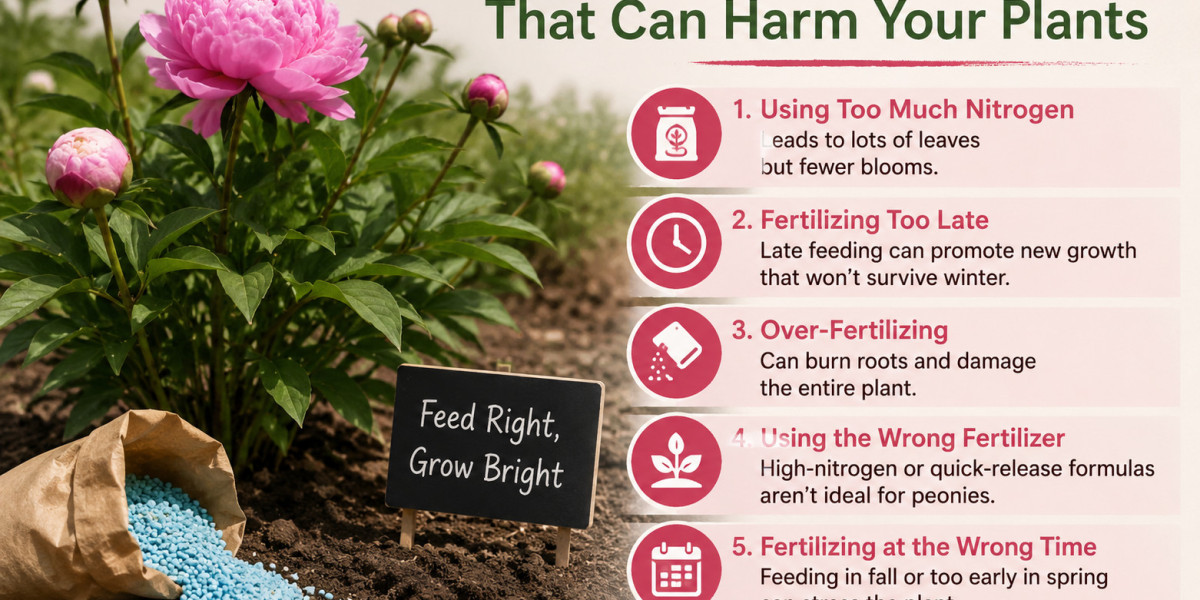

Peonies are beloved for their large, fragrant, and long-lasting flowers. These beautiful plants can thrive for decades when given proper care. However, many gardeners unknowingly make fertilizer mistakes that can weaken their plants instead of helping them grow. Using the wrong fertilizer, feeding at the wrong time, or overapplying nutrients can reduce blooms and even damage the roots.
This guide explains the most common Peony Fertilizer mistakes and how to avoid them so your plants stay healthy, produce bigger flowers, and continue thriving year after year.
Proper fertilization is about balance. Peonies are not heavy feeders, and simple adjustments can make a significant difference in their overall health.
YourHomify is a community that shares practical home and gardening ideas to help gardeners create healthier and more beautiful outdoor spaces.
Why Proper Peony Fertilizer Matters
Peonies are long-living perennials that store energy in their roots. The right fertilizer supports:
- Strong root development
- Healthy green foliage
- Better flower production
- Disease resistance
- Long-term plant health
When fertilizer is misused, plants often show signs of stress such as weak stems, yellow leaves, fewer blooms, or excessive leaf growth.
Understanding common mistakes helps prevent unnecessary damage.
1. Using Too Much Fertilizer
One of the biggest mistakes gardeners make is assuming more fertilizer means more flowers.
Excess fertilizer causes several problems:
- Root burn
- Excessive leafy growth
- Fewer blooms
- Salt buildup in the soil
Peonies prefer moderate feeding. Overfeeding encourages the plant to focus on producing leaves instead of flowers.
What to do instead
Apply fertilizer only once or twice per growing season and always follow product instructions carefully.
Less is often more when growing peonies.
2. Choosing High-Nitrogen Fertilizers
Nitrogen promotes leaf growth, but too much can reduce flowering.
Many general-purpose lawn fertilizers contain high amounts of nitrogen, which is not ideal for peonies.
Signs of excess nitrogen include:
- Tall, soft stems
- Dark green leaves
- Very few flowers
- Weak overall structure
Better fertilizer choices
Select balanced or low-nitrogen formulas such as:
- 5-10-10
- 10-10-10
- 5-10-5
These formulations support both roots and flower development.
3. Fertilizing at the Wrong Time
Timing plays a major role in successful peony care.
Applying fertilizer too late in the season can interfere with the plant's natural growth cycle.
Best times to fertilize peonies
Early spring:
Feed when shoots are about 2 to 3 inches tall.
After flowering:
Apply a light feeding once blooming ends to help store energy for next year's flowers.
Avoid fertilizing:
- During winter dormancy
- Late fall
- Extremely hot summer periods
Incorrect timing can stress the plant and waste nutrients.
4. Placing Fertilizer Directly Against the Crown
The crown is the central growing point where stems emerge from the soil.
Placing fertilizer directly against it can burn sensitive tissues and damage the plant.
Correct application method
Spread fertilizer in a circle around the plant.
Keep it approximately:
- 6 to 12 inches away from the crown
Water thoroughly after application to help nutrients penetrate the soil.
5. Ignoring Soil Testing
Many gardeners fertilize without knowing what their soil actually needs.
Adding nutrients blindly may create nutrient imbalances.
Soil tests reveal:
- Nutrient deficiencies
- Soil pH levels
- Organic matter content
Peonies prefer slightly acidic to neutral soil with a pH between 6.5 and 7.0.
Testing every few years helps create a targeted fertilization plan.
6. Applying Fertilizer to Dry Soil
Dry soil increases the risk of root burn because concentrated nutrients cannot spread evenly.
Always ensure the soil is slightly moist before feeding.
Best practice
- Water the plant lightly.
- Apply fertilizer around the root zone.
- Water again afterward.
This process allows nutrients to absorb safely.
7. Using Fresh Manure
Fresh manure may seem beneficial, but it can severely damage peonies.
Fresh manure contains:
- Excess nitrogen
- Harmful bacteria
- High salt levels
These factors can burn roots and weaken plants.
Safer alternatives
Use:
- Well-aged compost
- Fully decomposed manure
- Organic compost blends
Organic matter improves soil quality gradually.
8. Fertilizing Newly Planted Peonies Too Soon
Newly planted peonies need time to establish their root systems.
Adding fertilizer immediately after planting can overwhelm young roots.
What to do instead
If your soil was enriched with compost during planting, wait until the following spring before adding fertilizer.
Focus on:
- Proper watering
- Good drainage
- Healthy soil preparation
Patience leads to stronger plants.
9. Neglecting Soil Drainage
Even the best Peony Fertilizer cannot fix poor drainage.
Peonies dislike standing water because soggy soil can lead to root rot.
Warning signs include:
- Yellow leaves
- Stunted growth
- Soft stems
- Root decay
Improve drainage by:
- Adding compost
- Using raised beds
- Avoiding low-lying areas
- Loosening compacted soil
Healthy roots absorb nutrients more efficiently.
10. Forgetting That Mature Peonies Need Less Feeding
Older peony plants often require less fertilizer than younger ones.
Overfeeding mature plants can disrupt their natural balance.
Established peonies usually thrive with:
- One light spring feeding
- A small post-bloom application if necessary
Observe your plants before adding extra nutrients.
Healthy peonies often indicate they are receiving enough nourishment.
Signs Your Peony Is Overfertilized
Watch for these symptoms:
- Excessive leaf growth
- Fewer flowers
- Brown leaf edges
- Yellowing leaves
- Weak stems
- White salt deposits on the soil surface
If overfertilization occurs:
- Stop feeding immediately.
- Water deeply to flush excess salts.
- Remove any visible fertilizer granules.
- Resume fertilizing the following season only if needed.
Early correction can save the plant from long-term damage.
Simple Peony Fertilizer Routine for Success
Follow this easy schedule:
Early Spring
- Apply balanced fertilizer.
- Keep fertilizer away from the crown.
- Water thoroughly.
After Blooming
Apply a light second feeding if needed.
Fall
Add compost around the plant.
Avoid synthetic fertilizers.
Winter
Allow the plant to remain dormant.
Consistency is more important than frequent feeding.
Additional Tips for Bigger and Healthier Blooms
For the best results:
- Plant peonies in full sunlight.
- Ensure at least six hours of daily sun exposure.
- Remove spent flowers.
- Improve airflow around plants.
- Avoid overcrowding.
- Water deeply but infrequently.
- Mulch lightly without covering the crown.
Combining proper care with balanced fertilization produces stronger plants every season.
Final Thoughts
Avoiding common Peony Fertilizer mistakes is one of the easiest ways to protect your plants and encourage beautiful blooms year after year. Peonies do not require heavy feeding, and overfertilizing often creates more problems than benefits.
Focus on balanced nutrition, proper timing, and healthy soil conditions. A simple and consistent routine will reward you with stronger roots, healthier foliage, and larger flowers for many years.
When caring for peonies, remember that patience matters. These long-lived plants respond best to gentle care rather than excessive attention, allowing them to become a stunning centrepiece in any garden.