
Few topics in angling generate more passionate debate than the influence of the moon on fishing success. On one side stand the traditionalists — anglers who have fished for decades and swear that the best bites of their lives have happened around moon phase transitions, who plan their trips specifically around solunar tables, and who treat the lunar calendar as seriously as tide charts. On the other side are the skeptics — often anglers with scientific backgrounds who point out that rigorous controlled studies have failed to consistently demonstrate statistically significant correlations between moon phase and catch rates.
Both sides have legitimate points, and the truth — as is so often the case — is more nuanced and more interesting than either camp fully acknowledges.
This article examines the actual science of lunar influence on fish behavior: what the established evidence shows, what remains genuinely uncertain, and how to incorporate lunar thinking into your fishing planning without falling into superstition.
The Physical Reality: What the Moon Actually Does
Before evaluating claims about lunar fishing effects, it's worth being precise about what the moon actually does to the physical environment that fish inhabit.
Tides. The moon's gravitational pull is the primary driver of oceanic tides, as discussed in detail by tidal scientists and familiar to any coastal angler. This gravitational effect is real, measurable, and consequential for fish behavior in ways that are not subject to serious scientific dispute. The moon drives tides; tides drive current; current drives fish feeding behavior. This causal chain is well-established.
Light. The full moon provides meaningful nighttime illumination. Over open water or shallow, clear flats, a full moon night is genuinely bright — bright enough to read by on a clear night, and certainly bright enough to substantially change the visual environment for fish that depend on light to hunt. Species like snook, tarpon, redfish, and speckled trout are well-documented to feed aggressively under bright moonlight on nighttime tides, apparently exploiting the same visual advantage during darkness that they would normally only have during daylight.
Gravitational effects beyond tides. Proponents of solunar theory sometimes suggest that the moon's gravity affects fish behavior through mechanisms beyond tides — creating biological rhythms, affecting barometric pressure, or exerting direct physiological influences. This is where the science becomes murkier. There is no established mechanism by which lunar gravity — which is orders of magnitude weaker than Earth's own gravitational field — would exert a detectable direct physiological effect on fish, and studies attempting to demonstrate such effects have produced inconsistent results.
The critical distinction to maintain: the moon's influence on tides is physically certain and biologically significant. Claims of additional direct lunar influence on fish behavior beyond the tidal mechanism are biologically plausible but not scientifically established.
Solunar Theory: Origins and Claims
The modern concept of solunar fishing theory was popularized by American outdoor writer John Alden Knight in the 1930s. Knight's observation — based on his own fishing records and interviews with guides and hunters — was that fish and wildlife activity levels varied predictably with specific periods related to the positions of the sun and moon relative to the earth.
Knight identified four daily solunar periods: two "major" periods of roughly two hours each (occurring when the moon is directly overhead or directly underfoot at the angler's location) and two "minor" periods of roughly one hour each (occurring at the moon's rising and setting). Knight claimed that animal activity — feeding, movement, surface behavior — was highest during these periods and lowest during the intervals between them.
Solunar tables based on Knight's framework have been published and used by anglers and hunters ever since. The tables provide the times of the four daily solunar periods for any date and location, and many anglers structure their fishing day around these periods with genuine conviction.
What does the actual evidence show about these claims?
The Science: What Studies Have Found
Several researchers have attempted to test solunar theory using controlled methodology, and their results are instructive — though not as conclusive as either advocates or skeptics would prefer.
The positive evidence. Several studies using commercial fishing catch records — which represent very large sample sizes — have found statistically significant correlations between the major solunar periods and catch rates for specific species. A study of commercial snapper catch in New Zealand found catch rates during lunar overhead periods to be higher than chance would predict. Research on largemouth bass tournament results in North America has found some correlation between moon phase and catch rates, with new and full moon periods showing slightly elevated catches in several analyses.
The negative evidence. Other studies — including several attempting to replicate positive findings — have failed to detect statistically significant solunar effects. A 2016 analysis of a large recreational fishing database found no meaningful correlation between lunar phase and total catch weight per trip. Laboratory studies of fish behavior under controlled conditions have not consistently demonstrated the feeding rhythm peaks that solunar theory predicts.
The confounding problem. The fundamental challenge in solunar research is that lunar phase correlates with multiple other variables simultaneously. Full moons correlate with spring tides (stronger currents). New moons also correlate with spring tides. Moonrise and moonset correlate with dawn and dusk, which are independently productive feeding times. Separating the lunar variable from the many correlated variables requires either laboratory conditions (which remove the real-world fishing context) or statistical methods that require extremely large datasets. Most fishing studies — based on the practical limitations of data collection — have insufficient sample sizes to definitively isolate a lunar effect.
The honest scientific conclusion as of current research: the tidal mechanism of lunar influence on fish behavior is real and significant. Additional direct solunar effects may exist but have not been convincingly demonstrated across multiple independent studies. The appropriate epistemic position is genuine uncertainty — not dismissal, but not uncritical acceptance either.
Moon Phase and the Tidal Connection
The strongest practical argument for paying attention to moon phases in saltwater fishing planning is not the solunar theory itself but the well-established relationship between moon phase and tidal characteristics.
As explained in the section on tides: new moons and full moons produce spring tides with larger ranges and stronger currents. Quarter moons produce neap tides with smaller ranges and weaker currents. Strong tidal currents concentrate bait, trigger feeding responses, and make fish locations more predictable. Therefore — through the tidal mechanism alone — fishing during the new and full moon periods tends to produce more reliable and more pronounced feeding windows than fishing during quarter moon periods.
This effect is especially pronounced in environments with significant tidal range and in habitats where current concentration of bait is the primary feeding mechanism: tidal creeks, passes, inlets, river mouths, and the edges of seagrass flats. An angler who plans trips around new and full moon spring tides is likely to experience better fishing than one who doesn't, but the reason is tidal current, not mysterious solunar forces.
The practical implication: in saltwater environments where tides matter (which is most saltwater fishing environments), moon phase planning is genuinely useful — not because fish are magically drawn to moon positions, but because moon phase determines tidal intensity, which determines current, which determines fish behavior.

Full Moon and Night Fishing: The Light Effect
The full moon's illumination creates specific and well-documented changes in fish behavior that deserve separate treatment from the general solunar discussion.
In Florida's inshore estuaries, the relationship between full moon nights and snook feeding activity is widely recognized by experienced guides. Under a bright full moon, snook move from their daytime holding spots — the shaded sides of dock pilings and bridge structures — to the illuminated downcurrent sides, taking advantage of the light to ambush baitfish that are visible in the moonlit water column. Experienced night fishers who target these conditions with floating or suspending plugs worked through the bridge shadow lines on outgoing tides report remarkable action.
The mechanism makes biological sense: snook are primarily visual predators that rely on their vision to locate and capture prey. Bright moonlight extends their active hunting window into the night, and the same dock and bridge structures that concentrate fish and bait during the day create similar conditions at night under a full moon.
Similar patterns are documented for largemouth bass on clear lakes — full moon nights produce surface feeding activity that is almost entirely absent on dark nights — and for multiple species in marine and freshwater environments globally. The light effect of the full moon is real, locally significant, and worth building trip plans around for anglers who enjoy or are open to night fishing.
Barometric Pressure: The More Reliable Predictor
While the science of direct lunar influence on fish behavior remains genuinely uncertain, the science of barometric pressure effects on fish behavior is considerably better established — and barometric pressure is an often-overlooked factor that experienced anglers track carefully.
Fish possess a swim bladder — a gas-filled organ that maintains neutral buoyancy by adjusting its gas content to match ambient pressure. When barometric pressure falls (the atmospheric pressure on the water's surface decreases), the water pressure at a given depth changes slightly, which the swim bladder's gas content must compensate for. Fish are sensitive to these pressure changes, and their behavior responds accordingly.
The established patterns: falling barometric pressure — typically associated with approaching storm fronts — tends to trigger feeding activity as fish adjust to the changing conditions. Stable high pressure — clear, calm weather — tends to produce slower fishing as fish settle into comfortable, pressure-stable positions. Rapidly rising pressure after a front passes can produce excellent fishing for 12 to 24 hours as fish become active again. Sustained very high pressure can sometimes suppress feeding as the compressed water column affects swim bladder comfort.
The practical fishing rule of thumb derived from barometric observation: the 24 to 36-hour period ahead of an approaching front (falling pressure) and the 12 to 24 hours after a front passes (rising pressure) tend to be the most productive fishing windows. The period of the front itself — low pressure, rough water, wind, and rain — is typically the least productive.
Barometric pressure can be tracked on any smartphone weather app that shows pressure trends (rising, steady, or falling) in addition to the current reading. The trend matters more than the absolute value.
Solunar Tables in Practice: How to Use Them Intelligently
Even setting aside the scientific uncertainty, solunar tables can be a useful planning tool when used appropriately — which means using them as one input among several rather than as the primary organizing principle of trip planning.
The most rational approach: identify the days in your fishing window that have the most favorable combination of factors. Use moon phase to identify spring tide periods (new and full moon). Use tide tables to find specific tide change windows. Use barometric forecasts to identify pressure conditions. Then consult solunar tables to see whether the major solunar periods on your target day coincide with the tide and pressure windows you've identified.
When multiple favorable factors align — major solunar period during the first two hours of an outgoing tide on a spring tide, with stable barometric pressure — you have a genuinely strong theoretical basis for expecting above-average fishing activity. When multiple factors are unfavorable — neap tide, stable high pressure, no solunar activity — manage expectations accordingly.
The error most solunar believers make is treating the tables as independently predictive — planning to fish exclusively during major periods regardless of tide and weather. The tables are most useful as a confirming or qualifying factor in a multi-variable analysis, not as a standalone schedule.
Moon Phase and Species Behavior: Species-Specific Notes
Different species show different degrees of apparent lunar sensitivity, and experienced anglers working specific fisheries have accumulated observations worth acknowledging.
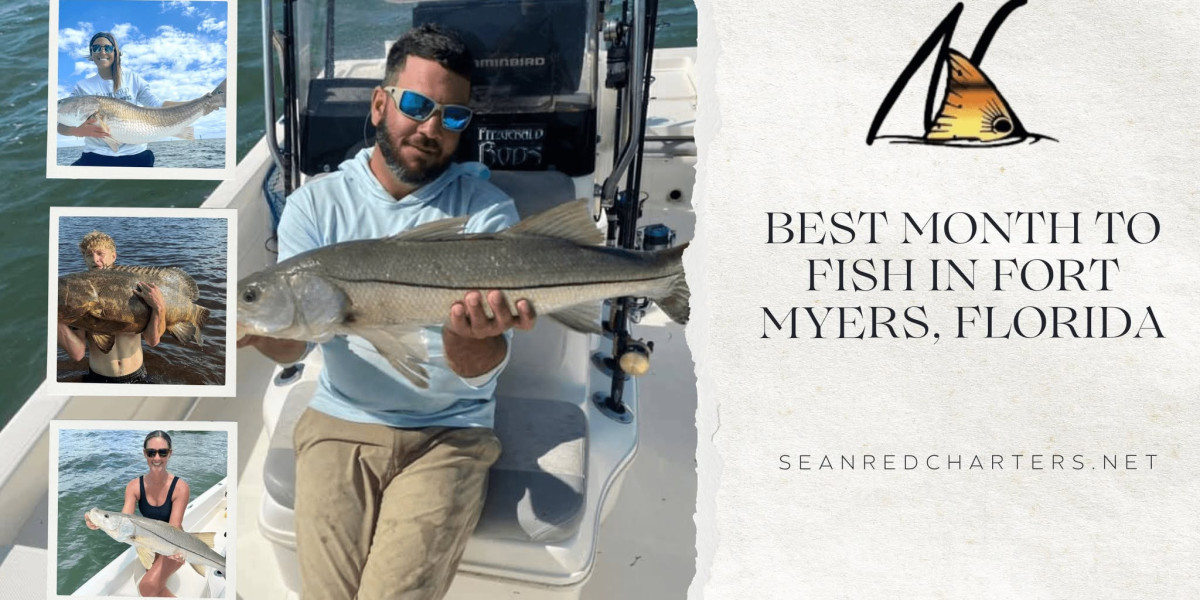
Snook in Florida estuaries show strong documented responses to full moon tides — specifically the combination of full moon illumination and strong current through the bridges and passes. Night fishing for snook under a full moon on a strong outgoing tide is a peak experience in Fort Myers fishing.
Tarpon in the spawning aggregations along Florida's Gulf Coast appear to exhibit peak jumping and rolling activity during certain lunar phases. Knowledgeable guides in areas like the Boca Grande Pass tarpon fishery take moon phase seriously when predicting peak activity windows. Whether this reflects direct lunar sensitivity or tidal effects on the spawning behavior is not established.
Flounder are widely reputed to show strong lunar feeding patterns — active during the day on falling tides near new and full moons, relatively inactive during neap tide periods. Flounder guides in multiple regions have documented this pattern over decades of records.
Bass in freshwater lakes — particularly in clear lakes where moonlight is unobscured by turbidity — show documented moonrise and moonset feeding activity on full moon nights that experienced bass anglers specifically target.
Offshore species like mahi-mahi, wahoo, and billfish show less clear lunar patterns in the scientific literature, though many experienced offshore captains maintain strong opinions about lunar fishing windows based on their own records.
Building Your Personal Lunar Fishing Log
The best way to test lunar effects in your specific fishery is to collect your own data. A simple fishing journal that records date, moon phase, solunar period, barometric pressure trend, tide phase, weather, target species, and catch results accumulates into a genuinely useful personal dataset over one to two seasons.
After 50 to 100 entries, patterns specific to your local fishery and your target species begin to emerge. You may find strong lunar correlations, weak ones, or none at all — and that finding, derived from your own observations, is more useful to your fishing than any general theory.
This kind of empirical, self-directed observation is precisely the approach that produces the detailed local knowledge that sets the best anglers and fishing guides apart from casual participants. Captains who run fishing charters over years in the same fishery accumulate exactly this kind of pattern recognition — knowing, from hundreds of logged trips, that the new moon outgoing tide in October consistently produces schooling redfish on a specific flat, or that the full moon night tide in June is the single best tarpon window of the year.
Conclusion: An Evidence-Based Lunar Strategy
The appropriate conclusion about moon phase and fishing is not that lunar effects are imaginary and solunar tables are worthless, nor that the moon controls fish behavior with the precision that true believers claim. It is this: the moon's gravitational influence on tides is real and consequential for fishing, the moon's light effect on nighttime feeding behavior is real and exploitable, additional direct lunar effects may exist and are worth tracking personally, and barometric pressure is a more reliably established predictor than solunar position for day-to-day fishing quality.
Use moon phase to identify tidal intensity and night fishing opportunities. Track barometric pressure as your most reliable short-term predictor of fishing quality. Keep your own records and let the local data guide your local decisions. And maintain the intellectual honesty to acknowledge that even after a lifetime of fishing observation, the sea has mysteries that resist simple explanation.