
Hair Transplant for Receding Hairline Correction: A Complete Guide
A receding hairline is one of the earliest and most noticeable signs of male pattern hair loss. For many individuals, it begins subtly at the temples and gradually progresses backward over time, changing the overall facial appearance. Hair transplant surgery has become one of the most effective long-term solutions for restoring a receding hairline and achieving a more youthful and balanced look. Hair transplant in Buraydah is becoming an increasingly popular option for individuals seeking a long-term solution to hair loss and receding hairlines.
This article explains how hair transplants correct a receding hairline, who is suitable, techniques used, expected results, and key considerations before treatment.
Understanding a Receding Hairline
A receding hairline refers to the gradual backward movement of the frontal hairline, usually starting at the temples. Over time, this can form an “M-shaped” pattern commonly associated with androgenetic alopecia (male pattern baldness).
Common signs include:
- Thinning at the temple areas
- Visible forehead expansion
- Uneven or “M-shaped” hairline
- Gradual loss of frontal density
This condition is usually progressive, meaning it continues to worsen without treatment.
Causes of a Receding Hairline
Several factors contribute to a receding hairline, but the most common is genetic sensitivity to DHT (dihydrotestosterone).
1. Genetic Factors
- The most common cause of hairline recession
- Inherited sensitivity of hair follicles to DHT
- Gradual weakening of frontal hair follicles
2. Hormonal Influence
- DHT shrinks hair follicles over time
- Leads to thinner, weaker hair growth
3. Aging
- Natural reduction in hair density with age
- Slower hair growth cycle
4. Lifestyle Factors
- Stress
- Poor nutrition
- Smoking
- Lack of proper scalp care
While lifestyle can worsen the condition, genetics plays the primary role.
Can a Hair Transplant Fix a Receding Hairline?
Yes, a hair transplant can effectively restore a receding hairline by relocating healthy hair follicles from the donor area (usually the back or sides of the scalp) to the frontal region.
The transplanted follicles:
- Retain their genetic resistance to hair loss
- Grow naturally in the new location
- Provide a permanent improvement in hairline shape
However, the goal is not just to restore hair but to create a natural-looking and age-appropriate hairline.
Ideal Candidates for Hairline Transplant
Not everyone with a receding hairline is immediately suitable for surgery.
Good candidates typically include:
- Individuals with stable hair loss patterns
- People with sufficient donor hair density
- Those with realistic expectations
- Adults usually above 25 years old
Caution is needed for:
- Very young patients with rapidly progressing hair loss
- Unstable or unpredictable hair loss patterns
- Poor donor area quality
In younger patients, doctors may recommend medical treatment first.
Hair Transplant Techniques for Hairline Correction
Several modern techniques are used to restore a receding hairline.
1. Follicular Unit Extraction (FUE)
FUE is the most commonly used method.
How it works:
- Individual hair follicles are extracted from the donor area
- Grafts are implanted into the receding hairline
Advantages:
- Minimal scarring
- Natural results
- Faster recovery
FUE is widely preferred for hairline restoration due to precision control.
2. Direct Hair Implantation (DHI)
DHI is an advanced variation of FUE.
Key features:
- Uses a specialized implantation pen
- Allows precise control of angle and direction
- Ideal for detailed hairline design
DHI is often used for patients who want higher density and refined hairline shaping.
3. FUT (Less Common for Hairline Only)
FUT may be used when a large number of grafts are needed.
Features:
- Provides many grafts in one session
- Leaves a linear donor scar
- Less commonly used for isolated hairline correction
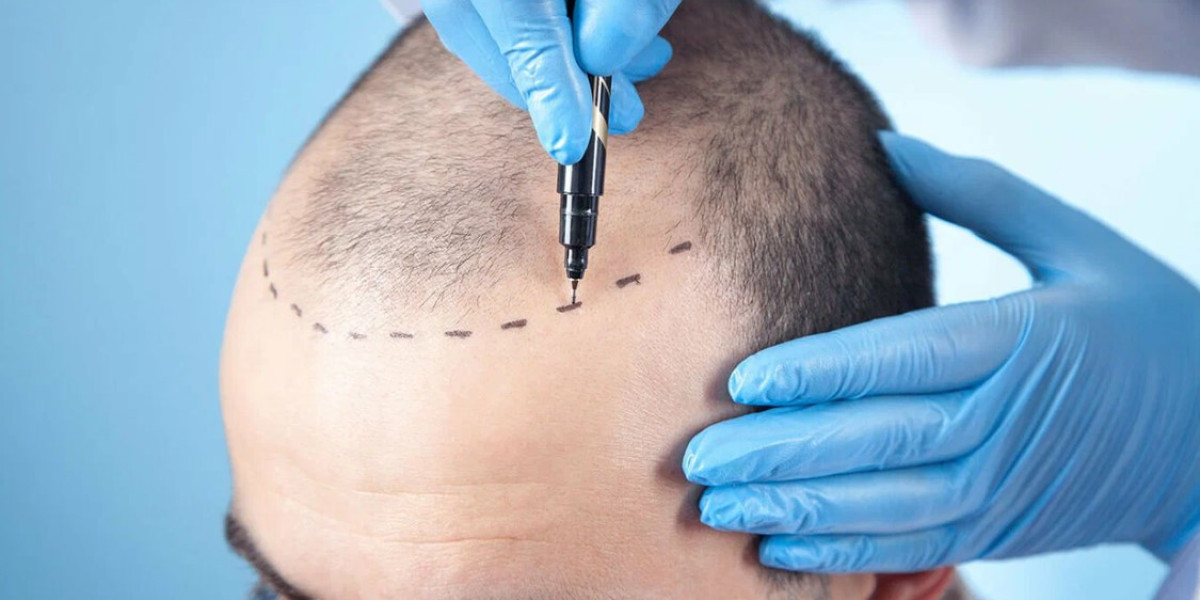
Importance of Hairline Design
Hairline design is one of the most critical aspects of a successful transplant.
A natural hairline should:
- Match facial proportions
- Be slightly irregular (not perfectly straight)
- Age appropriately with the patient
- Blend with existing hair
An unnatural hairline is often the result of poor planning rather than poor growth.
Density Expectations in Hairline Transplant
The hairline requires a balance between density and natural appearance.
Typical approach:
- Lower density at the very front (for softness)
- Gradual increase in density behind the hairline
- Use of single-hair grafts at the edge
This creates a natural transition rather than a harsh line.
Procedure Overview
A hairline transplant typically follows these steps:
1. Consultation and Planning
- Assessment of hair loss pattern
- Donor area evaluation
- Hairline design based on facial structure
2. Donor Hair Extraction
- Grafts are taken from the back or sides of the scalp
3. Graft Preparation
- Follicles are sorted and prepared under sterile conditions
4. Implantation
- Grafts are carefully placed in the receding areas
5. Recovery
- Initial healing within 7–10 days
- Hair growth begins after 3–4 months
Recovery Timeline
Hairline restoration follows a predictable timeline:
- 0–2 weeks: Healing and scab formation
- 2–4 weeks: Temporary shedding phase
- 3–4 months: Early regrowth begins
- 6–9 months: Noticeable improvement
- 9–12 months: Final natural result
Benefits of Hair Transplant for Hairline Correction
Hair transplant offers several advantages:
Permanent Solution
Transplanted follicles are resistant to further hair loss.
Natural Appearance
Modern techniques allow seamless blending with existing hair.
Improved Facial Aesthetics
A restored hairline enhances facial symmetry and youthfulness.
Boost in Confidence
Many patients experience significant psychological improvement.
Risks and Considerations
While generally safe, some risks include:
- Temporary swelling or redness
- Shock loss (temporary shedding)
- Uneven growth in rare cases
- Scarring (minimal with FUE/DHI)
Choosing an experienced surgeon significantly reduces these risks.
Non-Surgical Alternatives for Early Hairline Recession
For early-stage recession, non-surgical treatments may help slow progression:
- Minoxidil
- Finasteride
- PRP therapy
- Low-level laser therapy
These treatments do not restore a hairline but can preserve existing hair.
Long-Term Maintenance
Even after a successful transplant, maintaining overall hair health is important:
- Follow medical advice for ongoing hair loss prevention
- Maintain a healthy diet
- Manage stress levels
- Avoid smoking and excessive heat styling
Conclusion
Hair transplant for receding hairline correction is a highly effective and permanent solution for restoring a natural and youthful appearance. By carefully designing the hairline and strategically placing grafts, surgeons can recreate a balanced frame for the face that blends seamlessly with existing hair.













