
A missing stock entry can create bigger problems than most teams expect. One delayed update may affect purchase planning, customer deliveries, and warehouse movements on the same day. This is why companies now rely on structured ERP platforms for daily inventory control. Modern inventory management software keeps records connected across departments and reduces manual tracking errors. Teams can monitor stock movement, supplier data, and product availability from a single system, eliminating the need to switch between spreadsheets. Small reporting errors may also lead to payment disputes and supplier confusion during weekly inventory reviews across multiple locations. In this blog, we'll learn how ERP systems support daily inventory tasks and help companies maintain better operational accuracy.
What is the Role of ERP in Inventory Management?
Real Time Tracking
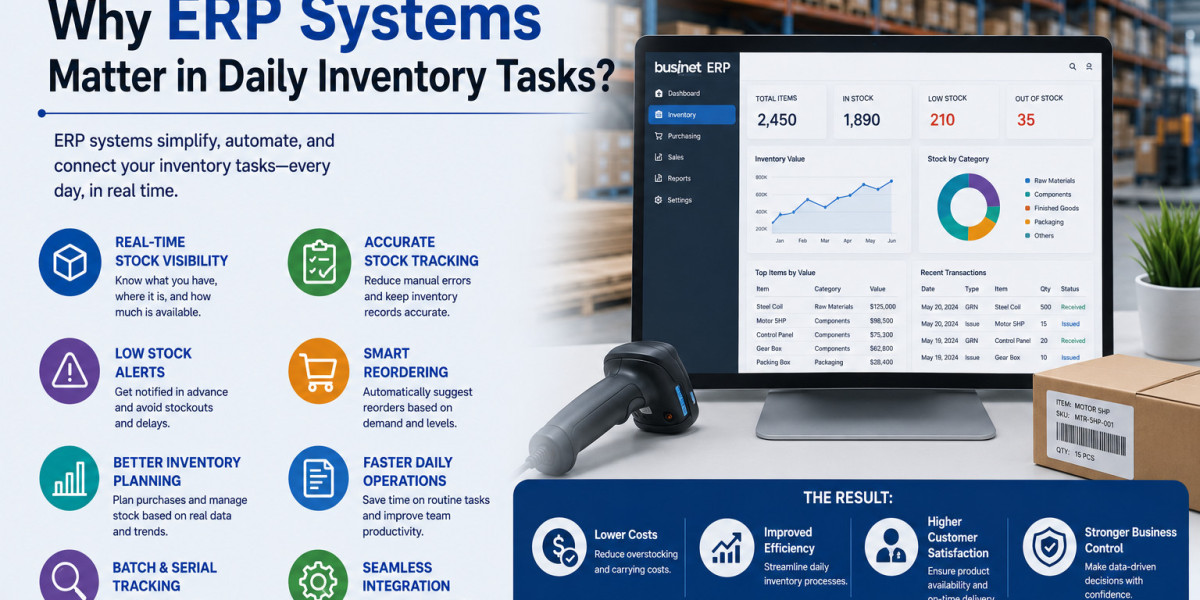
Inventory teams require updated information every hour because stock conditions change throughout the day. ERP for inventory management helps businesses record product movement immediately after sales, purchases, or warehouse transfers. This reduces confusion between departments and improves communication between purchasing teams and warehouse staff. Managers also receive faster reports, which support practical decision-making during routine operations and seasonal demand changes. Regular audit checks become simpler because every inventory update remains stored within the ERP database for verification.
Better Stock Planning
Poor stock planning usually creates two major problems. Some companies store excess products while others face sudden shortages. ERP systems study previous sales records and current stock levels to support accurate planning. This process helps businesses maintain balanced inventory quantities without creating unnecessary storage pressure. It also supports supplier coordination because purchase schedules become easier to manage and review during monthly operations. This advantage becomes useful for medium-sized companies managing different product categories across several warehouse locations every week.
Reduced Manual Work
Manual inventory records consume time and increase the possibility of repeated mistakes in daily operations. Many companies now depend on business automation software to reduce paperwork and simplify routine inventory activities. ERP systems automatically update stock records after every transaction and reduce duplicate data entry across departments. Employees spend less time correcting errors and more time focusing on warehouse supervision, vendor communication, and product handling activities. Employees avoid repeated phone calls because departments can review the same inventory information through ERP dashboards instantly.
Faster Order Handling
Order delays can damage customer trust and create unnecessary pressure on internal teams. ERP systems improve order handling by connecting inventory records with purchasing and billing processes. Employees can quickly confirm stock availability before processing customer requests. Warehouse staff also receive better coordination because dispatch schedules and packing details remain updated within the same platform. This structure improves delivery performance and supports smoother daily inventory operations.
Accurate Sales Records
Sales information directly affects inventory planning because every transaction changes product availability. Companies using sales management software with ERP integration receive updated reports without waiting for manual entries from multiple departments. Accurate sales records help businesses identify popular products and manage stock replacement schedules more effectively. Managers can also review customer demand patterns and improve purchasing decisions based on practical sales performance data collected during routine operations. Better coordination between sales and inventory teams also reduces customer complaints related to unavailable products and delayed dispatch schedules.
Conclusion
Inventory management depends on speed, accuracy, and proper coordination between teams. ERP systems support these goals by connecting purchasing, warehouse control, sales records, and reporting activities through one platform. Businesses using inventory management software gain stronger visibility across daily operations and reduce common inventory mistakes caused by manual records. ERP platforms also help employees complete routine tasks with better consistency and fewer reporting gaps. Companies that maintain structured inventory systems usually handle customer demands more efficiently and maintain stronger operational discipline during regular business activities. - By Businet ERP Software