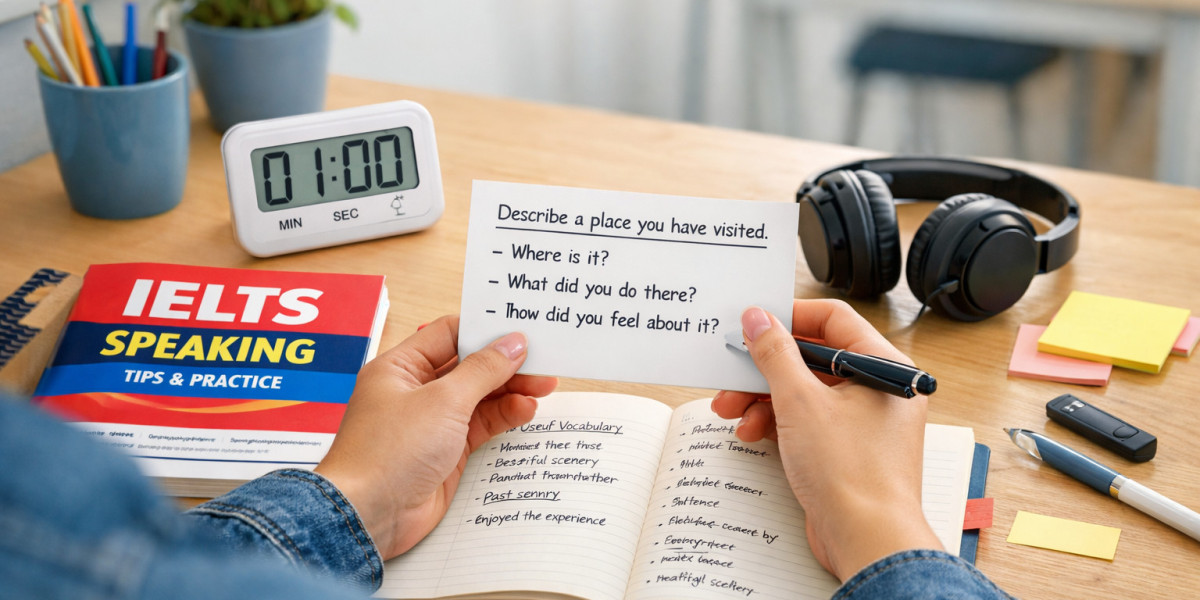

Learning IELTS speaking cue cards is an important part of IELTS speaking preparation. Many students feel nervous during the speaking test because they do not know how to continue speaking for two minutes. Regular cue card practice can help improve confidence, fluency, vocabulary, and speaking structure.
The cue card section is Part 2 of the IELTS speaking test. In this section, the examiner gives a topic card with a few points. Students get one minute to prepare and then speak for around two minutes. This part checks how clearly and naturally a person can speak in English.
What Are IELTS Speaking Cue Cards?
IELTS speaking cue cards are short speaking topics given during the IELTS speaking exam. Every cue card asks the candidate to describe something such as a person, place, experience, object, or activity.
A cue card usually contains:
- A main topic
- Three or four points to include
- A final question related to the topic
For example, a cue card may ask you to describe a memorable journey, a favorite book, or a useful skill you learned recently. The examiner wants to hear clear ideas, connected sentences, and natural communication.
Why Cue Card Practice Is Important
Many students know English grammar but still struggle during speaking tests. This happens because they are not used to speaking continuously. Practicing IELTS speaking cue cards regularly helps students become comfortable with speaking for a longer time without stopping too much.
Cue card practice also helps improve:
- Speaking confidence
- Pronunciation
- Sentence connection
- Vocabulary usage
- Idea development
- Fluency and coherence
When students practice different cue card topics, they learn how to organize answers quickly. This becomes very useful during the real exam.
Common Types of Cue Card Topics
Most IELTS speaking cue cards come from everyday situations and experiences. Understanding common categories can make preparation easier.
Person-Based Topics
These topics ask candidates to describe someone important or interesting. Examples include:
- A helpful teacher
- A family member
- A famous person
- A friend who inspired you
Place-Based Topics
These cue cards focus on locations or travel experiences. Examples include:
- A beautiful city
- A crowded place
- A historical location
- A place you visited recently
Experience-Based Topics
These topics ask about personal experiences or memories.
Examples include:
- A difficult decision
- A happy memory
- An important event
- A skill you learned
Object-Based Topics
Students may also get cue cards about objects or things they use.
Examples include:
- A useful mobile app
- A favorite gift
- A piece of technology
- A book you enjoyed reading
Simple Method to Answer Cue Cards
A simple structure can help students speak more naturally during the exam. Instead of memorizing answers, it is better to follow an easy speaking pattern.
Start with Introduction
Begin by directly introducing the topic. Use simple sentences related to the cue card.
For example:
“I would like to talk about a place that I visited last year with my family.”
Add Main Details
Explain the topic using the points mentioned on the cue card. Include details like:
- When it happened
- Where it happened
- Who was involved
- Why it was important
Include Personal Feelings
Sharing feelings makes answers sound natural. Students can explain why they liked or disliked something.
Finish Naturally
End with one or two closing lines instead of stopping suddenly.
Mistakes Students Often Make
While practicing IELTS speaking cue cards, students sometimes repeat common mistakes that reduce speaking scores.
One common mistake is memorizing answers. Examiners can usually identify memorized speech easily. It is better to understand the topic and speak naturally.
Another mistake is speaking too fast. Some students try to impress the examiner by speaking quickly, but this can reduce clarity and pronunciation quality.
Many students also stop speaking after one minute because they run out of ideas. Regular practice helps improve idea generation and sentence flow.
Using very difficult vocabulary can also create problems. Simple and clear English is often more effective than complicated words used incorrectly.
Tips to Improve Cue Card Performance
Students can improve their speaking skills with regular and smart practice.
Practice Daily
Even 15 to 20 minutes of speaking practice every day can improve fluency over time.
Record Your Answers
Listening to recorded answers helps students notice pronunciation mistakes, repeated words, and long pauses.
Use Real-Life Examples
Personal experiences make answers more natural and easier to explain.
Learn Topic Vocabulary
Preparing vocabulary related to travel, education, technology, hobbies, and people can help during the test.
Focus on Fluency
The goal is not perfect grammar in every sentence. Speaking smoothly and clearly is more important.
How Cue Cards Help Overall Speaking Skills
Practicing IELTS speaking cue cards not only improves IELTS performance but also helps in daily English communication. Students become more comfortable sharing opinions, describing experiences, and speaking in public situations.
Cue card preparation also improves thinking speed because students learn to organize ideas quickly within one minute. This skill is useful during interviews, presentations, and group discussions as well.
Regular practice builds confidence over time. Students who practice different speaking topics often feel less nervous during the actual IELTS test.
Best Way to Practice at Home
Students do not always need a classroom for speaking practice. They can improve at home using simple methods.
Choose one cue card topic daily and speak for two minutes. Use a timer to build confidence with time management. Speaking in front of a mirror can also improve eye contact and confidence.
Practicing with friends or family members can make speaking sessions more interactive. Students can also listen to English conversations, podcasts, and interviews to improve pronunciation and natural speaking style.