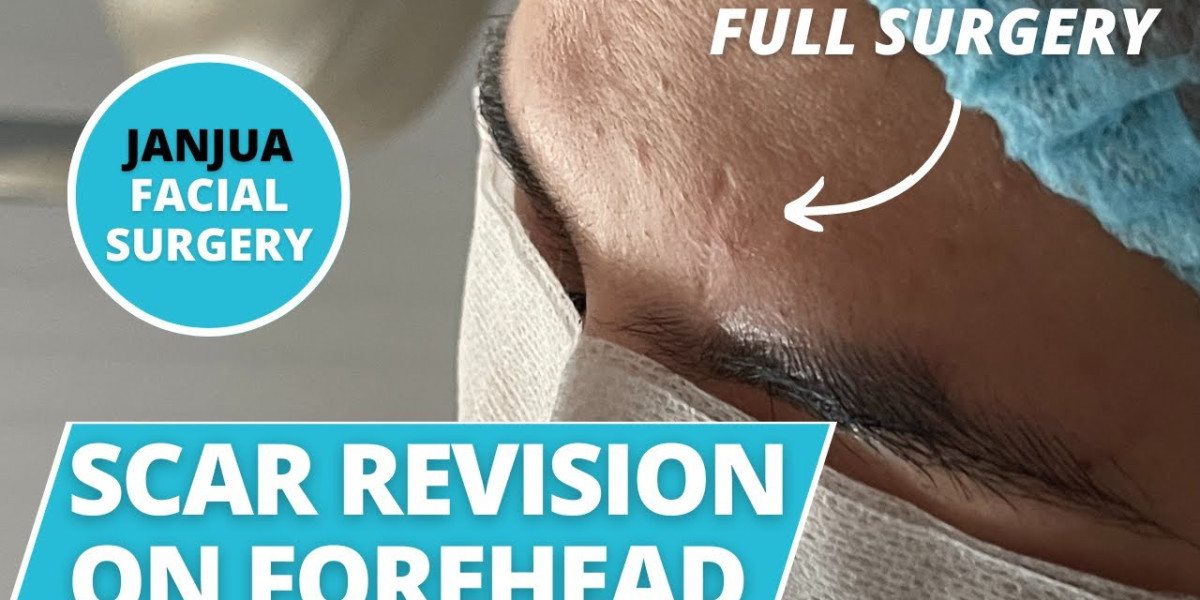

The human eye is remarkably adept at detecting patterns, particularly long, straight lines that contrast with the organic, undulating contours of the face and body. When a scar follows a single, uninterrupted path, it reflects light in a way that makes it highly visible, even if the line itself is thin. For patients seeking the most sophisticated level of camouflage, Surgical Scar Revision Riyadh often employs a specialized technique known as Geometric Broken Line Closure (GBLC). This method represents the pinnacle of surgical artistry, moving beyond simple repair to "deceive" the eye by breaking a conspicuous line into a series of random, interlocking geometric shapes. By scattering light and mimicking the natural irregularities of the skin’s surface, GBLC turns a prominent mark of trauma into a nearly imperceptible part of the skin’s texture.
The Philosophy of "Visual Deception"
The fundamental goal of GBLC is to eliminate the "linearity" of a scar. In nature, and specifically in human anatomy, there are very few perfectly straight lines. Skin is composed of pores, fine hairs, and microscopic ridges that create a "matte" finish.
Scattering Light: A straight scar acts like a mirror, reflecting light in a consistent direction, which creates a visible "shine" or "shadow."
The Broken Line: By creating a jagged, irregular border, GBLC ensures that light is reflected in multiple different directions. This "scatters" the visual signal, preventing the brain from recognizing a continuous boundary.
Merging with Texture: On the face—especially the forehead, cheeks, and chin—the skin has a specific "grain." GBLC allows the surgeon to create a scar pattern that mimics this natural skin grain, allowing the revised site to disappear into the background.
The Surgical Precision of GBLC
Executing a Geometric Broken Line Closure is a meticulous process that requires significantly more time and technical skill than a standard linear closure. It is a true "puzzle-piece" approach to reconstructive surgery.
1. Mapping the Irregularity
Before any incision is made, the surgeon carefully maps out a series of small, interlocking geometric shapes—circles, squares, triangles, and rectangles—along the length of the existing scar. These shapes are usually no more than 3 to 7 millimeters in size.
2. The "Step-Wedge" Incision
The surgeon then excises the old scar tissue using these jagged, geometric lines. The edges of the wound now look like a complex, irregular saw-blade. This "broken" edge is the key to the procedure’s success, as it ensures that no single segment of the new scar is long enough for the eye to track.
3. Tension-Free Interlocking
The most critical stage is the closure. Because the edges are irregular, they must be perfectly matched and joined without any overlap or gaps.
Internal Scaffolding: Surgeons in Riyadh use deep, absorbable sutures to take all the tension off the surface.
Microsurgical Alignment: The surface is then closed with hair-thin sutures, ensuring that every "peak" and "valley" of the geometric pattern is perfectly aligned. This creates a skin surface that is level, flat, and devoid of the "pin-cushioning" effect often seen in lesser techniques.
GBLC vs. W-Plasty: What’s the Difference?
While both techniques aim to break up a straight line, GBLC is considered more advanced and versatile than the W-Plasty.
W-Plasty: Uses a predictable, repeating "W" or zigzag pattern. Because the pattern is repetitive, the eye can sometimes still detect a "rhythm" to the scar.
GBLC: Uses a completely random assortment of shapes. The lack of a repeating pattern makes it even more effective at camouflaging the scar, especially in high-visibility areas like the center of the face.
Ideal Candidates and Anatomical Locations
GBLC is not used for every scar; it is specifically reserved for areas where the skin is relatively "tight" and the scar is highly visible.
Facial Scars: It is the gold standard for scars on the forehead, temples, and cheeks, where the skin is flat and light reflections are most obvious.
Long Linear Trauma: It is ideal for "railroad track" scars or long, wide marks resulting from previous surgeries or accidents.
Anatomical Landmarks: GBLC is carefully avoided near "mobile" landmarks like the eyelids or the corners of the mouth, where the geometric shapes could potentially distort the natural movement of the feature.
Recovery and the "Maturation" Phase
Because GBLC involves more "length" of incision than a straight line (due to the zigzags), the initial healing phase requires patience.
Early Healing: For the first few weeks, the zigzag pattern will be visible as a thin, pink line.
The Blending Phase: Between 3 and 6 months, the redness fades. This is when the "magic" of GBLC happens—as the color matches the surrounding skin, the geometric pattern becomes almost impossible to see.
Final Polish: In Riyadh’s advanced clinics, many patients follow GBLC with a session of fractional laser resurfacing. This "sands down" the microscopic edges of the geometric shapes, creating a perfectly smooth, matte finish that completes the visual deception.
Conclusion: The Ultimate in Aesthetic Refinement
The Art of Geometric Broken Line Closure is a testament to the evolution of Surgical Scar Revision in Riyadh. It moves the field from "repair" into the realm of high-definition "restoration." By understanding the physics of light and the psychology of human perception, surgeons can provide a level of camouflage that was previously thought impossible. For those who seek to remove the visual evidence of a past injury, GBLC offers a definitive, permanent, and artistically superior solution that allows the skin to regain its natural, uninterrupted beauty.