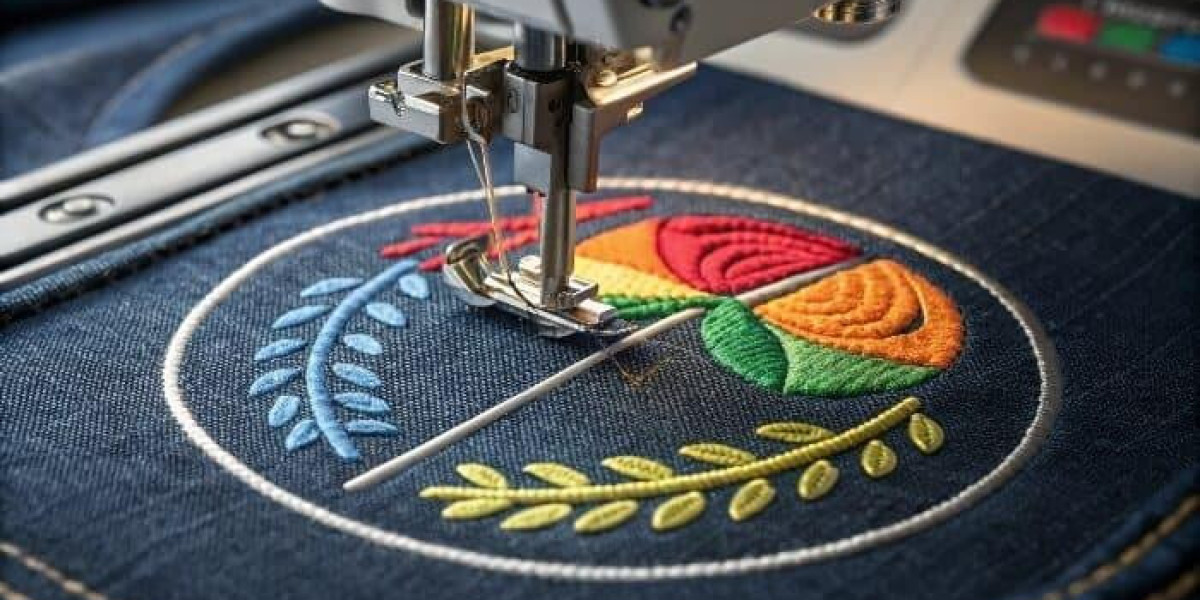

Embroidery Design Digitizing Service: Why It Matters for Quality Stitching
Understanding the Core Process
The digitizing process involves analyzing artwork and assigning stitch types such as satin stitches, fill stitches, and running stitches. Each section of the design is carefully mapped based on fabric type, thread behavior, and design complexity.
Key steps in the process include:
- Reviewing the original artwork for clarity and scalability
- Selecting appropriate stitch types for different design areas
- Adjusting stitch density to avoid overcrowding or gaps
- Setting underlay stitches for stability
- Defining stitch direction for visual depth
- Testing the file for machine compatibility
Each step ensures that the final output is not only visually accurate but also technically optimized for embroidery machines.
Common Problems Without Proper Digitizing
Many embroidery issues originate from poorly prepared stitch files rather than machine errors. Some of the most common problems include:
- Distorted or stretched designs after stitching
- Thread breaks due to incorrect stitch density
- Fabric puckering caused by improper tension planning
- Loss of small details in complex logos
- Misalignment in multi-color designs
These issues can increase production costs and delay delivery timelines. Proper digitizing eliminates most of these risks by ensuring that the design is structurally optimized before production begins.
Role of Professional Digitizing in Business Growth
For embroidery-based businesses, quality output directly impacts customer satisfaction and repeat orders. Professional digitizing helps businesses scale efficiently by reducing revision cycles and minimizing production errors.
Benefits include:
- Faster production turnaround
- Consistent stitching quality across batches
- Reduced machine maintenance issues
- Better compatibility with different fabrics
- Improved brand presentation on finished products
When embroidery quality improves, customer trust also increases, leading to stronger business relationships and long-term growth.
Fabric and Material Considerations
Different fabrics respond differently to embroidery. A design that works well on cotton may not perform the same on polyester, denim, or stretch fabrics. Proper digitizing takes these variations into account.
For example:
- Stretch fabrics require lower stitch density to avoid distortion
- Heavy fabrics like denim require stronger underlay support
- Lightweight fabrics need careful tension control to prevent puckering
- Caps require curved surface adjustments for proper alignment
Understanding fabric behavior is essential for creating stable and durable embroidery output.
Importance of Stitch Types and Density
Stitch selection plays a major role in the final appearance of embroidery. Satin stitches are commonly used for borders and text, while fill stitches are used for larger areas. Running stitches are used for fine details and outlines.
Incorrect stitch density can lead to:
- Overcrowded designs that damage fabric
- Sparse stitching that leaves gaps
- Uneven texture and poor visual balance
Proper balancing of stitch density ensures smooth production and a clean finish.
Technology and Modern Digitizing Tools
Modern digitizing tools allow designers to create highly precise stitch maps using advanced software. These tools provide control over stitch direction, spacing, and layering. However, software alone is not enough; human expertise is still required to interpret artwork correctly.
Experienced digitizers understand how thread behaves under tension and how different stitch types interact with fabric. This combination of technology and skill ensures high-quality results.
Why Quality Control is Essential
Before sending a file to production, quality control is critical. A properly reviewed file reduces risks during machine stitching and ensures consistency.
Quality checks include:
- Simulation of stitch paths
- Verification of color sequencing
- Checking for overlapping stitches
- Ensuring clean start and end points
- Testing scalability for different sizes
These steps ensure that the final embroidery output matches the original design expectations.
Conclusion
In the embroidery industry, precision and consistency are essential for delivering professional results. A well-prepared stitch file ensures smooth production, reduced errors, and better overall quality. Without proper digitizing, even high-end machines cannot produce reliable embroidery output. This is why businesses rely on expert-level conversion of artwork into machine-ready files to maintain their production standards and customer satisfaction.