
Choosing the right technology for Hypertrophic Scar Treatment in Dubai is a critical decision that depends on the scar’s maturity, the patient’s skin type, and their tolerance for downtime. While both Fractional CO2 and Er:YAG lasers are primary tools for remodeling raised tissue, they operate with distinct mechanisms that influence the overall patient experience.
In the intense Dubai climate, where extreme UV levels can quickly lead to post-treatment complications, understanding these differences ensures a safer path to smoother skin.
Understanding Laser Ablation for Raised Tissue
Ablative fractional lasers work by creating microscopic "thermal injury zones" that penetrate deep into the scar tissue. This process triggers a natural biological cascade—including heat shock proteins and matrix metalloproteinases—to normalize the cycle of collagen production and breakdown.
Fractional CO2 (10,600 nm): Offers deeper tissue penetration, making it highly effective for severe or dense hypertrophic scars.
Er:YAG (2,940 nm): Focuses on superficial tissue ablation with less underlying thermal damage, providing a gentler approach.
We observe that while both methods significantly improve scar height and pliability, the CO2 laser often achieves more dramatic clinical results due to its deeper reach.
Why Er:YAG is Preferred for Sensitive Skin Types in the UAE
Dubai is home to a diverse population with many residents having darker skin tones (Fitzpatrick IV-VI). These skin types are naturally more prone to post-inflammatory hyperpigmentation (PIH).
Gentle Remodeling: Er:YAG lasers carry a lower risk of PIH compared to CO2 lasers.
Reduced Heat: Because it causes less thermal damage to surrounding tissue, it is often the safer choice for patients with sensitive or pigment-reactive skin.
Faster Surface Healing: Many patients in Dubai prefer Er:YAG for its shorter initial downtime.
Expected Thermal Sensation and Depth of Penetration
During Hypertrophic Scar Treatment in Dubai, patients often wonder about the specific sensations they will experience.
Sensation Profile: CO2 lasers typically result in a higher pain intensity, often described as a hot, snapping sensation. Er:YAG is generally considered more tolerable.
Depth Advantage: CO2 is the "workhorse" for very thick scars, penetrating deeply to break up stubborn fibrous bands.
Directly below each treatment phase, we emphasize that medical-grade numbing creams are standard in Dubai clinics to ensure a comfortable experience.
Recovery Timeline: Managing Skin in a High-UV Environment
The Dubai UV index can reach extreme levels, especially between 10 AM and 4 PM, which can darken healing scars within minutes.
Based on post-procedure follow-ups, we observe that the desert's low humidity (often below 30%) can dehydrate healing skin. Regular application of prescribed moisturizers and staying hydrated are essential to support the skin's natural repair mechanisms.
Precision Mapping for Post-Surgical Raised Scars
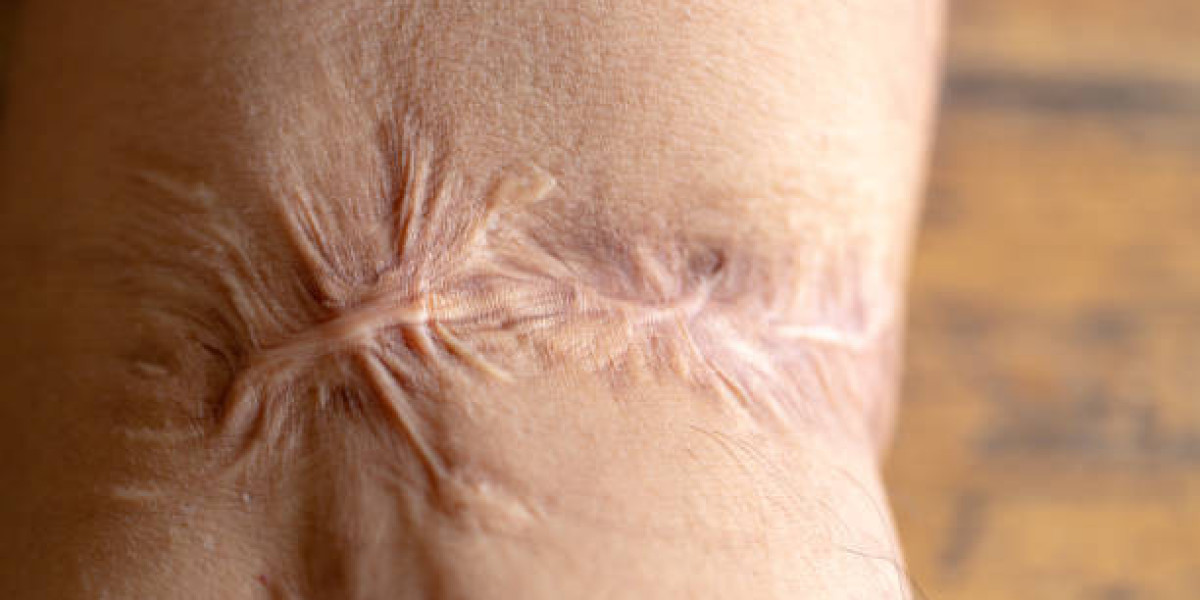
Successful Hypertrophic Scar Treatment in Dubai often begins with a detailed skin assessment. Practitioners use tools like the Vancouver Scar Scale (VSS) to evaluate vascularity, pigmentation, and height.
Early intervention—typically once the surgical wound has fully closed—is proven to be more effective than treating "mature" scars that have been present for years. By "mapping" the scar’s unique architecture, specialists can decide whether a CO2 laser is needed for depth or if an Er:YAG approach is sufficient for surface smoothing.
FAQs About Laser Protocols
How many sessions are typically required?
For most patients undergoing Hypertrophic Scar Treatment in Dubai, 3 to 5 sessions are conducted on a monthly basis to achieve optimal flattening and color correction.
Is there a significant difference in pain?
Yes. Clinical studies show that the Visual Analog Scale (VAS) for pain is significantly higher for CO2 fractional lasers than for Er:YAG lasers. However, localized numbing significantly mitigates this.
Can I exercise after a laser session?
We observe that patients should avoid strenuous exercise for at least 7 to 14 days following aggressive laser resurfacing to prevent increased inflammation and swelling at the treatment site.
How does Dubai’s heat affect the laser recovery?
Intense heat can cause "temperature shock" to healing skin, potentially disrupting its barrier function. It is vital to stay in air-conditioned environments and avoid direct sun exposure during the first week of recovery.
Which laser is better for "red" scars?
While CO2 and Er:YAG address texture, we often observe that combining them with a Pulsed Dye Laser (PDL) provides the best results for reducing the redness (vascularity) of an active hypertrophic scar.