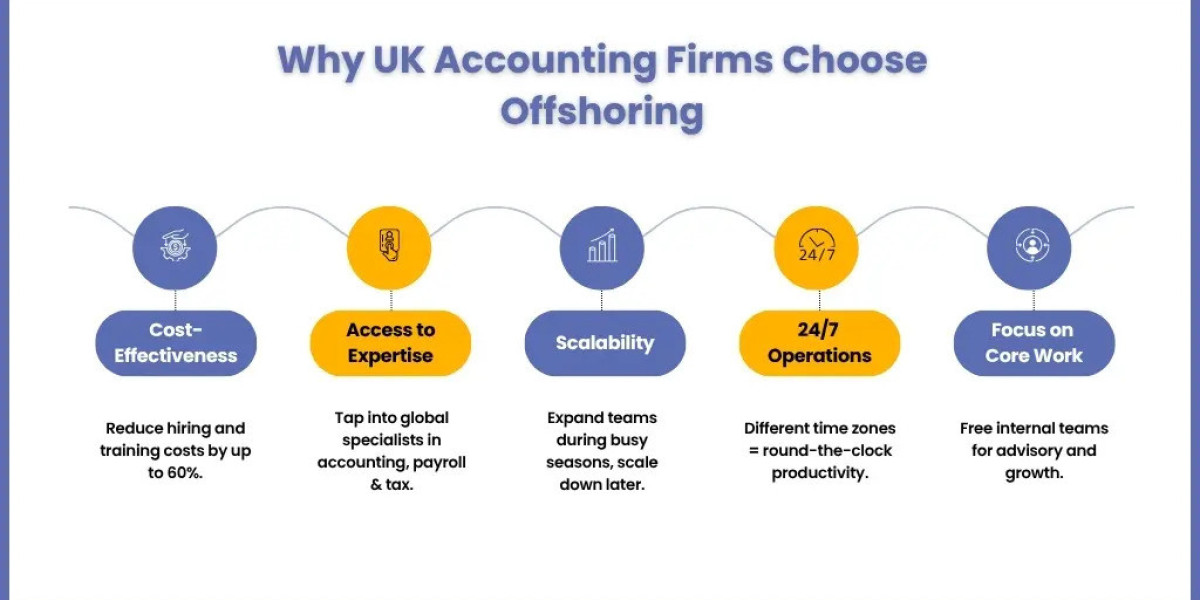

Instead of maintaining a full in-house team in a high-cost location, firms collaborate with offshore teams that operate remotely but function as an extension of their internal workforce.
In 2026, offshore staffing has become a mainstream strategy rather than a cost-cutting experiment. With improved global connectivity, secure cloud platforms, and advanced collaboration tools, accounting firms of all sizes are using offshore talent to increase efficiency, scale faster, and remain competitive in a demanding financial environment.
Why Offshore Staffing Has Grown in Accounting
The accounting industry has undergone significant transformation over the past decade. Increasing regulatory complexity, rising labor costs, and growing client expectations have pushed firms to rethink traditional hiring models. Offshore staffing has emerged as a practical solution to these challenges.
One of the main drivers is cost efficiency. Hiring qualified accountants in countries like the United States, the United Kingdom, or Australia can be expensive. Offshore professionals often provide the same level of expertise at a significantly lower cost, allowing firms to allocate resources more strategically.
Another factor is talent availability. Many regions such as India, the Philippines, and Eastern Europe have developed strong accounting education systems and professional training programs. This has created a large pool of skilled accountants who are well-versed in international standards like IFRS and GAAP.
How Offshore Staffing Works in 2026
Offshore staffing today is far more sophisticated than simple outsourcing. It is now a structured, technology-driven collaboration model. The process typically works in the following way:
1. Identifying Business Needs
Accounting firms first identify which tasks can be handled offshore. Common functions include bookkeeping, accounts payable and receivable, bank reconciliations, payroll processing, tax preparation, and financial reporting support.
High-level advisory or client-facing roles usually remain in-house, while repetitive or time-consuming tasks are delegated offshore.
2. Selecting an Offshore Staffing Partner
Firms typically work with offshore staffing providers who specialize in accounting talent. These providers recruit, vet, and train professionals before assigning them to client firms. Some firms also choose to directly hire offshore employees through remote job platforms.
3. Onboarding and Integration
Once hired, offshore accountants are integrated into the company’s systems. This includes training on workflows, accounting software (such as QuickBooks, Xero, or NetSuite), and compliance standards. Clear communication protocols are established to ensure smooth collaboration.
In 2026, onboarding is highly digital. Virtual training sessions, recorded workflows, and AI-powered knowledge bases help offshore teams get up to speed quickly.
4. Daily Collaboration and Workflow Management
Offshore accountants work remotely but operate as part of the internal team. Communication happens through tools like Slack, Microsoft Teams, and Zoom, while project management platforms like Asana or Trello track tasks.
Cloud accounting systems allow real-time access to financial data, ensuring transparency and accuracy across all locations.
5. Quality Control and Supervision
Even though offshore teams handle core tasks, oversight remains critical. Senior accountants or managers review work, set guidelines, and ensure compliance with local regulations. Many firms implement multi-level review systems to maintain quality standards.
Key Benefits of Offshore Staffing for Accountants
Cost Savings
One of the most significant advantages is reduced operational cost. Firms can save on salaries, office space, and employee benefits while maintaining high-quality output.
Access to Global Talent
Offshore staffing opens access to a broader talent pool with specialized accounting expertise, often including professionals trained in international tax laws and reporting standards.
Scalability
Firms can easily scale teams up or down based on workload. This flexibility is especially useful during tax season or financial year-end periods.
Increased Productivity
By delegating repetitive tasks offshore, in-house teams can focus on strategic advisory services, client relationships, and business growth.
24/7 Workflow Capability
With teams working across different time zones, accounting processes can continue around the clock. This leads to faster turnaround times for financial reporting and client deliverables.
Challenges of Offshore Staffing
While offshore staffing offers many advantages, it also comes with challenges that firms must manage carefully.
Communication barriers can arise due to time zone differences or cultural variations. However, structured communication schedules and clear documentation help reduce misunderstandings.
Data security is another concern. Accounting firms handle sensitive financial information, so strict cybersecurity protocols, encrypted systems, and compliance with data protection laws are essential.
Quality control must also be actively managed. Without proper supervision, inconsistencies in work can occur. This is why many firms implement standardized processes and regular audits.
Offshore Staffing Trends in 2026
In 2026, offshore accounting is being shaped by several key trends:
- AI integration: Automation tools assist offshore accountants in data entry, reconciliation, and reporting.
- Hybrid teams: Firms are combining in-house, offshore, and AI-driven workflows for maximum efficiency.
- Specialized offshore roles: Instead of general bookkeeping, offshore teams now handle niche areas like forensic accounting, tax advisory support, and financial analysis.
- Stronger compliance frameworks: Global regulations around data privacy and financial reporting are becoming more standardized, making offshore collaboration safer and more reliable.
Conclusion
Offshore staffing for accountants in 2026 is no longer just a cost-saving tactic—it is a strategic growth model. By combining global talent, advanced technology, and structured workflows, accounting firms can improve efficiency, reduce expenses, and scale more effectively.
When implemented correctly, offshore teams become a seamless extension of in-house operations, enabling firms to focus on higher-value services while maintaining accuracy, compliance, and client satisfaction.