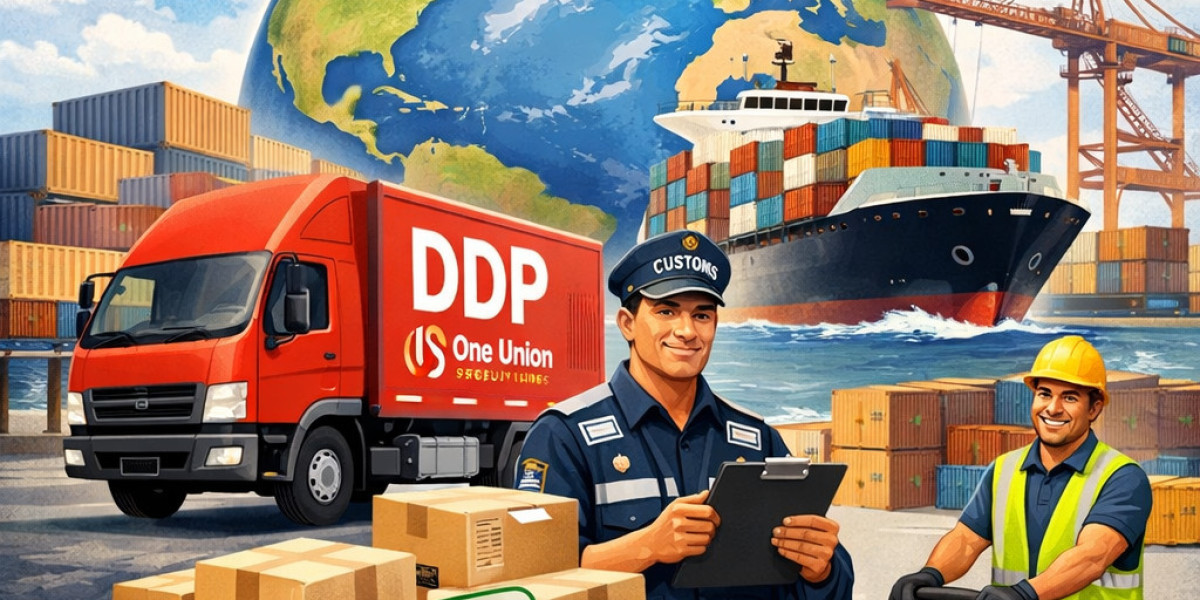

In today’s interconnected global economy, international trade has become more accessible than ever. However, along with opportunities come complexities—especially when it comes to shipping responsibilities, customs clearance, duties, and taxes. One shipping model that has gained significant attention for simplifying these challenges is Delivery Duty Paid (DDP). Businesses looking to streamline operations and reduce buyer-side burdens increasingly rely on DDP delivery services to ensure smooth cross-border transactions.
This article explores how DDP works, how it compares to other Incoterms such as Delivered Duty Unpaid (DDU), and the difference between DAP, DDP, and DAT in shipping. We also highlight how One Union Solutions supports businesses with comprehensive global trade services, including Exporter of Record and Importer of Record solutions.
What is Delivery Duty Paid (DDP)?
Delivery Duty Paid (DDP) is an international shipping agreement under the Incoterms framework where the seller assumes maximum responsibility. Under DDP, the seller is responsible for delivering goods to the buyer’s specified destination, covering all costs and risks involved in transportation. This includes freight charges, export and import duties, customs clearance, and taxes.
For buyers, DDP represents a hassle-free experience. They receive goods at their doorstep without worrying about regulatory compliance or unexpected fees. For sellers, however, it requires in-depth knowledge of international logistics and customs regulations in the destination country.
How DDP Simplifies Buyer Responsibility in Global Trade
One of the most significant advantages of DDP delivery services is the reduction of buyer responsibility. Traditionally, buyers had to manage customs clearance, pay import duties, and handle local logistics. With DDP, all these responsibilities shift to the seller.
Here’s how DDP simplifies the process:
1. Elimination of Hidden Costs
Under DDP, all costs are pre-calculated and included in the final price. Buyers do not face surprise charges such as customs duties or port handling fees upon delivery.
2. Streamlined Logistics
The seller coordinates the entire shipping process, including freight forwarding, documentation, and customs clearance. This reduces delays and ensures timely delivery.
3. Reduced Administrative Burden
Buyers no longer need to deal with complex import regulations, licensing, or compliance requirements. This is particularly beneficial for businesses new to international trade.
4. Improved Customer Experience
For e-commerce and B2B transactions alike, DDP enhances customer satisfaction by offering a seamless delivery experience.
Delivery Duty Paid Services in India
India has become a major hub for international trade, and the demand for efficient shipping solutions is growing rapidly. Delivery Duty Paid services in India are particularly valuable due to the country’s intricate customs procedures and regulatory framework.
Businesses exporting to India often face challenges such as:
- Complex documentation requirements
- Multiple tax layers (including GST)
- Strict compliance standards
By using DDP services, sellers can navigate these complexities more effectively. A reliable DDP freight forwarder ensures that all legal and logistical aspects are handled efficiently, allowing goods to move smoothly across borders.
Role of a DDP Freight Forwarder
A DDP freight forwarder plays a crucial role in executing DDP shipments. They act as intermediaries who manage transportation, documentation, and customs processes on behalf of the seller.
Key responsibilities include:
- Coordinating international shipping routes
- Handling export and import documentation
- Managing customs clearance procedures
- Calculating and paying duties and taxes
- Ensuring compliance with local regulations
Choosing the right freight forwarder is essential for minimizing risks and ensuring successful delivery.
Delivered Duty Unpaid (DDU) vs Delivery Duty Paid (DDP)
Before DDP became widely adopted, Delivered Duty Unpaid (DDU) was a common shipping term. Under DDU, the seller delivers goods to the destination but does not cover import duties or taxes. These costs are the buyer’s responsibility.
Key Differences:
- Cost Responsibility:
- DDP: Seller pays all costs, including duties and taxes
- DDU: Buyer pays import duties and taxes
- Risk Management:
- DDP: Seller assumes maximum risk
- DDU: Risk shifts to buyer upon arrival
- Buyer Convenience:
- DDP: High convenience
- DDU: Moderate to low convenience
DDP is generally preferred in modern trade due to its transparency and simplicity.
Difference Between DAP, DDP & DAT in Shipping
Understanding the difference between DAP, DDP, and DAT is essential for selecting the right shipping term.
Delivered at Place (DAP)
Under DAP, the seller delivers goods to a specified location but does not pay import duties or taxes. The buyer is responsible for customs clearance and related charges.
Delivered Duty Paid (DDP)
As discussed, DDP places all responsibilities on the seller, including duties, taxes, and delivery.
Delivered at Terminal (DAT)
DAT requires the seller to deliver goods to a terminal (such as a port or warehouse). The seller covers transport and unloading costs, but the buyer handles customs clearance and import duties.
Summary Comparison:
| Term | Seller Responsibilities | Buyer Responsibilities |
|---|---|---|
| DAP | Delivery to location | Duties, taxes, clearance |
| DDP | All costs & risks | Minimal involvement |
| DAT | Delivery to terminal | Duties, taxes, onward transport |
Incoterms 2026 and the Evolution of DDP
Incoterms are periodically updated to reflect changes in global trade practices. Incoterms 2026 are expected to further clarify responsibilities and improve transparency in international shipping agreements.
DDP Incoterms 2026 will likely emphasize:
- Enhanced digital documentation
- Greater compliance with international trade regulations
- Improved clarity on tax obligations
Businesses must stay updated with these changes to remain competitive and compliant.
Exporter of Record and Importer of Record Services
Two critical roles in international shipping are the Exporter of Record (EOR) and Importer of Record (IOR).
Exporter of Record Service
The Exporter of Record is responsible for ensuring that goods comply with export regulations in the origin country. This includes documentation, licensing, and adherence to trade laws.
Importer of Record
The Importer of Record handles compliance in the destination country, including customs clearance, duties, and taxes.
In DDP shipments, the seller often assumes both roles, which can be challenging without proper expertise. This is where specialized service providers come into play.
How One Union Solutions Supports Global Trade
One Union Solutions is a trusted partner for businesses navigating the complexities of international shipping. With expertise in DDP delivery services, the company offers end-to-end solutions that simplify global trade operations.
Key Services:
- DDP Freight Forwarding
- Exporter of Record (EOR) Services
- Importer of Record (IOR) Solutions
- Customs Clearance Management
- Regulatory Compliance Support
By leveraging these services, businesses can expand into new markets without worrying about logistical or regulatory hurdles.
Why Choose DDP for Your Business?
DDP is particularly beneficial for:
- E-commerce businesses shipping internationally
- Companies entering new markets
- Organizations seeking to improve customer satisfaction
- Businesses lacking in-house logistics expertise
While DDP may involve higher upfront costs for sellers, the benefits in terms of efficiency, reliability, and customer trust often outweigh the expenses.
Conclusion
Delivery Duty Paid (DDP) is a powerful tool for simplifying global trade. By shifting responsibilities from buyers to sellers, it creates a seamless and transparent shipping experience. Compared to other terms like DDU, DAP, and DAT, DDP offers unmatched convenience and clarity.
As global trade continues to evolve with frameworks like Incoterms 2026, businesses must adapt to stay competitive. Partnering with experienced providers like One Union Solutions ensures that every aspect of the shipping process—from compliance to delivery—is handled with precision.
In a world where efficiency and reliability are paramount, DDP delivery services stand out as a game-changing solution for modern international trade. https://oneunionsolutions.com/blog/