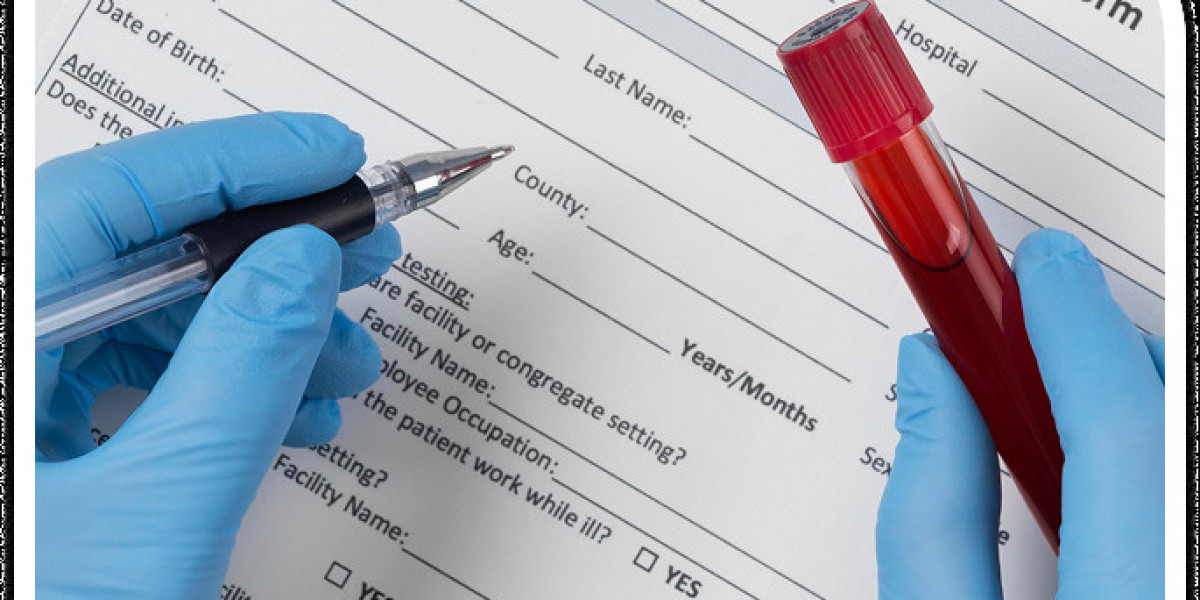

In the precision-driven world of 2026 healthcare, receiving a medical report can feel like getting a definitive "yes" or "no" answer. However, interpreting an STD test in Dubai requires a deeper understanding of diagnostic nuances. No medical test is 100% infallible; instead, they operate on high probabilities and strict clinical protocols. At Tajmeels Clinic, we believe that empowering patients with knowledge about test accuracy is the key to true peace of mind.
Test Sensitivity and Specificity: The 2026 Standard
To understand accuracy, we must look at the two pillars of laboratory science:
Sensitivity: The test’s ability to correctly identify those with the infection. A highly sensitive test (like the 2026 Multiplex PCR) ensures that if the pathogen is present, it will almost certainly be detected, minimizing "False Negatives."
Specificity: The test’s ability to correctly identify those without the infection. A highly specific test ensures that a positive result isn't triggered by a cross-reaction with a different virus, minimizing "False Positives."
In 2026, Tajmeels Clinic utilizes dual-platform testing, where we prioritize high sensitivity for initial screening and high specificity for confirmation.
Factors Affecting STD Test in Dubai Accuracy
Several external variables can influence your result, regardless of the lab’s quality:
The Window Period: This is the most common cause of a False Negative. If you test too soon after exposure—before the virus has replicated or antibodies have formed—the test may return a negative result even if you are infected.
Current Medications: Taking antibiotics for an unrelated issue can sometimes suppress bacterial loads (like Chlamydia), leading to an inaccurate "negative" screen.
Sample Integrity: In 2026, the shift toward home collection makes following instructions vital. For instance, urinating too soon before a "First-Catch" urine sample can dilute the bacterial concentration.
Common False Result Scenarios
The False Positive (Rare but Possible)
A False Positive occurs when the test indicates an infection that isn't there. In 2026, this most commonly happens with:
Syphilis Screens: Non-treponemal tests (RPR) can occasionally cross-react with other autoimmune conditions or recent vaccinations.
Herpes IgG Tests: Some low-level "positive" scores can be triggered by cross-reactivity between HSV-1 and HSV-2 antibodies.
The False Negative (Timing Dependent)
A False Negative occurs when the test misses an existing infection. This is almost always due to testing during the "eclipse phase"—the earliest days after exposure when the pathogen is present but below the limit of detection.
Confirmatory Testing Steps
In 2026, a "Reactive" or "Positive" result at Tajmeels Clinic is rarely the end of the journey. To ensure 100% accuracy, we follow a Reflex Testing Protocol:
Automatic Re-run: The lab re-tests the original sample using a different reagent.
Secondary Method: If the first test was an antibody screen, we confirm it with a Molecular PCR or Western Blot to verify the presence of the pathogen itself.
New Sample Collection: In specific cases, we may request a fresh sample 14 days later to observe the "trend" of the markers.
Lab Standards in Dubai: ISO 15189 and DHA Oversight
Dubai remains a global leader in medical regulation. In 2026, every STD test in Dubai performed at Tajmeels Clinic is processed in labs that adhere to:
ISO 15189 Accreditation: The international benchmark for medical laboratory quality and competence.
DHA Quality Assurance: Routine inspections by the Dubai Health Authority ensure that equipment is calibrated and staff are certified.
Digital Traceability: Every sample is barcoded and tracked from the moment of collection to the final report, eliminating the risk of manual errors or sample mix-ups.
Retesting Protocols: When to Double-Check
Even with a negative result, our 2026 guidelines recommend a "Verification Retest" if:
You tested within the first 72 hours of exposure.
You are still experiencing physical symptoms despite a negative report.
You have a partner who has recently tested positive.
For HIV, the 2026 gold standard is an initial PCR at 10 days, followed by a confirmatory 4th Generation Ag/Ab test at 45 days for absolute certainty.
Conclusion: Beyond the Paper Report
Accuracy is not just a number on a lab report; it is a clinical process that begins with the right timing and ends with professional interpretation. In 2026, a "negative" should be a result of true health, and a "positive" should be a confirmed fact. At Tajmeels Clinic, we bridge the gap between complex science and your personal peace of mind, ensuring that every STD test in Dubai provides the clarity you deserve. Your health is too important for "maybe"—we provide the "definitely."