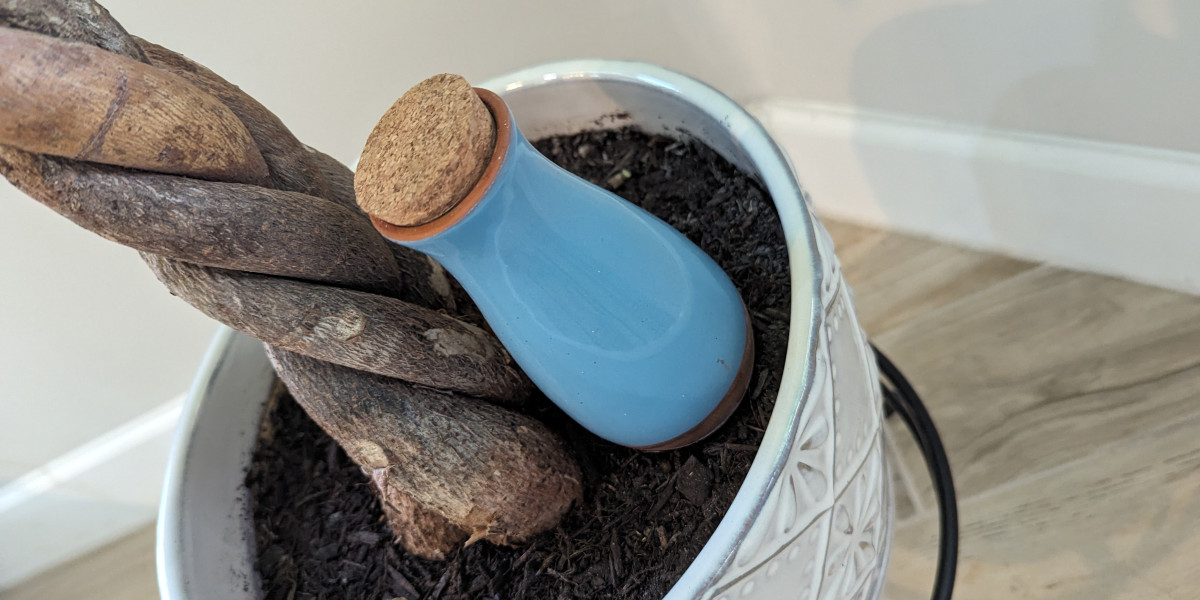

You've decided to upgrade your plant care game. You're ready to stop guessing about watering and start using tools that make life easier. But now you face a new dilemma: should you buy terracotta watering spikes or self watering globes ?
Both promise to keep your plants hydrated with less effort. Both look beautiful sitting in your pots. And both have passionate fans who swear by them. So how do you choose?
The answer depends on your plants, your lifestyle, and what you want from your watering tools. Let's break down the differences so you can make the perfect choice for your indoor garden.
Quick Answer: What's the Main Difference?
Terracotta watering spikes use porous clay to release water slowly and only when the soil is dry. They're self-regulating and excellent for plants that need consistent moisture without becoming waterlogged.
Self-watering globes use gravity and air pressure to release water as the soil dries. They're simple, decorative, and perfect for plants with moderate, steady water needs.
Still unsure? Let's dive deeper.
How Terracotta Watering Spikes Work
Terracotta watering spikes are made from unglazed, porous clay. You attach them to a water bottle (wine bottles work great), fill the bottle with water, and insert the spike into the soil.
The science: Terracotta contains millions of microscopic pores. Water slowly seeps through these pores and into the surrounding soil but only when the soil is dry enough to pull moisture through the clay. When the soil is saturated, the flow stops automatically.
The result: Your plant gets water exactly when it needs it, in exactly the right amount. No guesswork, no timers, no electricity.
Best Features:
Self regulating – Waters only when soil is dry
Customizable – Choose bottle size based on plant needs
Long-lasting – Works for 1-3 weeks depending on bottle size
Root-focused – Delivers water directly to root zone
Prevents gnats – Keeps topsoil dry, discouraging fungus gnats
Best Plants for Spikes:
Thirsty plants: Boston ferns, peace lilies, calatheas
Large plants: Monsteras, fiddle leaf figs, bird of paradise
Vegetables: Indoor tomatoes, peppers, herbs
Any plant that likes consistent moisture
How Self Watering Globes Work
Self-watering globes also called aqua globes or watering bulbs are hollow glass vessels with a long, narrow neck. You fill the globe with water, flip it upside down, and insert the neck into the soil.
The science: When you insert a filled globe into dry soil, two things happen. First, capillary action pulls water from the globe into the soil. Second, a weak vacuum forms inside the globe, stopping the flow when the soil is moist enough. As the soil dries, air bubbles rise into the globe, releasing more water.
The result: A simple, gravity-powered system that keeps soil consistently moist without any moving parts.
Best Features:
Decorative – Adds beauty to your plant display
Easy to use – Fill and insert, that's it
Visible water level – Clear glass shows when it's empty
Great for travel – Keeps plants hydrated for 1-2 weeks
Wide variety – Available in colors, shapes, and sizes
Best Plants for Globes:
Moderate drinkers: Pothos, philodendrons, peace lilies
Medium pots: 4-8 inch containers
Herbs: Basil, mint, cilantro
Any plant that appreciates steady moisture
Side-by-Side Comparison
| Feature | Terracotta Spikes | Self Watering Globes |
|---|---|---|
| Material | Porous clay | Glass |
| Water source | Attached bottle (your choice of size) | Built in globe (fixed size) |
| How it works | Water seeps through clay pores | Gravity + air pressure release |
| Regulation | Self regulating based on soil dryness | Releases as soil dries, less precise |
| Best for | Thirsty plants, large pots, long trips | Moderate plants, medium pots, decoration |
| Duration | 1-3 weeks (depends on bottle size) | 5-14 days (depends on globe size) |
| Topsoil moisture | Stays dry (prevents gnats) | May stay slightly moist |
| Visibility | Can't see water level in bottle | Clear glass shows water level |
| Aesthetics | Rustic, natural look | Colorful, decorative |
| Customization | Use any bottle size | Fixed globe size |
| Maintenance | Clean clay periodically | Clean glass, clear clogs |
| Price | Moderate | Affordable to moderate |
When to Choose Terracotta Spikes
Pick spikes if:
1. You have thirsty plants
Ferns, calatheas, and peace lilies drink constantly. A large wine bottle on a spike can keep them happy for up to two weeks.
2. You want to customize water volume
With spikes, you control how much water your plant gets by choosing the bottle size. Small water bottle for a week? Wine bottle for two weeks? You decide.
3. You struggle with fungus gnats
Spikes keep the topsoil dry because water releases below the surface. This makes your pots much less appealing to gnats looking for damp places to lay eggs.
4. You have large plants
For monsteras, fiddle leaf figs, or large container plants, spikes with big bottles provide the volume these plants need.
5. You prefer a natural, rustic look
The combination of clay and glass bottles (especially wine bottles) creates an earthy, handmade aesthetic.
When to Choose Self Watering Globes
Pick globes if:
1. You want something decorative
Self watering globes come in beautiful colors and shapes teardrops, birds, frosted glass, recycled glass. They add charm to your plant display.
2. You have medium-sized plants
For standard houseplants in 4-8 inch pots, globes provide the perfect amount of water for 5-10 days.
3. You want to see water levels at a glance
Clear glass globes let you see exactly how much water remains. No guessing when to refill.
4. You're new to self-watering tools
Globes couldn't be simpler: fill, insert, done. They're the perfect introduction to automated plant care.
5. You have a mix of moderate drinkers
Pothos, philodendrons, peace lilies, and many common houseplants thrive with globe watering.
Can You Use Both?
Absolutely! Many plant parents use both tools for different plants in their collection:
Spikes on thirsty ferns and large monsteras
Globes on pothos, philodendrons, and peace lilies
Neither on succulents, snake plants, and ZZ plants
You might even use multiple globes in one very large pot or combine a spike with occasional manual watering for extra thirsty plants.
Real Gardener, Real Results
"I used to think I had to pick one method for all my plants," says Marcus, a SmartiLiving customer with over 40 houseplants. "Now I match the tool to the plant. My monstera has a wine bottle spike that lasts two weeks. My pothos collection has colorful globes that look beautiful. And my succulents? I just ignore them like they prefer. Everyone's happy."
Quick Decision Guide
Ask yourself these questions:
| Question | If Yes → | If No → |
|---|---|---|
| Do I have thirsty plants like ferns? | Spikes | Globes |
| Do I want something decorative? | Globes | Spikes |
| Do I struggle with fungus gnats? | Spikes | Either works |
| Do I have large plants in big pots? | Spikes | Globes |
| Do I want to see water levels easily? | Globes | Spikes |
| Am I new to self-watering tools? | Globes | Spikes |
| Do I want to customize water amounts? | Spikes | Globes |
| Do I have mostly medium-sized plants? | Globes | Spikes |
The Bottom Line: Both Are Brilliant
Here's the honest truth: terracotta spikes and self-watering globes are both excellent tools. You really can't go wrong with either. The "best" choice simply depends on your specific plants and preferences.
Choose spikes for thirsty plants, large pots, customization, and gnat prevention
Choose globes for decoration, medium plants, visibility, and simplicity
And remember you're allowed to love both. Your plants don't care which tool you use as long as they get the consistent hydration they need to thrive.
Ready to find your perfect match? Explore SmartiLiving's collection of terracotta watering spikes and self watering globes to see which ones fit your plant family best.