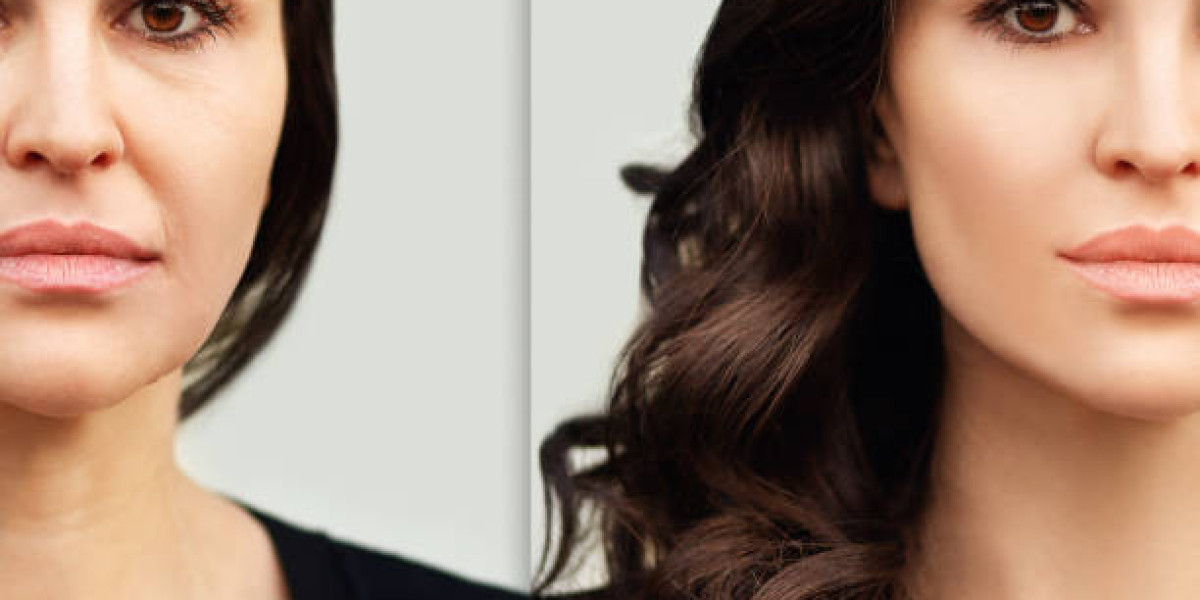

beauty peels and surgical skin resurfacing. For patients seeking Chemical Peels in Dubai, the medium-depth option is the clinical choice for addressing structural damage that resides in the papillary dermis. Unlike light peels that only refresh the surface, a medium-depth peel—typically utilizing Trichloroacetic Acid (TCA)—reaches the layer where collagen and elastin are housed. In clinical settings, we observe that this depth is required to successfully treat "etched" wrinkles, deep pigment, and stubborn acne scarring. It is a medical procedure that requires specific "downtime" but yields a transformation that superficial treatments cannot replicate.
The Science of Dermal Penetration
A medium-depth peel works by inducing a controlled protein coagulation. This "frosting" effect is a clinical indicator that the acid has bypassed the epidermis and reached its target depth.
Acid Concentration: Usually involves TCA at concentrations of 20% to 35%, often combined with Jessner’s solution to enhance penetration.
Protein Coagulation: The acid "denatures" the proteins in the skin cells, causing them to turn white (frost).
Dermal Reset: By reaching the papillary dermis, the peel triggers the release of growth factors that rebuild the skin's structural matrix.
Homogenous Penetration: In clinical settings, we observe that the practitioner must apply the acid with extreme uniformity to ensure the results are even across the face.
What are the Real Patient Sensations During a Medium-Depth Peel?
Based on post-procedure follow-ups, the sensory experience of a medium-depth peel is more intense and localized than lighter sessions.
Is the Procedure Painful?
In clinical settings, we observe that patients experience a sharp, "stinging heat" for about 5 to 10 minutes. However, because we use specialized cooling technology, the sensation remains manageable without the need for general anesthesia.
The Clinical Prep: The skin is stripped of all oils. You will feel a cold, antiseptic "tingle" followed by a very dry skin sensation.
The "Sting" Peak: As the TCA is layered, you will feel a sensation similar to a hot rubber band snap across the skin.
The Cooling Transition: We utilize high-flow cold air (Zimmer chillers) which "numbs" the heat. Most patients report the cooling makes the heat feel "pulsating" rather than burning.
The Post-Neutralization Calm: As soon as the neutralizer or cold compress is applied, the stinging stops instantly, replaced by a deep "tightness."
What are the Realistic Recovery Expectations?
How Much Social Downtime is Required?
A medium-depth peel requires 7 to 10 days of "social downtime." You will not want to attend major events during this window, as the skin undergoes a significant and visible shedding process.
The Clinical Healing Timeline:
Days 1–2 (The Bronze Phase): The skin looks very tight and may turn a dark tan or brownish color. It feels like a dry "shield" on your face.
Days 3–6 (The Sheeting Phase): The skin begins to peel in large, visible sheets—not just small flakes. This usually starts around the mouth and eyes.
Days 7–10 (The Reveal): The old skin is gone. The new skin underneath is pink, delicate, and remarkably smooth.
Day 14+: The redness fades into a bright, clear, and rejuvenated complexion.
Who Should Not Get a Medium-Depth Chemical Peel?
Are There Specific Safety Contraindications?
Because this treatment reaches the dermis, the safety screening is much more rigorous than for a "glow" peel.
History of Keloids: If you are prone to raised, thick scars, a medium-depth peel may be too aggressive for your skin type.
Recent Accutane Use: You must be off Accutane for at least 6 to 12 months, as the medication severely thins the skin and impairs healing.
Uncontrolled UV Exposure: If you have an outdoor lifestyle or upcoming beach holiday in Dubai, you must postpone this treatment.
Immune Suppression: Patients with compromised immune systems or poorly controlled diabetes may face a higher risk of infection during the peeling phase.
Real Patient Experiences
"The medium peel was a commitment. My skin looked like a brown mask for three days, but when it peeled off, my deep sunspots were gone. It’s like I have a new face." — Elena
"It was 'spicy' for about five minutes in the clinic, but the cooling fan made it totally fine. The results on my acne scars were better than three sessions of laser." — Hassan
Why Choose Tajmeels Clinic for Medium-Depth Resurfacing?
At Tajmeels Clinic, we treat medium-depth peels as a precision medical intervention. Our Senior Practitioners are experts in "Endpoint Monitoring"—the ability to look at the skin's color and texture changes to know exactly when the acid has reached the papillary dermis. We don't use "one-size-fits-all" timers; we react to your skin's unique biological response. We provide every patient with a "Medical Grade Aftercare Kit" containing occlusive ointments and antiseptic cleansers to ensure your healing is flawless. By choosing Tajmeels, you are choosing a clinical environment that prioritizes your safety and delivers a true dermal transformation.
FAQs
Can I go back to work the next day?
You can work, but your face will look very red and tight. By day 4, the peeling is very visible, so most patients prefer to work from home.
Will it help with deep "pitted" scars?
Yes, medium-depth peels are one of the most effective clinical ways to smooth the edges of "boxcar" and "rolling" acne scars.
Is it safe for all skin colors?
Medium-depth TCA requires extreme caution on dark skin. We often prefer a "Step-Up" approach or specific buffering for Fitzpatrick types IV–VI.
How often can I get a medium-depth peel?
In clinical settings, we observe that 1 or 2 sessions per year are usually sufficient for significant, long-term anti-aging results.
Can I use my normal moisturizer during recovery?
No. You must use the specific "occlusive" ointments we provide, as regular lotions may contain irritants that can sting or cause a rash.
Does it remove "moles"?
No. Chemical peels do not remove raised moles. Any pigmented spots should be checked by our practitioners to ensure they are safe to treat.