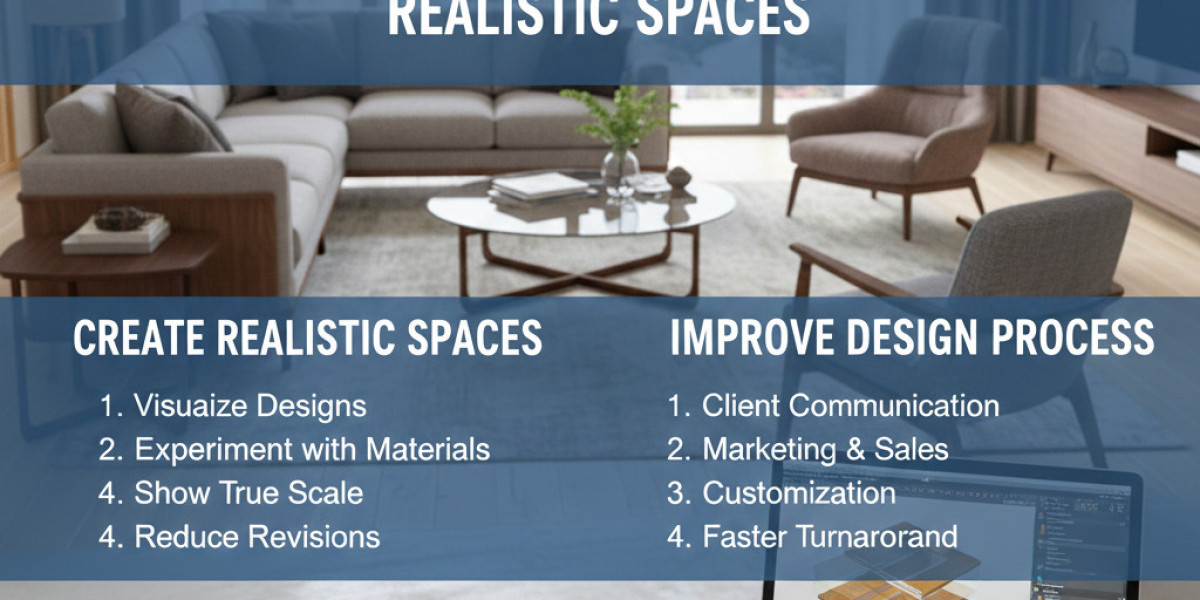

In the modern world of interior design, visualization is key. Clients expect to see how a space will look before a single wall is painted or a piece of furniture is placed. This is where 3D furniture rendering has become an indispensable tool for interior designers. By transforming concepts into lifelike digital images, 3D furniture rendering allows designers to create realistic spaces, improve client communication, and minimize costly design errors.In this article, we will explore how 3D furniture rendering works, its benefits for interior designers, and why it is an essential part of modern interior design projects.
What Is 3D Furniture Rendering?
3D furniture rendering is the process of creating realistic, three-dimensional images of furniture and interior spaces using specialized software. Unlike traditional sketches or 2D drawings, 3D renderings provide a photorealistic view of how a room will look once furnished and decorated.
These renderings can include.
Individual furniture pieces with accurate textures and finishes
Full room layouts with walls, floors, and ceilings
Lighting effects, shadows, and reflections
Different materials, colors, and styles applied virtually
The level of detail and realism in 3D furniture rendering allows designers and clients to visualize spaces accurately before construction or installation begins.
How 3D Furniture Rendering Works
Creating a 3D furniture rendering involves several steps.
Modeling Furniture and Interiors
The first step is to create a 3D model of the furniture and the interior space. Designers use software like SketchUp, 3ds Max, or Blender to build accurate models based on dimensions and specifications.
Applying Materials and Textures
Once the models are complete, realistic textures such as wood, metal, fabric, or glass are applied. This helps simulate how different materials will look in the actual space.
Setting Up Lighting
Lighting is crucial in creating realism. 3D rendering allows designers to add natural sunlight, artificial lights, and shadows to accurately depict how the room will appear at different times of day.
Rendering the Scene
The software generates the final image or animation, converting the 3D models, textures, and lighting into a photorealistic visualization. This step often involves advanced rendering engines like V-Ray or Corona Renderer.
Post-Processing
After rendering, images may be enhanced using tools like Photoshop to adjust colors, contrast, and other visual elements. This step ensures the final visuals are polished and client-ready.
Benefits of 3D Furniture Rendering for Interior Designers
Realistic Visualization
3D furniture rendering allows clients and designers to see exactly how a space will look once furnished. This eliminates ambiguity that often arises from sketches or 2D drawings and ensures the design matches client expectations.
Improved Client Communication
Clear visualizations improve communication between designers and clients. Clients can.
Approve furniture placement and layout
Suggest changes to colors, materials, or textures
Understand the scale and proportions of each element
This level of clarity minimizes misunderstandings and ensures smoother project execution.
Cost and Time Efficiency
Making changes during the design phase is much cheaper than after furniture has been purchased or installed. 3D rendering helps identify design flaws early, allowing adjustments to be made without extra costs or delays.
Enhanced Design Creativity
3D rendering allows interior designers to experiment with different furniture styles, colors, and layouts without physically moving anything. This creative freedom enables the exploration of innovative design concepts and personalized solutions.
Accurate Space Planning
Proper furniture placement is critical in interior design. 3D furniture rendering provides precise visual guidance for spatial planning, ensuring furniture fits correctly and the space feels balanced and functional.
Applications of 3D Furniture Rendering
Residential Interior Design
From living rooms and bedrooms to kitchens and home offices, 3D renderings allow designers to showcase how furniture, lighting, and decor come together in a cohesive space.
Commercial Interior Design
In offices, retail spaces, and hospitality projects, 3D renderings provide stakeholders with a realistic preview of the space, enabling informed decisions on furniture layout, material choices, and branding elements.
E-Commerce and Furniture Marketing
Furniture brands and online retailers use 3D renderings to display products in realistic room settings, helping customers visualize how pieces will look in their homes.
Renovation and Remodeling Projects
For renovation projects, 3D furniture renderings help clients see how changes will impact existing spaces, reducing guesswork and ensuring satisfaction.
How 3D Rendering Improves Project Workflow
Streamlined Design Approvals
Clients can approve layouts and designs more quickly because they can see exactly what the finished space will look like.
Minimized Errors
By visualizing every detail digitally, designers can identify spatial conflicts, design inconsistencies, or style mismatches before implementation.
Efficient Material Selection
3D renderings show how different materials, finishes, and furniture interact in a room, making it easier to choose appropriate combinations.
Enhanced Collaboration
Designers, contractors, and clients can collaborate using the same visual model, ensuring alignment and reducing the risk of misunderstandings.
Technology Trends in 3D Furniture Rendering
Modern 3D rendering services are increasingly leveraging advanced technologies:
Real-time rendering – Allows instant visualization of changes in furniture placement or materials
Virtual reality (VR) – Enables clients to immerse themselves in the designed space
Augmented reality (AR) – Lets clients see virtual furniture in their actual rooms via mobile devices
Artificial intelligence (AI) – Assists in generating design variations and automating rendering processes
These technologies are transforming the interior design industry, making 3D furniture rendering more interactive, accurate, and client-friendly.
Choosing the Right 3D Furniture Rendering Service
When selecting a rendering service, consider the following.
Portfolio quality – Look for realistic and detailed renderings
Software expertise – Ensure proficiency with advanced rendering tools
Customization – Ability to match the client’s style and project requirements
Turnaround time – Quick delivery without compromising quality
Collaboration support – Assistance with revisions and updates
Professional services, such as those offered by SMA Archviz, provide high-quality 3D furniture rendering that helps interior designers create realistic, accurate, and client-approved spaces.
Common Challenges Without 3D Furniture Rendering
Without 3D furniture rendering, interior design projects may face:
Miscommunication with clients regarding furniture placement and style
Unanticipated design flaws during installation
Increased material and labor costs due to late changes
Delays caused by uncertainty in design decisions
3D rendering acts as a bridge between concept and reality, mitigating these risks and ensuring smooth project execution.
Final Thoughts
3D furniture rendering is revolutionizing the interior design industry. By providing realistic, photorealistic visualizations, designers can communicate ideas clearly, experiment creatively, and make informed decisions that enhance project accuracy.For interior designers looking to elevate their workflow, reduce errors, and deliver client satisfaction, leveraging professional 3D furniture rendering services is a strategic choice.Whether you are designing a residential living room, a commercial office, or a renovation project, 3D furniture rendering ensures that spaces are visually accurate, functional, and aesthetically pleasing before any physical work begins.