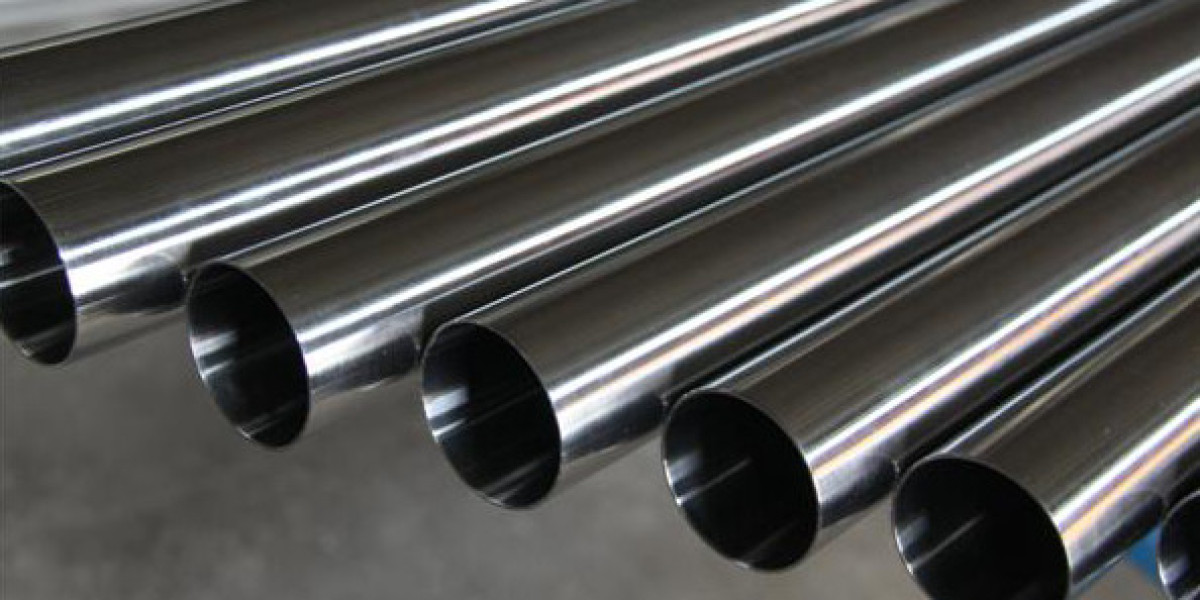

Stainless Steel 304 pipes are widely used across industries due to their excellent corrosion resistance, durability, and fabrication flexibility. While many buyers focus on pricing and availability, understanding the manufacturing process and selection criteria is equally important.
Manufacturing Process of SS 304 Pipes
1. Raw Material Selection
High-quality stainless steel billets or coils are selected according to ASTM standards. Chemical composition is verified before production begins.
2. Seamless Pipe Manufacturing
Billets are heated.
Piercing process creates a hollow tube.
Elongation and sizing ensure correct dimensions.
Heat treatment improves mechanical properties.
Pickling removes surface scale.
Seamless pipes are preferred for high-pressure and high-temperature applications.
3. Welded Pipe Manufacturing
Stainless steel coils are rolled into cylindrical shapes.
Longitudinal seam welding is performed.
Heat treatment reduces welding stress.
Final sizing and polishing are completed.
Welded pipes are more economical and suitable for general applications.
Standard Sizes of SS 304 Pipes
Outer Diameter: 6 mm to 600 mm
Thickness: SCH 5 to SCH 160
Length: Single random, double random, or custom length
The size selection depends on pressure rating, flow rate, and structural requirements.
Testing & Quality Control
Reputed manufacturers conduct various tests such as:
Hydrostatic Test
Ultrasonic Testing (UT)
Eddy Current Testing
PMI Testing (Positive Material Identification)
Tensile & Hardness Test
These tests ensure performance reliability and compliance with standards like ASTM A312 and ASME B36.19.
How to Select the Right SS 304 Pipe
When choosing Stainless Steel 304 pipes, consider:
Operating temperature
Pressure rating
Corrosive exposure
Required surface finish
Compliance standards
For high-pressure applications, seamless pipes are recommended. For structural and low-pressure systems, welded pipes are cost-effective.
Storage & Handling Tips
Store in dry conditions.
Avoid direct contact with carbon steel.
Use protective caps to prevent contamination.
Maintain clean surfaces to preserve corrosion resistance.
Proper storage increases service life and prevents surface damage.
Conclusion
Understanding the manufacturing and testing process of Stainless Steel 304 pipes helps in making informed purchasing decisions. Whether for industrial, commercial, or structural use, selecting the correct type ensures long-term durability and performance.
SS 304 pipes remain one of the most dependable piping solutions due to their balance of strength, corrosion resistance, and cost-effectiveness.