
Thread veins, also known as spider veins or telangiectasia, are small, thin blood vessels that appear close to the surface of the skin. They usually appear red, blue, or purple and often form web-like or branching patterns. While thread veins are generally harmless, many people seek treatment due to cosmetic concerns or associated discomfort.
What Are Thread Veins?
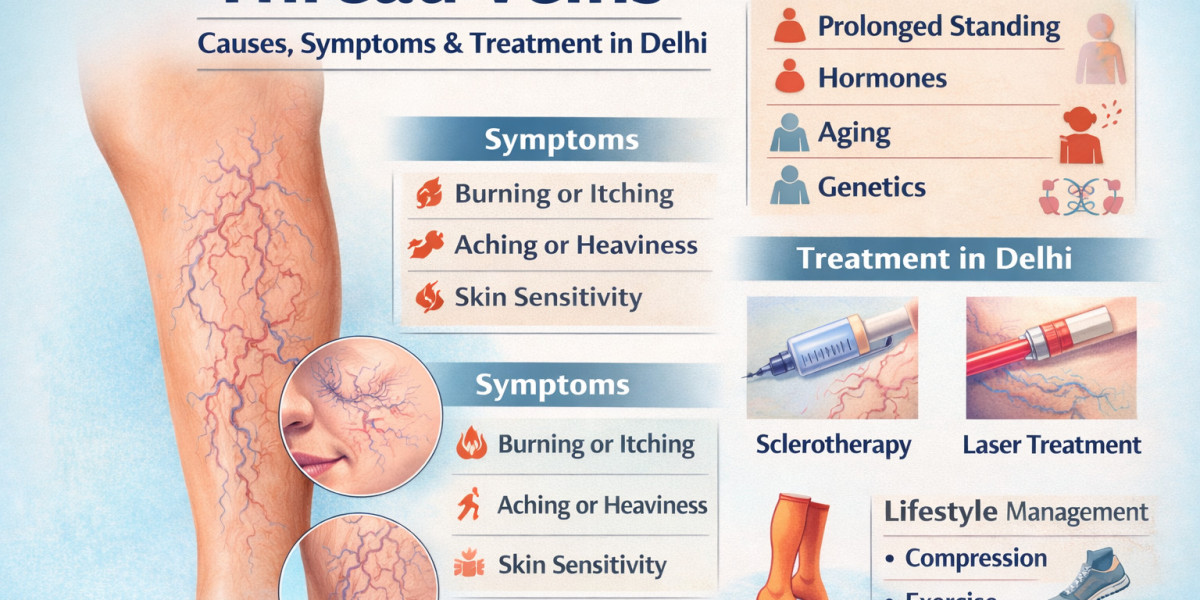
Thread veins are dilated capillaries that develop when small blood vessels lose elasticity or become damaged. They are most commonly seen on the legs, thighs, ankles, and sometimes on the face. Unlike varicose veins, thread veins are smaller and usually do not bulge above the skin surface.
Causes of Thread Veins
Several factors can contribute to the development of thread veins, including:
Genetic predisposition
Prolonged standing or sitting
Hormonal changes (pregnancy, menopause)
Ageing and loss of skin elasticity
Obesity
Excessive sun exposure (for facial thread veins)
Urban lifestyle patterns and long working hours, common in cities like Delhi, may increase the risk of developing thread veins over time.
Symptoms to Watch For
Most thread veins do not cause medical problems, but some individuals may experience mild symptoms such as:
Burning or itching sensation
Aching or heaviness in the legs
Skin sensitivity around affected areas
If thread veins are accompanied by pain, swelling, or worsening symptoms, further evaluation by a vascular specialist is advised to rule out underlying venous disease.
Diagnosis
Thread veins are usually diagnosed through a physical examination. In some cases, a Doppler ultrasound may be recommended to assess deeper veins and check for venous reflux, especially if symptoms suggest an underlying venous condition.
Treatment Options in Delhi
Modern vascular treatments offer safe and effective solutions for thread veins:
Sclerotherapy
A commonly used procedure where a medical solution is injected into the affected veins, causing them to collapse and fade over time.
Laser Treatment
Laser energy is used to target and close small thread veins, especially useful for facial veins and delicate areas.
Lifestyle Management
Wearing compression stockings, regular exercise, leg elevation, and weight management can help prevent progression and recurrence.
Treatment choice depends on the size, location, and severity of thread veins, as well as individual patient needs.
When to See a Vascular Specialist
Although thread veins are often a cosmetic concern, consulting a vascular specialist ensures accurate diagnosis and appropriate treatment. Early evaluation can help prevent progression and identify any underlying venous issues.
Conclusion
Thread veins are a common condition affecting many adults and can impact confidence and comfort. With modern diagnostic tools and minimally invasive treatments available in Delhi, thread veins can be treated safely and effectively. Seeking expert advice ensures the best outcomes and long-term vein health.