
Efficient water management is one of the most critical challenges in modern agriculture. With climate variability, increasing water scarcity, and rising crop demands, traditional irrigation techniques are often unable to provide the precision and sustainability required by contemporary farming practices. Smart micro irrigation systems are transforming agricultural water management by delivering precise, demand-based irrigation that conserves water, reduces cost, and improves crop performance.
Smart micro irrigation refers to the deployment of automated irrigation solutions that use sensors, controllers, and communication technologies to monitor field conditions in real time and make irrigation decisions based on crop water requirements. Unlike conventional flood or sprinkler systems, micro irrigation delivers water directly to the root zone through drip lines, micro-sprinklers, or emitters, ensuring that plants receive only the amount of water they need.
How Smart Micro Irrigation Works
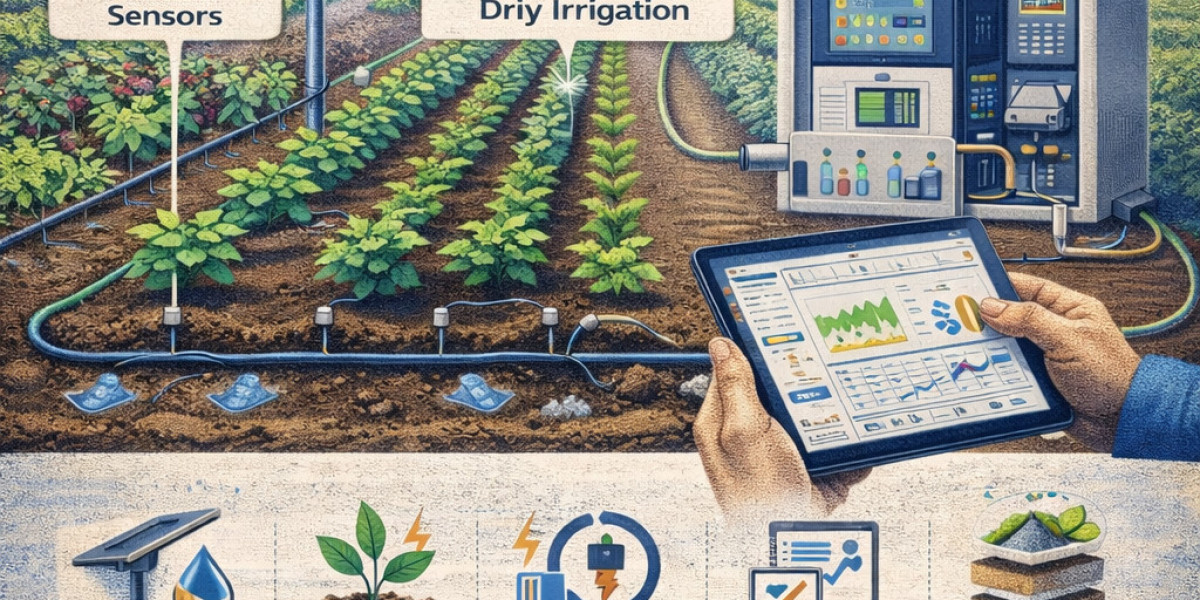
A typical smart micro irrigation system consists of:
Soil moisture sensors that measure water content in different field zones
Weather sensors to track temperature, humidity, and evapotranspiration
Automated control units that process sensor data and schedule irrigation
Valves and pumps that execute irrigation commands
Communication modules for remote monitoring and control
Sensors continuously collect data from the field and send it to the irrigation controller. The controller analyzes soil moisture levels, weather patterns, and crop water demand to determine when and how much to irrigate. This information allows the system to apply water efficiently, reducing wastage and avoiding over-irrigation.
Benefits of Smart Micro Irrigation
Water Conservation
Smart micro irrigation delivers water directly to the plant roots, significantly reducing water loss due to evaporation or surface runoff.Improved Crop Yields
With precise water delivery and optimal soil moisture, plants can grow healthier and produce better yields compared to traditional methods.Reduced Energy and Operation Costs
Automated irrigation reduces the need for manual labor, lowers pump operation time, and optimizes energy consumption.Data-Driven Decision Making
Real-time field data helps farmers make better irrigation decisions and adapt to changing environmental conditions.Minimized Soil Erosion
Low-volume irrigation reduces soil disturbance and prevents nutrient leaching, supporting sustainable soil health.
Applications in Modern Agriculture
Smart micro irrigation is suitable for:
Vegetable and fruit farming
Orchard and plantation crops
Greenhouses and nurseries
Large agricultural farms
Precision agriculture setups
By integrating technology and crop science, smart irrigation enables farmers to meet productivity goals while conserving natural resources.
Why Choose Smart Micro Irrigation
In the age of precision agriculture, every drop of water, every kilowatt of energy, and every farm input matters. Smart micro irrigation allows farmers to:
Irrigate intelligently based on actual crop needs
Save water without compromising plant health
Adapt irrigation schedules to weather changes
Monitor field conditions remotely
AKNITech supports implementation of smart irrigation systems by providing expert consultation, system design, installation, and integration services. Whether you are upgrading an existing setup or deploying a new automated irrigation solution, smart micro irrigation delivers measurable benefits in sustainability and productivity.