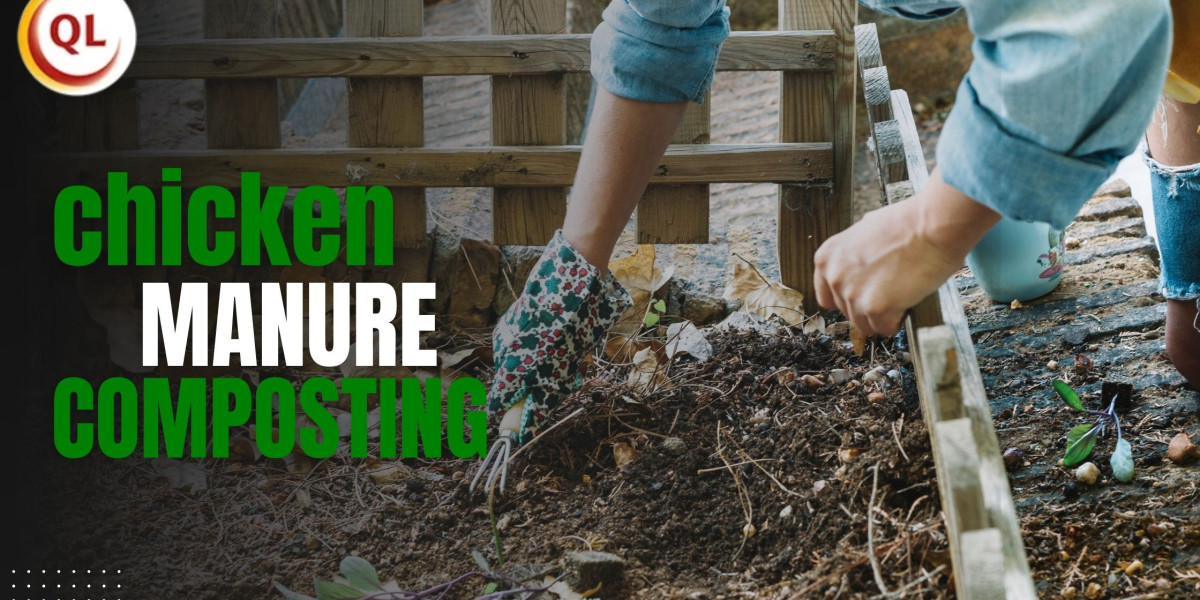

Organic fertilizer production begins with proper waste management, and Chicken Manure Composting plays a crucial role in transforming raw poultry waste into safe, nutrient-rich fertilizer. Fertilizer producers rely on scientifically controlled composting methods to stabilize nutrients, eliminate pathogens, and enhance soil-building properties. At QL Farms , we follow advanced composting practices to ensure high-quality organic fertilizer that supports sustainable agriculture. This article explores the most effective chicken manure composting methods used by professional fertilizer producers.
Understanding Chicken Manure Composting
Chicken manure composting is a biological process where microorganisms break down poultry waste under controlled conditions. Raw chicken manure is rich in nitrogen but can be harmful to crops if applied directly due to high ammonia content and pathogens. Composting converts this raw material into a stable fertilizer that is safe, odor-free, and beneficial for soil health.
Professional fertilizer producers carefully manage temperature, moisture, aeration, and carbon balance to produce consistent compost. The result is a high-quality organic input suitable for vegetables, fruits, grains, and plantation crops.
Importance of Proper Composting for Fertilizer Production
Effective chicken manure composting improves nutrient availability while protecting crops and the environment. It reduces weed seeds, destroys harmful bacteria, and prevents nutrient loss. Composting also improves the physical structure of manure, making it easier to apply evenly across fields.
At QL Farms, composting ensures that our fertilizer delivers long-term soil benefits rather than short-term nutrient spikes. This approach supports sustainable farming and consistent crop performance.
Windrow Composting Method
Windrow composting is one of the most commonly used chicken manure composting methods among fertilizer producers. In this process, chicken manure is mixed with carbon-rich materials such as straw, sawdust, or rice husk and arranged in long rows called windrows.
These windrows are turned regularly using specialized equipment to introduce oxygen and maintain uniform decomposition. Temperature is closely monitored to ensure pathogen destruction. Windrow composting is cost-effective and suitable for large-scale fertilizer production.
Aerated Static Pile Composting
Aerated static pile composting is an advanced chicken manure composting method designed to improve efficiency and reduce labor. In this system, manure is piled over a network of perforated pipes that supply air to the compost pile.
Unlike windrow composting, turning is minimal or unnecessary. Controlled airflow maintains optimal oxygen levels, allowing microorganisms to decompose manure efficiently. Fertilizer producers prefer this method for faster composting cycles and reduced odor emissions.
In-Vessel Composting Technology
In-vessel composting is a highly controlled chicken manure composting method used by modern fertilizer producers. The process takes place inside enclosed containers or drums where temperature, moisture, and aeration are precisely regulated.
This method accelerates decomposition and ensures consistent compost quality. In-vessel systems are ideal for producers aiming for premium organic fertilizer standards. At QL Farms, such controlled techniques help maintain nutrient stability and product safety.
Vermicomposting with Chicken Manure
Vermicomposting involves using earthworms to break down composted chicken manure further. While raw manure is unsuitable for worms, pre-composted manure can be processed into nutrient-dense vermicompost.
Fertilizer producers use this method to enhance microbial activity and nutrient availability. Vermicompost produced from chicken manure composting improves soil structure, water retention, and root development, making it highly valuable for organic farming.
Managing Carbon-to-Nitrogen Ratio
A critical factor in chicken manure composting is maintaining the correct carbon-to-nitrogen (C:N) ratio. Chicken manure is nitrogen-rich, so producers add carbon materials like dry leaves or agricultural waste to balance the mix.
Proper C:N ratio prevents ammonia loss and ensures steady microbial activity. Fertilizer producers carefully monitor this balance to produce compost that releases nutrients gradually and improves soil fertility.
Temperature and Moisture Control
Temperature control is essential in professional chicken manure composting. Compost piles must reach high temperatures to eliminate pathogens and weed seeds. At the same time, excessive heat can kill beneficial microorganisms.
Moisture levels are equally important. Compost that is too dry slows decomposition, while excessive moisture causes odor and nutrient loss. QL Farms maintains optimal temperature and moisture levels to ensure effective composting.
Curing and Maturation Stage
After active composting, chicken manure composting enters the curing stage. During this phase, microbial activity stabilizes, and compost matures into a soil-friendly product.
Fertilizer producers allow adequate curing time to ensure compost is fully stabilized and safe for crops. Mature compost improves soil structure, enhances nutrient availability, and promotes beneficial microbial populations.
Quality Control and Testing
Professional fertilizer producers conduct quality testing throughout the chicken manure composting process. Testing ensures nutrient consistency, pathogen elimination, and compliance with organic standards.
At QL Farms, rigorous quality control ensures our composted fertilizer meets agricultural requirements and delivers reliable results for farmers. This commitment guarantees safe application and long-term soil benefits.
Benefits of Chicken Manure Composting for Farmers
Chicken manure composting produces fertilizer that improves soil health, enhances water retention, and boosts crop productivity. It supports sustainable agriculture by recycling waste and reducing dependence on synthetic fertilizers.
Farmers using composted chicken manure benefit from improved yields, healthier crops, and better soil fertility over time. This makes chicken manure composting an essential practice for modern fertilizer producers.
Surgery
Chicken Manure Composting is the foundation of high-quality organic fertilizer production. Through methods such as windrow composting, aerated static piles, in-vessel systems, and vermicomposting, fertilizer producers transform raw poultry waste into valuable agricultural inputs.
At QL Farms , our composting practices focus on safety, consistency, and sustainability. By using scientifically managed chicken manure composting methods, we deliver organic fertilizer that supports healthy crops and long-term soil productivity. Investing in composted chicken manure is a smart choice for farmers seeking reliable, eco-friendly fertilization solutions.