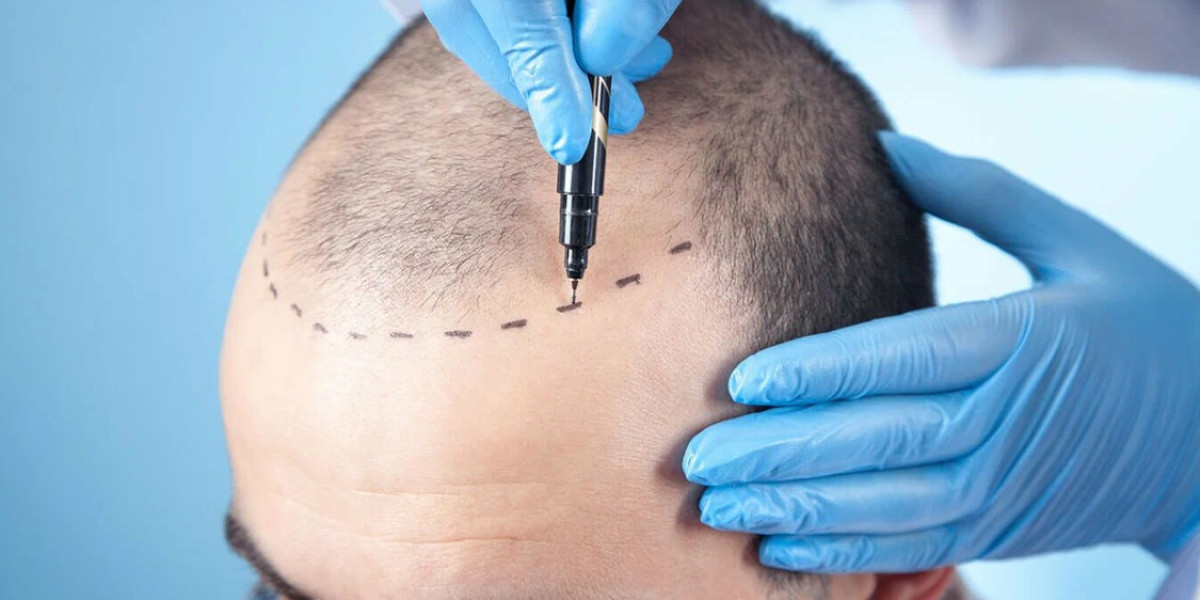

How Many Grafts Are Needed for Hair Restoration?
One of the most common questions people ask before a hair transplant is: “How many grafts will I need?” The answer is not the same for everyone because graft requirements depend on the level of hair loss, hair type, scalp condition, and desired density.
A hair graft is a small unit containing 1 to 4 hair follicles. During a transplant, these grafts are moved from the donor area (usually the back or sides of the head) to thinning or bald areas. The total number of grafts determines how full and natural the final result will look. Hair transplant in Buraydah offers modern solutions for restoring natural hair growth and improving confidence.
Understanding graft requirements helps patients set realistic expectations and plan a successful hair restoration journey.
What Is a Hair Graft?
A hair graft is a naturally occurring group of hair follicles taken from the donor area.
Each graft may contain:
- 1 hair follicle (single graft)
- 2 hair follicles
- 3–4 hair follicles
Why grafts matter:
- They determine hair density
- They influence coverage area
- They affect overall natural appearance
Hair transplant results are measured in grafts, not individual hairs.
Factors That Determine Graft Requirements
The number of grafts needed varies widely from person to person. Several key factors influence the final count.
1. Extent of Hair Loss
The most important factor is how advanced the hair loss is.
Mild Hair Loss
- Slight recession at hairline
- Small thinning areas
- Grafts needed: 800–1,500
Moderate Hair Loss
- Noticeable thinning on front and mid-scalp
- Receding hairline
- Grafts needed: 1,500–3,000
Advanced Hair Loss
- Large bald areas
- Crown involvement
- Grafts needed: 3,000–5,000+
The more extensive the hair loss, the higher the graft requirement.
2. Donor Hair Availability
Donor hair is limited and plays a major role in planning.
Strong donor area:
- Higher graft extraction possible
- Better coverage options
Weak donor area:
- Limited graft supply
- Requires conservative planning
Surgeons must carefully balance graft usage to avoid overharvesting.
3. Desired Hair Density
Patients can choose how thick they want their hair to look.
Natural density:
- Lower graft requirement
- Soft, realistic appearance
High-density result:
- More grafts needed
- Fuller but more donor usage
Typically, natural density is prioritized over excessive thickness.
4. Hair Type and Texture
Hair characteristics significantly affect coverage.
Thick Hair:
- Provides better coverage
- Fewer grafts needed
Fine Hair:
- Requires more grafts for same visual density
Curly/Wavy Hair:
- Creates illusion of higher density
- More efficient coverage
Hair texture can reduce or increase graft requirements.
5. Size of the Bald Area
The larger the area, the more grafts are needed.
Common regions:
- Hairline restoration
- Mid-scalp coverage
- Crown (vertex) restoration
Each area has different density requirements.
6. Age and Future Hair Loss Pattern
Younger patients may continue to lose hair over time.
Planning considerations:
- Conservative graft use
- Preservation for future sessions
- Age-appropriate hairline design
This ensures long-term balance and sustainability.
Average Graft Estimates by Area
Here is a general breakdown of graft distribution:
Hairline Restoration:
- 800–1,800 grafts
- Focus on natural framing
Mid-Scalp:
- 1,200–2,500 grafts
- Main density zone
Crown Area:
- 1,500–3,000+ grafts
- Requires more grafts due to circular pattern
Full Scalp Coverage:
- 3,000–5,500+ grafts
These numbers vary based on individual needs.
Norwood Scale and Graft Planning
The Norwood scale is commonly used to classify male pattern baldness and estimate graft requirements.
Norwood 1–2:
- Minimal hair loss
- 800–1,500 grafts
Norwood 3:
- Early recession
- 1,200–2,000 grafts
Norwood 4:
- Moderate hair loss
- 2,000–3,500 grafts
Norwood 5–6:
- Advanced baldness
- 3,500–5,000+ grafts
Norwood 7:
- Severe hair loss
- Multiple sessions required
Can You Get All Grafts in One Session?
Yes, but it depends on the case.
One session is possible when:
- Donor area is strong
- Hair loss is moderate
- Surgeon can safely extract enough grafts
Multiple sessions are needed when:
- Advanced baldness exists
- Donor supply is limited
- High density is desired
Many patients achieve best results in staged procedures.
What Happens If Too Many Grafts Are Used?
Overharvesting can lead to problems:
- Thinning donor area
- Uneven scalp appearance
- Reduced future transplant options
- Poor graft survival if overcrowded
That’s why careful planning is essential.
How Surgeons Decide the Exact Graft Count
Hair transplant specialists use a detailed evaluation process:
Assessment includes:
- Scalp analysis
- Donor density measurement
- Hair thickness evaluation
- Bald area mapping
- Patient expectations
Tools used:
- Digital scalp imaging
- Density calculators
- Microscopic donor analysis
This ensures accurate and safe planning.
Can Graft Numbers Be Increased Later?
Yes, in many cases.
Additional sessions may be done if:
- Hair loss continues
- Patient wants higher density
- Donor hair remains sufficient
Hair restoration is often a long-term process, not a single procedure.
Setting Realistic Expectations
Understanding graft numbers helps manage expectations.
Important truths:
- More grafts do not always mean better results
- Natural appearance is more important than maximum density
- Donor hair is limited and must be preserved
- Final results depend on technique and planning
Conclusion
The number of grafts needed for hair restoration varies depending on the extent of hair loss, donor hair quality, desired density, and individual hair characteristics. Mild cases may require fewer than 1,500 grafts, while advanced baldness can require 4,000 to 5,000 or more.
Successful hair restoration is not just about using the highest number of grafts but about strategic planning, proper distribution, and long-term balance. When carefully designed, even a moderate number of grafts can create a natural, fuller, and long-lasting result.