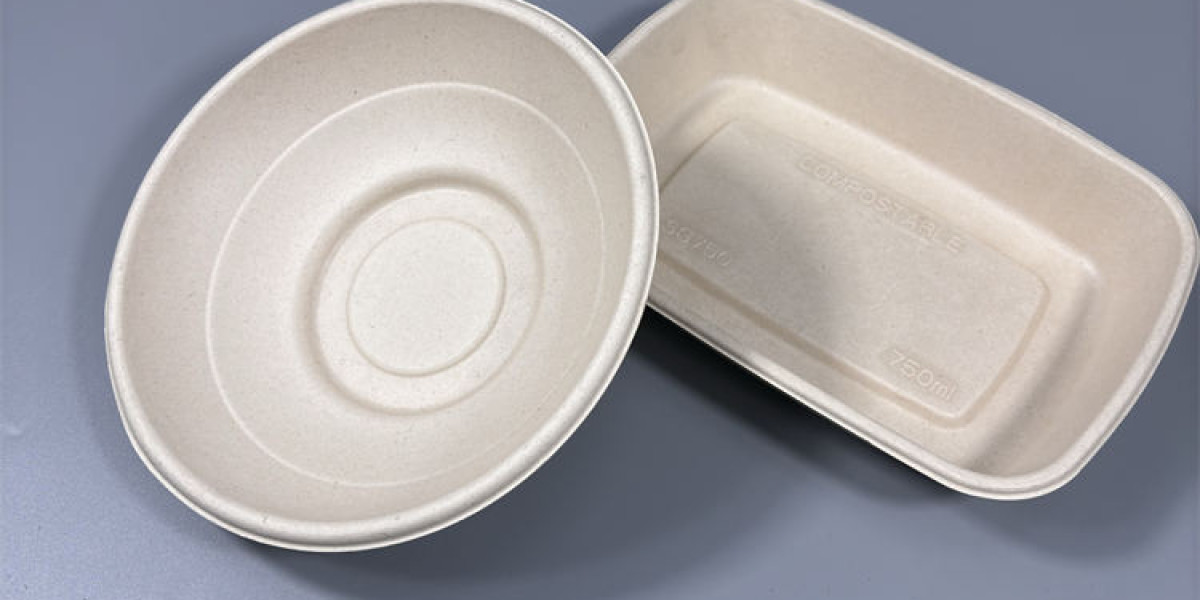
As global industries move rapidly toward sustainability, manufacturers are under increasing pressure to replace plastic packaging with eco-friendly alternatives. Molded pulp packaging has emerged as one of the most reliable, scalable, and environmentally responsible solutions. From food containers and trays to industrial protective packaging, molded pulp products are now widely accepted across multiple industries.
At the center of this transformation is advanced production technology. Among the most efficient and modern solutions available today is the Rotary Thermoforming Pulp Molding Machine. Designed for high output, precision forming, and automated operation, this machine plays a critical role in helping manufacturers meet growing market demand while maintaining sustainability goals.
Understanding Rotary Thermoforming Pulp Molding Technology
Rotary thermoforming pulp molding technology is a modern manufacturing process that converts pulp slurry into finished molded products through a continuous rotary system. Unlike traditional reciprocating machines, which operate step-by-step, rotary machines work in a circular, uninterrupted motion. This allows multiple production stages—forming, pressing, drying, and demolding—to occur simultaneously.
This continuous operation significantly increases production efficiency, reduces cycle time, and ensures consistent product quality. The result is a highly automated system capable of producing large volumes of molded pulp products with minimal labor and reduced energy consumption.
How a Rotary Thermoforming Pulp Molding Machine Works
The production process is engineered for both speed and accuracy. Each stage is carefully controlled to ensure optimal performance and consistent results.
Pulp Preparation
The process begins with raw materials such as recycled paper, cardboard, or plant fibers. These materials are mixed with water to create a uniform pulp slurry. The quality of this slurry directly impacts the strength, surface finish, and durability of the final product.
Rotary Forming
The pulp slurry is transferred to forming molds mounted on a rotating table. Vacuum suction draws the pulp into the mold cavities, shaping the product precisely. The rotary motion ensures continuous production without interruptions.
Hot Pressing and Thermoforming
Once formed, the wet pulp products move to a hot-pressing station. Heat and pressure are applied to remove excess moisture, increase density, and improve surface smoothness. This thermoforming stage gives the product its final strength and appearance.
Drying and Cooling
After pressing, products undergo controlled drying to achieve optimal moisture content. Cooling ensures structural stability before demolding.
Automatic Demolding and Stacking
Robotic arms or automated systems remove finished products from the molds and stack them neatly, ready for packaging or further processing.
Key Advantages of Rotary Thermoforming Pulp Molding Machines
High Production Efficiency
One of the biggest advantages of rotary thermoforming machines is their ability to operate continuously. Multiple molds working simultaneously result in higher output compared to traditional machines. This makes them ideal for large-scale production environments where speed and consistency are essential.
Advanced Automation
Modern rotary pulp molding machines are equipped with PLC control systems, servo motors, and intelligent touch-screen interfaces. These features allow precise control over temperature, pressure, and cycle timing, ensuring uniform product quality while reducing operator intervention.
Reduced Labor Requirements
Thanks to automated forming, pressing, and demolding systems, a single operator can manage the entire production line. This significantly reduces labor costs while improving workplace safety.
Compact Footprint
Despite their high output capacity, rotary machines are designed with space efficiency in mind. Their compact layout makes them suitable for factories with limited floor space while still delivering industrial-level performance.
Applications of Rotary Thermoforming Pulp Molding Machines
Rotary thermoforming technology supports a wide range of molded pulp products, making it highly versatile across industries.
Food Packaging Industry
Molded pulp trays, bowls, lids, and containers are increasingly used in food service due to their biodegradability and food-safe properties. These products are ideal for takeaway packaging, cafeterias, and eco-conscious restaurants.
Protective Industrial Packaging
Molded pulp inserts provide excellent cushioning and shock absorption for electronics, appliances, and fragile goods during transportation. They are lightweight, strong, and fully recyclable.
Agricultural Packaging
Egg trays, fruit trays, and seedling holders made from molded pulp offer durability while remaining environmentally friendly. Rotary machines can produce these items at high volumes with consistent quality.
Consumer Goods and Retail
Retail brands use molded pulp packaging to enhance product presentation while aligning with sustainability goals. Custom shapes and branding options make molded pulp a preferred choice for premium packaging.
Environmental Benefits of Rotary Pulp Molding Technology
Sustainability is a key driver behind the growing adoption of molded pulp packaging. Rotary thermoforming machines support eco-friendly manufacturing in several important ways.
Molded pulp products are biodegradable and compostable, breaking down naturally without harming the environment. The raw materials used are renewable and often derived from recycled sources, reducing dependence on virgin resources.
In addition, the efficient design of rotary machines minimizes water and energy consumption. Optimized heating systems and continuous production reduce waste, making the overall process environmentally responsible and cost-effective.
Cost Efficiency and Long-Term ROI
Investing in a rotary thermoforming pulp molding machine offers strong long-term returns. Lower raw material costs, reduced labor requirements, and energy-efficient operation contribute to a lower cost per unit.
High production capacity allows manufacturers to meet large orders quickly, improving profitability and market competitiveness. The durable construction and industrial-grade components ensure long service life with minimal maintenance, further enhancing return on investment.
Why Manufacturers Are Shifting to Rotary Thermoforming Systems
Manufacturers worldwide are transitioning from traditional molding methods to rotary thermoforming systems for several reasons:
Consistent high-quality output
Faster production cycles
Lower operational costs
Improved sustainability compliance
Ability to scale production easily
These benefits make rotary systems an ideal choice for companies looking to future-proof their operations and align with global environmental regulations.
Choosing the Right Rotary Thermoforming Pulp Molding Machine
When selecting a rotary pulp molding machine, manufacturers should consider production capacity, automation level, mold compatibility, and after-sales support. A well-designed system should integrate seamlessly into existing production lines while offering flexibility for future expansion.
Partnering with a reliable manufacturer ensures access to technical support, spare parts, and training, all of which are essential for smooth long-term operation.
The Role of Rotary Machines in the Future of Packaging
The demand for sustainable packaging continues to grow as governments implement stricter regulations on plastic usage and consumers become more environmentally conscious. Molded pulp packaging is no longer a niche solution—it is becoming a mainstream alternative across industries.
Advanced equipment like the Rotary Thermoforming Pulp Molding Machine enables manufacturers to meet this demand efficiently while maintaining high quality and profitability.
Conclusion
Rotary thermoforming pulp molding machines represent a major advancement in sustainable manufacturing technology. Their ability to deliver high output, consistent quality, and automated operation makes them a powerful solution for modern packaging production.
By combining environmental responsibility with industrial efficiency, these machines help manufacturers reduce costs, increase output, and contribute to a greener future. As global demand for eco-friendly packaging continues to rise, investing in rotary thermoforming pulp molding technology is a strategic move toward long-term success.